 Lynden
 Metal Roofing Built for Aldergrove's Weather, Not a Showroom
Aldergrove sits close enough to the Fraser Valley's damp, mossy microclimate and the Georgia Strait's salt air that a roof built for a drier region simply won't hold up the same way here. Homeowners who cross the border to shop contractors, or who split their attention between BC and Whatcom County pricing, often get roofing advice written for a different climate entirely. We work this specific corner of the map — Lynden, the county line, and the communities just north of it, including Aldergrove — and we size every metal roofing job to what actually happens to a roof here: months of low-angle rain, a moss season that never really ends, and enough salt-laced air moving inland to matter for fastener and flashing choices.
This page is about one thing only: metal roofing, done right, for homes in and around Aldergrove, BC. Not a general product pitch — the specific decisions that separate a metal roof that performs for decades from one that starts showing streaking, fastener corrosion, or moss buildup within a few wet seasons.
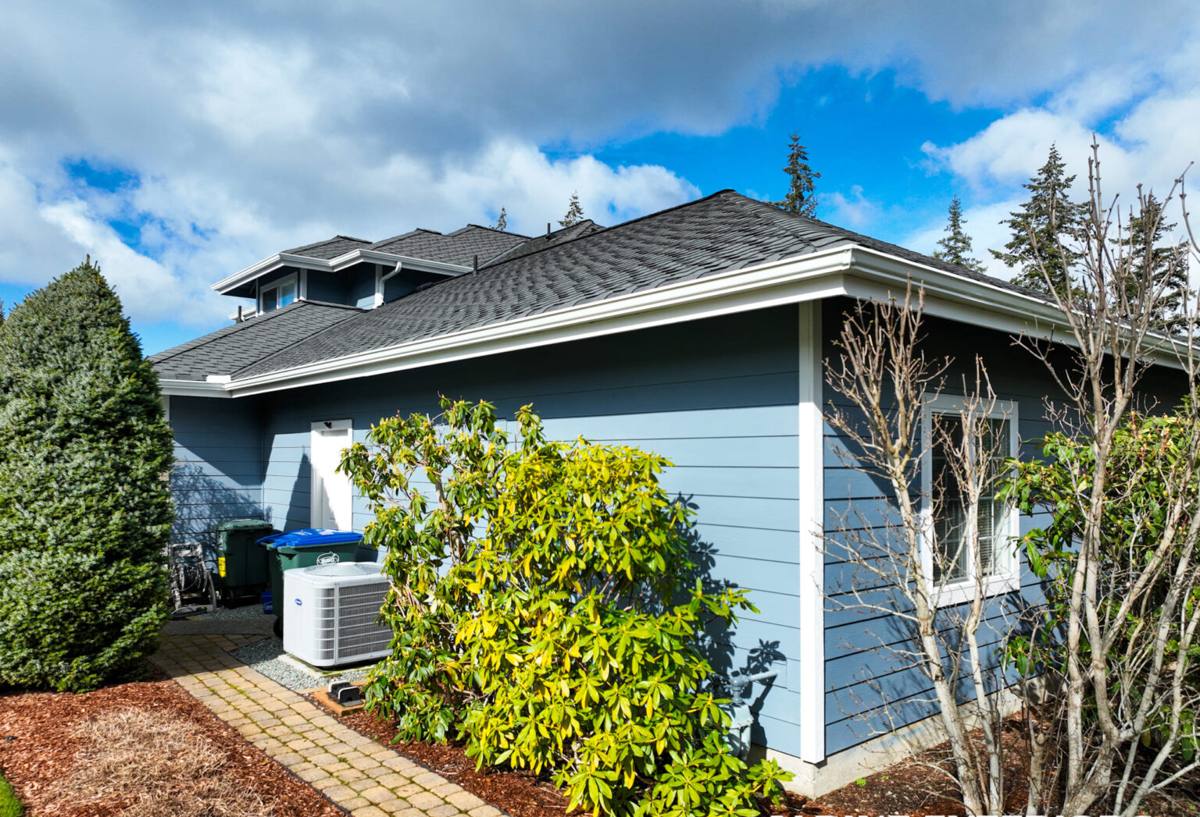
What Aldergrove's Climate Actually Does to a Roof
Three things drive most of the roofing problems we see in this area, and metal roofing responds differently to each one than asphalt does.
Driving Rain and Wind-Driven Moisture
Storms coming off the strait don't always fall straight down. Wind-driven rain gets pushed sideways under laps, around penetrations, and into any seam that wasn't detailed with that angle of attack in mind. Metal roofing handles this well when the panel system, underlayment, and flashing details are matched to the pitch and exposure of the specific roof — it handles it poorly when installers treat every roof the same regardless of how much weather it actually takes.
Moss and Sustained Dampness
This region's long wet stretch means anything that holds moisture against a roof surface — debris in valleys, shaded north-facing slopes, low-slope sections — becomes a moss farm. Moss on asphalt shingles lifts the mat and traps water against the deck. Moss on metal behaves differently: it generally can't root into the panel the way it does into shingle granules, but it can still build up in valleys, around fasteners, and at panel laps, holding moisture against seams and coatings longer than it should. Roof design and panel profile both affect how much moss actually gets a foothold.
Salt Air and Corrosion
Aldergrove isn't oceanfront, but this area gets enough salt-carrying air off the strait and inlet systems that corrosion resistance is a real spec decision, not a marketing line. The metal itself, the coating system, and — just as important — the fasteners all need to be chosen for a coastal-influenced environment. Cutting corners on fastener material is one of the most common ways we see metal roofs fail early, and it's invisible until the streaking and staining show up.
Getting the Metal System Right
"Metal roofing" isn't one product — it's a category with real differences in panel profile, coating, fastening method, and cost. Getting this right for an Aldergrove-area home means matching the system to the roof's exposure, pitch, and how long the owner plans to stay in the house.
Panel Profiles
- Standing seam — concealed fasteners, raised interlocking seams, the strongest option against wind-driven rain and the best long-term performer in this climate. Higher upfront cost, longest service life.
- Exposed-fastener panels (ribbed/corrugated) — lower cost, faster install, but the fasteners themselves are exposed to weather and need periodic inspection and eventual replacement of gaskets over the roof's life.
- Metal shingles/shakes — profiled to mimic traditional roofing textures while keeping metal's durability; a fit for homes where the owner wants a metal roof's lifespan without a fully industrial look.
Coatings and Corrosion Resistance
For a salt-air-influenced area, we steer clients toward coating systems and substrate types with proven coastal performance rather than the cheapest coil available. The coating is what actually fights the corrosion — the base metal matters, but a weak coating undermines even a good substrate. Fastener material has to be compatible with the panel metal; mismatched metals in a wet, salty environment set up galvanic corrosion that eats fasteners from the inside out, well before the panels themselves would fail.
Comparing Roofing Options for This Climate
| Factor | Standing Seam Metal | Exposed-Fastener Metal | Asphalt Shingle |
|---|---|---|---|
| Wind-driven rain resistance | Excellent — concealed seams | Good, if fasteners stay sealed | Moderate — depends on install detail |
| Moss resistance | Good — fewer moisture traps | Fair — fastener rows can trap debris | Poor — moss roots into the mat |
| Coastal corrosion risk | Low with correct coating/fasteners | Moderate — exposed fasteners are the weak point | Low (different failure mode: granule loss, UV wear) |
| Typical service life | 40-70 years | 25-40 years | 15-25 years |
| Upfront cost | Highest | Mid | Lowest |
What a Correct Metal Roof Installation Involves
The panels themselves get most of the attention, but the details underneath and around them are what actually determine whether a metal roof performs in this climate.
Deck and Underlayment
Any deck showing rot, delamination, or soft spots from prior moisture intrusion gets addressed before a single panel goes down — installing new roofing over a compromised deck just hides a problem that will resurface. A high-temperature synthetic or self-adhered underlayment underneath the metal gives a second line of defense against wind-driven rain that finds its way under a panel, which matters more here than in drier regions.
Flashing and Penetrations
Valleys, chimneys, vent stacks, and wall-to-roof transitions are where the overwhelming majority of leaks actually start on any roof type. Metal roofing done correctly uses purpose-built flashing details for each transition rather than generic trim bent to fit — this is slower work, and it's exactly the part of the job that separates a roof that stays dry for decades from one that leaks within a few winters.
Fastening and Sealants
Correct fastener spacing, torque, and material compatibility with the panel metal. Sealants and closures at ridges, eaves, and laps that are rated for sustained UV and moisture exposure, not general-purpose caulk that breaks down after a season or two of this region's weather.
Ventilation
Metal roofs need proper attic and roof-deck ventilation just as much as any other roof type — arguably more, since condensation on the underside of metal panels in a poorly ventilated attic can cause its own moisture problems. We check ridge, soffit, and intake ventilation as part of any metal roofing job, not as an afterthought.
Our Process for Aldergrove-Area Metal Roofing Projects
- On-site inspection — we look at the existing roof, deck condition, ventilation, and the specific exposure of the property to wind and rain direction.
- System recommendation — panel profile, coating, and fastener spec matched to the roof's pitch, exposure, and the owner's budget and timeline.
- Written estimate — clear line items, no vague allowances, so there are no surprises once work starts.
- Deck and structural prep — any rot, soft decking, or ventilation gaps addressed before panels go on.
- Installation — underlayment, flashing, panels, and fastening done to manufacturer spec and matched to this climate's demands.
- Final walkthrough — we go over the finished roof, warranty paperwork, and basic maintenance expectations with the owner.
Maintenance: What Actually Keeps a Metal Roof Performing Here
- Clear debris from valleys and around penetrations at least once a year — this is where moss and standing moisture cause the most trouble.
- Check fastener heads and gaskets on exposed-fastener systems every few years; gaskets are a wear item and cheaper to replace early than after a leak.
- Rinse accumulated salt residue and grime off the roof periodically if the property sees direct exposure to coastal air.
- Watch for streaking near fasteners or seams — early sign of a coating or corrosion issue worth having looked at before it spreads.
- Keep gutters and downspouts clear so water isn't backing up under eave flashing during heavy rain events.
Why Hiring a Crew That Already Works This Area Matters
A lot of roofing quotes get written from a generic playbook — same panel spec, same flashing details, regardless of whether the roof sits in a dry inland valley or takes direct wind and salt off the strait. We work Lynden, the border communities, and Aldergrove regularly enough to know which roofs need the extra flashing detail at a valley, which slopes are going to fight moss no matter what, and which fastener spec actually holds up to what this specific stretch of weather delivers year after year. That's the difference between a metal roof that's still tight and clean-looking in twenty years and one that's already showing corrosion streaks in five.
If you're weighing metal roofing for a home in Aldergrove or the surrounding area, we're glad to walk the roof with you and give straight answers on what it needs — no pressure, no generic pitch. Reach out using the form below for a free estimate.