 Lynden
 Aldergrove Sits in One of the Toughest Climates for Exterior Siding
Aldergrove, British Columbia sits just north of the Aldergrove-Lynden border crossing, close enough to Whatcom County that it shares the same weather system we deal with every day. That means the same combination that wears down siding faster than almost anywhere else in North America: salt-tinged marine air rolling in off the Strait of Georgia and Puget Sound, driving rain that comes sideways during fall and winter storms, and a moss and algae season that can stretch six months or longer on shaded, north-facing walls. Homes here don't get a break between wet spells the way siding does in drier climates, and that constant damp-dry cycling is exactly what breaks down the wrong exterior products over time.
We install exactly one siding product for this reason: James Hardie fiber cement. Not vinyl, not LP SmartSide, not Cemplank, not Allura, not primed wood. This page walks through what the Aldergrove climate actually does to a home's exterior, what correct fiber cement installation looks like, and why a crew that already works this specific corridor matters more than it might seem.
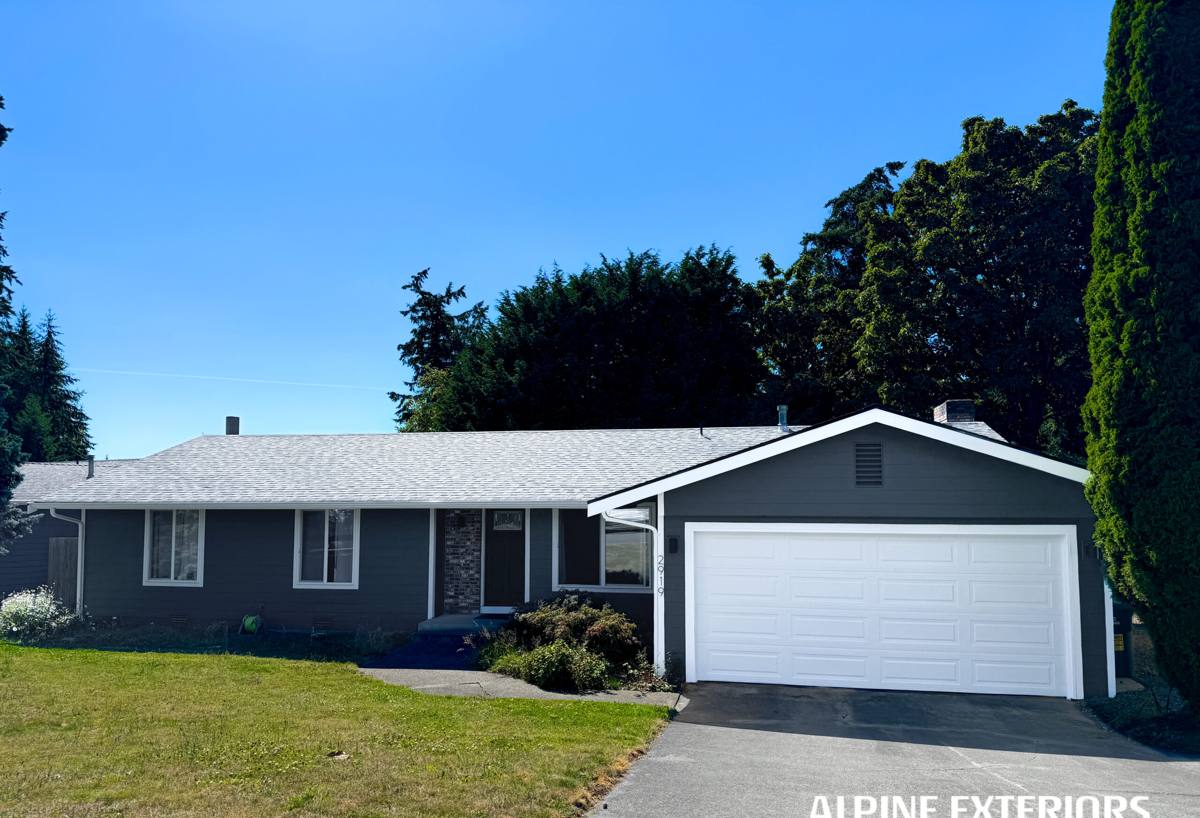
What Salt Air, Rain, and Moss Actually Do to Siding
Each of these three stressors attacks siding a different way, and most siding failures we get called out to inspect are a combination of all three working on a product that wasn't built to handle them.
Salt Air
Airborne salt is corrosive to metal fasteners, trim, and flashing, and it accelerates the breakdown of lower-grade paints and coatings. On vinyl siding, salt-laden moisture works into seams and behind panels where it can't dry out. On wood-based products, it speeds up moisture absorption at any exposed edge or fastener hole.
Driving Rain
Wind-driven rain doesn't just fall straight down — it gets pushed sideways and upward under laps, around trim, and into any gap in the water-resistive barrier. A siding system is only as good as its weakest flashing detail, and in this climate, that weak point gets tested dozens of times a year, not once or twice.
Long Moss Season
Shaded walls, roof overhangs, and north-facing elevations here can stay damp for months. Moss and algae don't just look bad — they hold moisture against the siding surface, which is a problem for any product with wood fiber content or a finish that isn't engineered to resist biological growth.
| Material | How It Responds to This Climate | Long-Term Concern |
|---|---|---|
| Vinyl siding | Seams and laps trap moisture; can warp or crack in temperature swings | Water intrusion behind panels goes undetected for years |
| LP SmartSide / OSB-based | Wood-strand core is vulnerable at cut edges and fastener points if moisture gets in | Swelling and edge deterioration in chronic damp conditions |
| Primed wood or cedar | Needs repainting and re-caulking on a strict schedule to stay sealed | Maintenance burden grows every year the schedule slips |
| James Hardie fiber cement | Non-combustible, dimensionally stable, factory-cured finish resists moss and salt exposure | Still requires correct flashing and installation to perform as designed |
Why James Hardie Is the Product We Standardize On
Fiber cement isn't magic — it's cement, sand, and cellulose fiber, engineered and pressure-cured into a plank that doesn't expand and contract the way wood or vinyl does, and doesn't burn the way wood-based products can. James Hardie backs that with a ColorPlus factory finish, which is baked on under controlled conditions rather than field-painted, and a product lineup engineered for specific climate zones.
For this region, that means HardiePlank lap siding and HardiePanel in the HZ5 formulation, which James Hardie engineers specifically for climates with regular moisture exposure and freeze-thaw cycling — exactly what Whatcom County and the Fraser Valley both experience. The HZ5 formulation is designed to resist moisture-related damage better than the standard formulations sold in drier climates, which matters when a wall is going to spend a good chunk of the year damp.
What a Long-Term Warranty Structure Buys You
James Hardie's non-prorated warranty coverage on the substrate, paired with ColorPlus finish coverage, is transferable to a new owner within the coverage window when installed by a qualified contractor per manufacturer specifications. That matters for resale — a documented, code-compliant install with an intact warranty is worth more to a buyer than a siding job with no paper trail.
What a Correct Hardie Installation Actually Involves
The product only performs as designed if the installation matches James Hardie's published specifications. This is where a lot of siding jobs — on any product — quietly fail. A correct job includes:
- A properly lapped weather-resistive barrier behind the siding, not just house wrap tacked up and forgotten
- Rainscreen or drainage gap detailing where local conditions and code call for it, so bulk water has somewhere to go
- Correct fastener type, spacing, and penetration depth per the Hardie install guide — not shortcuts that void the warranty
- Proper flashing at every window, door, and horizontal trim transition, lapped so water sheds outward and down
- Minimum clearances at grade, roof lines, and decks so the bottom course of siding never sits in standing water or snow
- Factory-caulked or manufacturer-approved joint treatment at butt joints, not just a bead of generic caulk
Skipping any one of these doesn't usually cause a visible problem in year one. It shows up in year five or eight, as moisture damage behind the siding that's expensive to trace and repair.
Our Process, Start to Finish
- On-site walk-through: We look at the home's exposure — which walls take the worst of the driving rain, where shade and moss have already taken hold, and where existing flashing or trim needs attention regardless of what siding is on it now.
- Tear-off and inspection: Once the old siding is off, we inspect the sheathing and water-resistive barrier underneath. This is often the first real look anyone's had at that wall in decades, and it's the point where hidden moisture damage gets found and addressed before it's covered back up.
- Barrier and flashing correction: Any gaps, missed laps, or damaged sheathing get fixed before a single piece of new siding goes up. This step is non-negotiable — it's the difference between a job that lasts and one that fails quietly from behind.
- Hardie installation to spec: Panels and planks installed with correct fastening, spacing, and flashing detail, matched to the HZ5 product line for this climate zone.
- Trim, caulking, and final inspection: Manufacturer-approved sealants at joints and transitions, followed by a final walk-through so you know exactly what was done and why.
Why a Crew That Already Works Aldergrove Matters
Aldergrove sits close enough to Lynden that a crew based in Whatcom County can reasonably serve it, but "close enough on a map" and "actually set up to do the job right" are different things. A contractor who regularly works this corridor already understands the logistics of getting crews and material across the Aldergrove-Lynden crossing, has a feel for how this specific stretch of climate — shared between the Fraser Valley and the Pacific Northwest coast — treats a home's exterior, and isn't guessing at exposure and drainage detailing for the first time on your project.
That familiarity also means straightforward answers about scheduling, permitting expectations on the Canadian side of the work, and realistic timelines that account for border logistics — none of which should be a surprise partway through a project.
What to Ask Any Contractor Before You Hire
- Are you a certified James Hardie installer, and can you explain the HZ5 product line specifically?
- Will you inspect and correct the water-resistive barrier and flashing before installing new siding, not just over it?
- What does your written estimate include — tear-off, disposal, trim, and caulking, or are those add-ons?
- Do you have experience working on this specific stretch between Whatcom County and the Fraser Valley?
- What warranty coverage applies, and is it transferable if the home sells?
What Drives the Cost of a Siding Project Here
| Factor | Why It Matters in This Climate |
|---|---|
| Condition of the existing wall assembly | Hidden moisture damage from years of driving rain adds repair scope once old siding comes off |
| Wall exposure and complexity | Homes with more corners, dormers, and trim need more flashing detail and labor time |
| Product line and profile chosen | HardiePlank widths, textures, and ColorPlus color options vary in material cost |
| Extent of trim and soffit work | Salt air and moisture exposure often mean trim needs replacing alongside the siding |
| Access and logistics | Material delivery and crew scheduling across the border corridor factor into timelines |
We won't quote a number without seeing the house — anyone who does is guessing, and a guess isn't useful when you're planning a project. What we can tell you honestly is which of these factors are likely to matter on your specific home during the walk-through.
Keeping Hardie Siding Performing Long-Term
Fiber cement is low-maintenance compared to wood or vinyl, but "low-maintenance" doesn't mean "no maintenance," especially with a moss season this long. A short annual checklist goes a long way:
- Rinse siding gently once a year, especially shaded and north-facing walls where moss takes hold first
- Keep gutters clear so overflow doesn't run down the siding face during heavy storms
- Trim back vegetation and tree cover that keeps walls damp longer than they need to be
- Check caulking at trim joints and penetrations every couple of years and re-seal if it's cracked or pulling away
- Have flashing and clearances inspected if you notice discoloration or soft spots at the base of a wall
None of this is heavy work, but skipping it in a climate this wet shortens the life of any exterior product, Hardie included.
If you're weighing a siding replacement on an Aldergrove home, we're glad to walk the property, look at what's actually happening on your walls, and put together a straightforward, no-pressure estimate. There's a form below — reach out and we'll get a time on the calendar.