 Lynden
 Board & Batten Siding Built for Abbotsford, BC
Board and batten is one of the most requested siding profiles in the Fraser Valley right now, and for good reason. The look — wide vertical panels with narrow trim boards covering each seam — reads as clean, modern farmhouse, or classic barn-style depending on how it's detailed, and it works equally well as a full exterior or as an accent on a gable end, dormer, or entry feature. But board and batten is also one of the least forgiving siding styles when it's installed wrong. The vertical seams, the reveal spacing, and the way water is meant to shed off each batten all depend on getting the details right the first time. For homes in Abbotsford, BC, where driving rain, a long moss season, and damp shaded lots are part of daily life, those details matter even more than the style itself.
This page covers what board and batten siding actually needs to hold up in this climate, what a correct installation looks like when it's done in James Hardie fiber cement, and why we think the crew doing the work matters as much as the material.
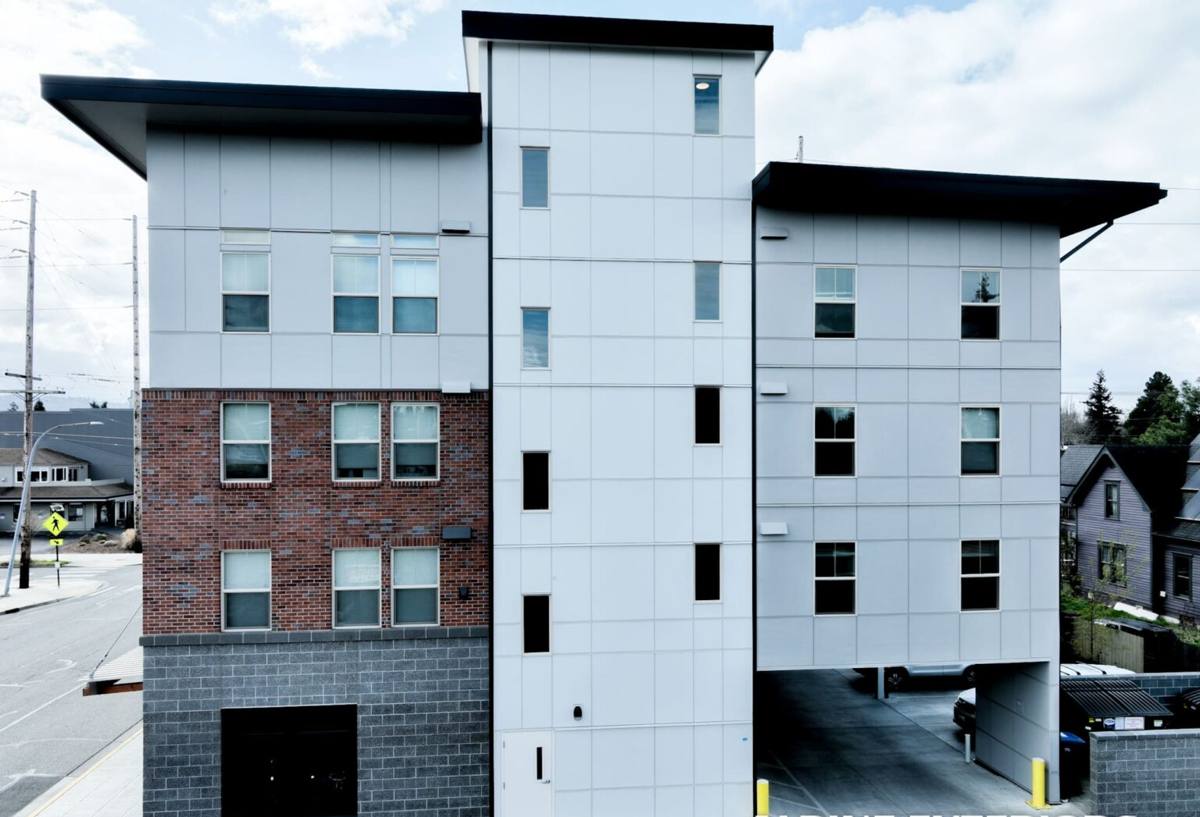
What the Fraser Valley Climate Does to Vertical Siding
Driving Rain and Wind-Driven Moisture
Vertical siding profiles like board and batten have more horizontal seams and joints exposed to wind-driven rain than a standard lap pattern does, simply because of how the battens, corners, and panel butt joints are arranged. In a region that sees long stretches of steady, low-pressure rain pushed sideways by wind, any gap in the water-resistive barrier, any batten fastened without the right clearance, or any panel joint left uncaulked or improperly flashed becomes a place for moisture to work its way behind the cladding. Over years, that's how rot starts — not from a single storm, but from repeated small intrusions that never fully dry out between rain events.
Moss, Algae, and Shaded Exposures
Whatcom County and the Fraser Valley share the same long, wet, mild winters that make this one of the best moss-growing climates in North America. North-facing walls, siding tucked under eaves or tree canopy, and any surface that stays damp longer than it should are the spots where moss and algae take hold first. On absorbent or poorly finished siding materials, that growth doesn't just look bad — it holds moisture against the surface and accelerates deterioration underneath. Board and batten's vertical grooves and batten shadow lines can actually collect more organic debris than a flat lap profile if the material and finish aren't up to the job.
Freeze-Thaw and Seasonal Swings
The Fraser Valley doesn't get brutally cold, but it does cycle through freeze-thaw stretches most winters, and any siding material that absorbs water is vulnerable during those swings. Water trapped in a porous board that then freezes can crack, split, or delaminate over a handful of seasons. This is one of the biggest reasons material choice matters as much as workmanship on a board and batten project here.
What a Correct Board & Batten Installation Actually Involves
The Panel System We Use
We build board and batten exteriors using James Hardie vertical siding panels finished with Hardie trim boards run over each seam at a consistent, engineered reveal. That's different from installing individual narrow boards edge to edge, which multiplies the number of vertical joints — and joints are exactly where water problems start. Fewer, better-detailed seams is the whole point.
Fastening and Batten Spacing
Panel and batten spacing isn't just an aesthetic choice — it determines how the assembly sheds water. Battens need consistent width and reveal, fasteners need to land in framing at the manufacturer's specified pattern, and every panel needs room to handle normal expansion and contraction without buckling or pulling fasteners loose. Rushed or inconsistent batten spacing is one of the most common defects we see on board and batten jobs that weren't done by a crew with real experience in the profile.
Flashing and Drainage Behind the Battens
Underneath the visible siding, a correctly installed weather-resistive barrier and drainage plane give any moisture that does get past the surface a path to escape instead of sitting against the sheathing. Head flashing above windows and doors, kick-out flashing where a roofline meets a wall, and proper sealant at penetrations all have to be right before the first panel goes up — none of it is visible once the job is finished, but it's what determines whether the siding is still doing its job in fifteen years.
James Hardie vs. Other Board & Batten Materials
Board and batten is available in several materials, and each one behaves differently in a wet, moss-prone climate like this one. Here's how the common options compare on the factors that actually matter over the life of the siding.
| Material | Moisture behavior | Moss/algae resistance | Maintenance | Fire rating |
|---|---|---|---|---|
| James Hardie fiber cement | Engineered for wet climates; does not rot | Factory ColorPlus finish resists staining and growth better than raw wood | Occasional wash; no repainting on ColorPlus finishes | Non-combustible |
| Vinyl board & batten | Doesn't rot, but seams and panels can warp or gap with temperature swings | Smooth surface sheds some growth, but gapped seams trap debris | Low, but damage usually means full panel replacement | Combustible, can melt/deform near heat |
| Wood or engineered wood (cedar, LP SmartSide) | Absorbs moisture; performance depends heavily on ongoing sealing/paint | Prone to moss and algae without consistent maintenance | Regular repainting/resealing required | Combustible |
We install James Hardie exclusively. It's not the only board and batten material on the market, but it's the one we're willing to warranty and stand behind on homes that have to deal with this specific climate year after year.
Our Process for an Abbotsford, BC Board & Batten Project
- On-site assessment: we look at wall orientation, existing moisture damage, tree cover, and drainage around the foundation before recommending anything.
- Design and product selection: panel size, batten spacing, reveal, and ColorPlus color are decided together, including whether board and batten is used across the whole home or as an accent.
- Removal and prep: old siding comes off, sheathing is inspected and repaired if needed, and a new weather-resistive barrier goes down before anything else.
- Flashing first: windows, doors, and roof-to-wall transitions are flashed and sealed before panels go up, not patched afterward.
- Installation to manufacturer spec: panels and battens are fastened at the correct pattern and reveal, with attention to expansion clearance at every joint.
- Final walk-through: we go over the finished exterior with the homeowner before calling the job done.
Why a Crew That Already Works Abbotsford, BC Matters
Lynden sits close enough to the border that a lot of our work is second nature to us on both sides of it. That matters for a project like this in a few practical ways. Building expectations, permitting norms, and even typical siding practices differ somewhat between Washington and British Columbia, and a crew that only works one side of the line is learning as they go the first time they cross it. We're not learning on your project. We also know what this specific stretch of the Fraser Valley does to an exterior — which walls take the worst of the wind-driven rain, which shaded lots need extra attention to moss and drainage, and what a poorly detailed board and batten job looks like five years in, because we've been asked to fix a few. That local pattern recognition is worth more than it sounds like on paper.
What to Ask Before You Hire
Board and batten is a popular enough look right now that plenty of contractors will quote it, even if it's not a profile they install often. Before you sign anything, it's worth asking:
- Has this crew installed board and batten specifically, not just standard lap siding, on multiple projects?
- What weather-resistive barrier and flashing details will be used behind the panels?
- What's the batten spacing and reveal, and is it consistent with the manufacturer's engineering, not just eyeballed?
- Is the siding material rated and warrantied for this climate specifically, or for a national average?
- What does the manufacturer's warranty actually cover, and does it transfer if you sell the home?
- Will the crew show you the flashing and barrier work before it's covered by siding?
Maintenance After Installation
One of the practical advantages of a factory-finished fiber cement board and batten exterior is how little ongoing maintenance it asks for compared to painted wood siding. A ColorPlus finish doesn't need repainting on the manufacturer's normal schedule, and the material itself doesn't feed moss and algae growth the way bare wood does. That said, no siding in this climate is entirely maintenance-free — an occasional gentle wash to keep organic growth from establishing on shaded walls, and a periodic check of caulking at trim and penetrations, go a long way toward getting the full service life out of the installation.
If you're weighing board and batten for a home in Abbotsford, BC, we're happy to walk the property, talk through what the specific walls and exposures need, and put together a straightforward, no-pressure estimate. There's a form below to get that started.