 Lynden
 Siding That Has to Work Year-Round in Sumas
Sumas sits at the edge of Whatcom County where marine air off the Pacific meets the lowland river valleys, and that combination is hard on exterior building materials. Homes here deal with driving, wind-blown rain for much of the year, humid air that keeps surfaces damp long after the rain stops, and a moss and algae season that can stretch from fall through spring. Add in salt-laden air that moves inland off the Sound during storms, and you have a climate that punishes any siding product with weak points at the seams, fasteners, or finish.
We install James Hardie fiber cement siding exclusively, and Sumas is one of the areas where that decision shows up most clearly in how a home performs ten and twenty years down the road. This page covers what local homes actually need from their siding, what a correct James Hardie installation looks like, and why the installing crew matters as much as the product itself.
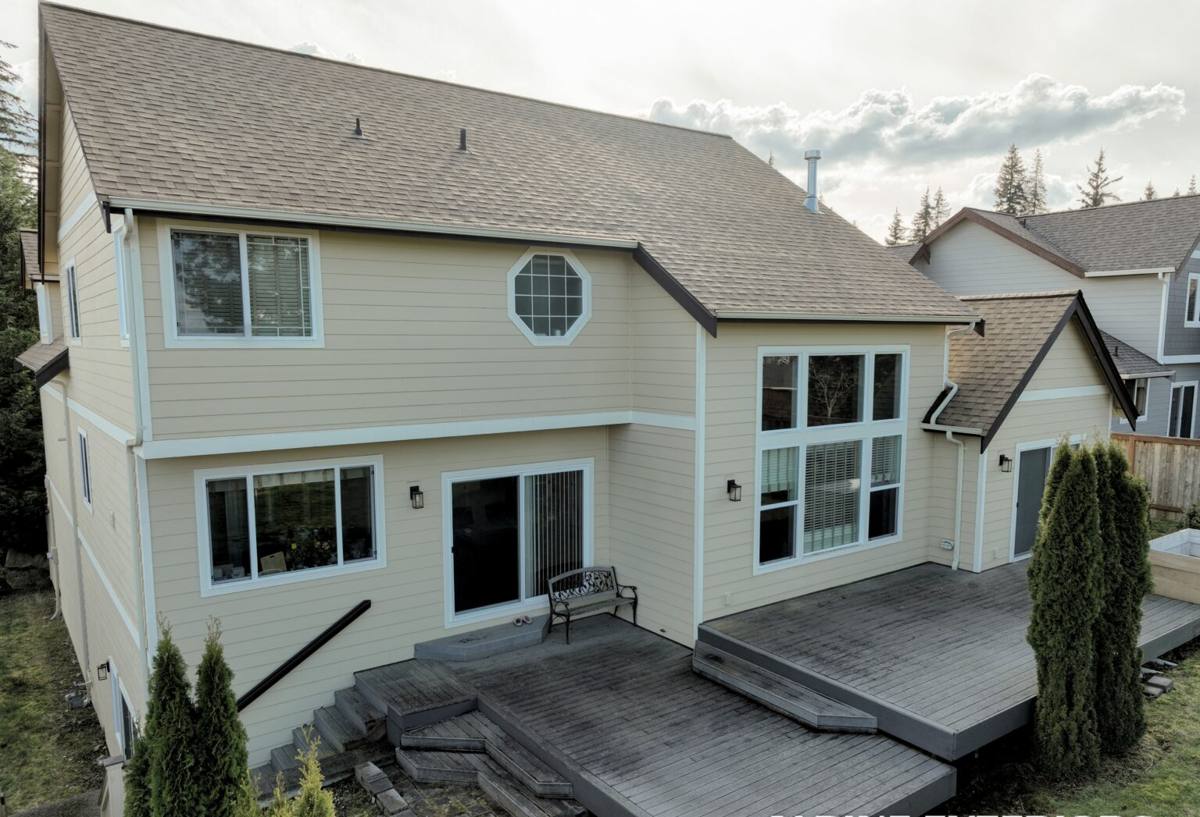
What Whatcom County Weather Does to Siding Over Time
Moisture That Doesn't Let Up
The Pacific Northwest's defining trait isn't just rainfall totals — it's duration. Long stretches of damp, overcast weather mean siding surfaces often don't get a real chance to dry out between rain events. Any product that absorbs moisture, swells, or traps water behind its surface is going to struggle in this pattern, especially on north- and west-facing walls that see the most driving rain and the least direct sun.
Moss, Algae, and Organic Growth
Damp, shaded surfaces in this region grow moss and algae readily, and siding is no exception. Once organic growth takes hold on a porous or textured surface, it holds even more moisture against the wall and accelerates whatever damage is already happening underneath. A siding product's surface finish and paint system matter a lot here — not just for looks, but for how well it resists staining and growth over the years.
Salt Air and Corrosion
During coastal storm systems, salt-laden moisture can travel well inland into Whatcom County, and it accelerates corrosion on fasteners, flashing, and any exposed metal trim. Siding systems that rely heavily on exposed metal components or that aren't engineered with corrosion-resistant fastening in mind tend to show wear faster in this kind of air.
Why We Install James Hardie and Nothing Else
We made a standard years ago to install only James Hardie fiber cement siding, and we don't deviate from it — not vinyl, not LP SmartSide, not cedar, not other fiber cement brands. That's not a marketing position; it's a practical one based on what actually holds up in Whatcom County conditions.
Fiber cement is non-combustible and dimensionally stable — it doesn't expand and contract with moisture and temperature the way wood-based or vinyl products do, which matters when a wall assembly is wet more often than it's dry. James Hardie's ColorPlus factory-applied finish is baked on under controlled conditions rather than field-applied, which gives it better long-term resistance to fading, chipping, and the kind of moss and mildew staining that shows up on lesser finishes in our climate.
James Hardie also engineers specific product lines for different climate zones, and the HZ5 line used throughout the Pacific Northwest is formulated for high-moisture, freeze-thaw-adjacent conditions. That climate engineering is the difference between a product that was designed for this region and one that simply happens to be sold here.
What a Correct Installation Actually Involves
James Hardie siding performs the way it's supposed to only when it's installed to the manufacturer's specifications. A rushed or generic install is one of the most common reasons fiber cement siding underperforms — the product isn't at fault, the installation is. In a climate like Sumas's, these details aren't optional extras; they're what keeps water out of the wall assembly.
- Correct starter strip placement and consistent bottom clearance off grade, decks, and patios so splash-back moisture doesn't wick into the board
- Proper weather-resistant barrier and flashing integration at every window, door, and penetration — this is where most siding failures actually originate
- Manufacturer-specified fastener type, spacing, and penetration depth, chosen with corrosion resistance in mind given the salt-air exposure inland storms bring
- Correct gapping and caulking at butt joints and trim, sized for the way fiber cement expands and contracts seasonally
- Proper flashing and kick-out details above rooflines and at wall-roof intersections, which are common failure points in driving-rain climates
- Field-cut edges sealed or primed per Hardie's specification so raw cut edges aren't left exposed to moisture
Skipping any one of these steps can void the manufacturer warranty and, more importantly, can let moisture into the wall long before the siding itself shows visible wear.
How James Hardie Compares for a Home Like Yours
Homeowners in Sumas often ask us to walk through the honest trade-offs between siding options before committing. Here's how the main choices stack up against the conditions this area actually sees.
| Factor | James Hardie Fiber Cement | Vinyl | Wood / Cedar |
|---|---|---|---|
| Moisture resistance | Engineered for high-moisture climates (HZ5) | Doesn't absorb water, but seams and warping let moisture behind panels | Absorbs moisture readily; prone to rot without diligent upkeep |
| Moss/algae resistance | Factory finish resists staining and growth better over time | Textured surfaces can hold moss; finish fades and chalks | Porous surface is highly prone to moss and mildew |
| Fire resistance | Non-combustible | Combustible, can melt/deform near heat sources | Combustible |
| Finish longevity | Factory-baked ColorPlus, resists fading and chipping | Color is through-body but fades and can become brittle | Requires repainting or restaining every few years |
| Maintenance burden | Low — periodic washing, no repainting cycle | Low, but cracks/warps and can't be easily patched | High — regular sealing, painting, and rot inspection |
This isn't a claim that other products are worthless — vinyl and cedar both have legitimate uses and plenty of homes wear them fine in drier climates. It's simply that, given what Sumas weather does to a wall over 20-plus years, fiber cement engineered for this region gives homeowners the best combination of durability, appearance retention, and low upkeep.
Our Process for Sumas Homes
Assessment and Planning
We start with a walk-around of the home to check the condition of the existing siding, look for signs of moisture intrusion or rot in the sheathing, and evaluate trim, flashing, and window details that will need attention during the reside. This is also when we talk through HZ5 board profiles, textures, and ColorPlus color options.
Preparation
Old siding comes off and we inspect the wall assembly underneath before anything new goes up. Any damaged sheathing or framing gets addressed at this stage — covering over a problem is how moisture issues turn into structural ones later.
Weather Barrier and Flashing
We install or verify the weather-resistant barrier and get flashing details right at every window, door, and penetration before a single piece of siding is hung. In a climate with as much driving rain as ours, this step does more to prevent future problems than the siding itself.
Installation
Boards go up to James Hardie's fastening and clearance specifications, with attention to butt joint gapping, corner details, and trim work. We keep job sites clean and protect landscaping throughout.
Final Walkthrough
We walk the finished job with the homeowner, check caulking and trim lines, and go over basic care so the siding stays looking right for years.
Why Hiring a Crew That Already Works This Area Matters
Correct fiber cement installation isn't intuitive — it's a system with specific tolerances, and a crew that mainly installs vinyl or does general remodel work will often miss the details that matter most in our climate. A crew that regularly works Whatcom County homes already understands how driving rain moves across a typical wall here, where moss tends to establish first, and how to detail flashing so it sheds water instead of trapping it.
That familiarity also shows up in smaller ways: knowing which board textures and colors read well against the region's muted light, understanding realistic timelines around our wetter months, and being straightforward about what a home actually needs versus what's easiest to sell. Siding is a 20-to-30-year decision — the installing crew's experience in this specific climate is part of what you're paying for, not just the material.
Caring for Hardie Siding After Installation
One of the practical advantages of fiber cement in a moss-prone climate is how little upkeep it demands. A yearly rinse with a garden hose (avoiding high-pressure washing directly into seams) keeps most organic growth from taking hold. Trim and caulking should get a visual check each year, particularly after the wet season, and any landscaping that keeps foliage or sprinklers from constantly wetting the siding will extend its finish life. Because ColorPlus is a factory finish rather than field-applied paint, most homeowners never need to repaint it — a real difference from wood siding's recurring maintenance cycle.
If you're weighing a reside or new siding for a Sumas-area home, we're happy to take a look and walk you through what your specific home needs — no pressure, no obligation. Reach out using the form below to schedule a free estimate.