 Lynden
 Deck Building for Sumas Homes
A deck in Sumas has to earn its keep. Whatcom County gives you a real outdoor season, but it also hands you months of standing moisture, low winter sun that never quite dries a shaded deck surface, and the kind of driving rain that finds every gap in flashing, fastening, and framing that wasn't done right the first time. A deck built to a generic spec, without accounting for that, will show it within a few seasons: soft spots, green film on the boards, rust bleeding from fasteners, or a railing post that's gone spongy at the base.
We build decks for homeowners in Sumas and throughout Whatcom County with that reality built into every decision, not bolted on afterward. That means the right footing depth, the right drainage path under and around the structure, the right fasteners, and decking material chosen for how it actually performs here, not just how it looks in a showroom.
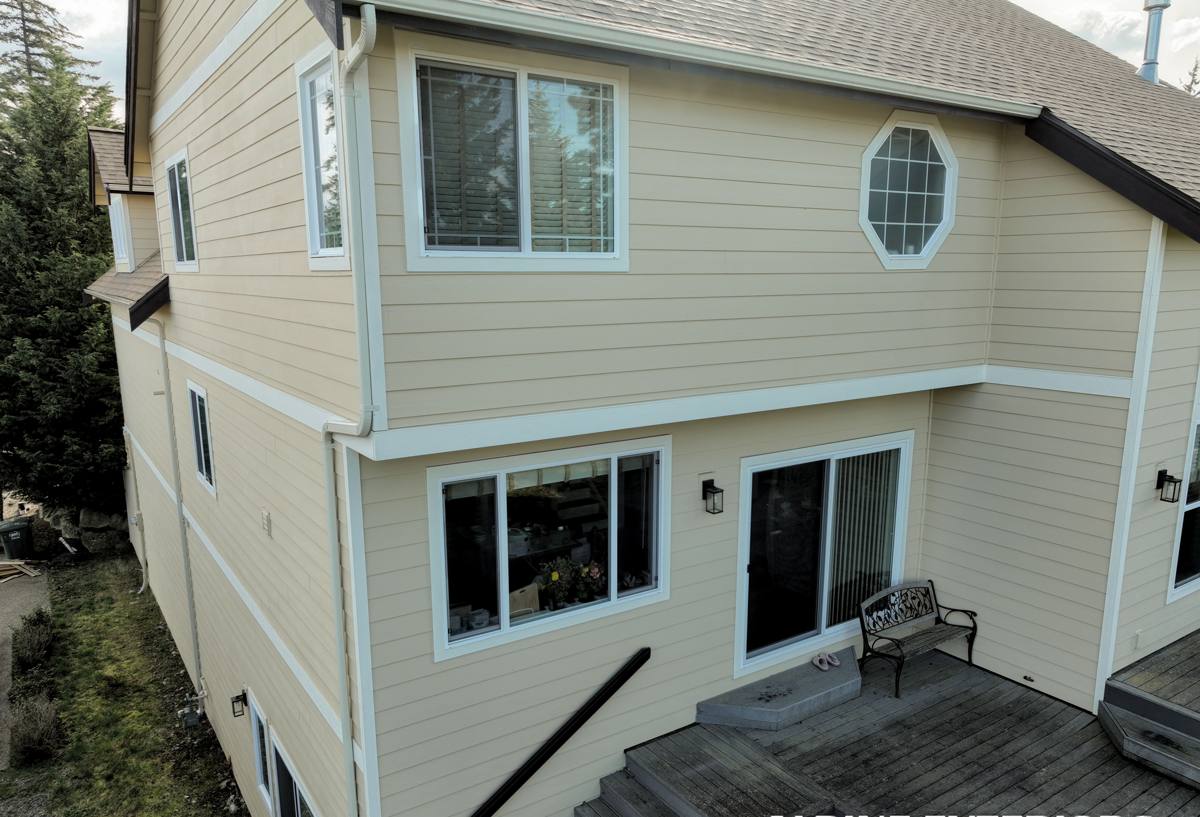
What the Local Climate Does to a Deck Over Time
Three things wear on outdoor structures in this part of Washington, and they compound each other:
Driving Rain
Wind-driven rain doesn't just fall straight down and run off. It gets pushed sideways into ledger connections, under poorly lapped flashing, and into end grain on cut boards that weren't sealed. Once water gets behind or under decking, it doesn't dry quickly in our climate — it sits.
A Long Moss and Algae Season
Shaded decks, north-facing decks, and decks tucked under trees stay damp for long stretches between fall and spring. That's exactly the environment moss, algae, and mildew need to take hold. Left alone, that growth holds moisture against the board surface and turns walking surfaces slick and slippery — a real safety issue on stairs and ramps, not just a cosmetic one.
Marine Air and Moisture Cycling
The moist marine air that moves through Whatcom County keeps humidity elevated even on dry-looking days. Metal fasteners, connectors, and hardware that aren't rated for this kind of persistent moisture exposure corrode faster than homeowners expect, and that corrosion is often hidden under the decking where you won't see it until something fails.
None of this means a deck in Sumas is a losing proposition — it means the build has to plan for it from the footings up.
What a Correctly Built Deck Actually Involves
A lot of what determines whether a deck lasts is invisible once the project is finished. The parts that show — the decking boards, the railing style — matter for looks, but the parts underneath determine whether you're dealing with rot and repairs in five years or twenty-five.
Footings and Framing
Footings need to be set below frost depth and sized for the actual load of the deck, including furniture, hot tubs if applicable, and snow load in a hard winter. Framing lumber should be rated for ground contact or exposure as appropriate, and every cut end — which is where treated lumber loses its protection — should be sealed before installation, not left raw.
Ledger Attachment and Flashing
The ledger board, where the deck attaches to the house, is the single most common failure point on decks nationally, and it's almost always a water intrusion problem. Proper flashing that directs water out and away from the house band joist, correct fastening into structural framing (not just siding), and a small air gap where called for are not optional steps — they're the difference between a deck that stays sound and one that quietly rots the house behind it.
Drainage Beneath the Deck
Water needs somewhere to go. That means grading the ground under the deck away from the house foundation, and on lower decks, sometimes installing a drainage system so the crawlspace underneath doesn't stay a permanent swamp through the wet months.
Fasteners and Hardware
Structural connectors, joist hangers, and fasteners should be corrosion-resistant hardware rated for treated lumber contact and sustained moisture exposure. This is a small line item in a bid and an easy place for a corner to get cut — it shouldn't be.
Choosing a Decking Material for Sumas Weather
There's no single right answer here — it depends on budget, how much maintenance you want to do, and how much shade the deck sits in. We'll walk through the real trade-offs rather than push one product.
| Material | Upfront Cost | Maintenance in This Climate | How It Handles Moss/Moisture |
|---|---|---|---|
| Cedar | Moderate to high | Annual cleaning and re-sealing recommended | Naturally rot-resistant but needs upkeep to stay that way; shaded boards still need scrubbing |
| Pressure-Treated Pine | Lowest | Periodic cleaning, sealing every 1-2 years | Prone to moss and mildew if not maintained; can cup or splinter over time |
| Composite Decking | Higher | Occasional washing, no staining/sealing | Resists rot, but capped composite still needs washing to prevent surface algae in deep shade |
| PVC Decking | Highest | Occasional washing only | Non-porous surface holds up well against moisture and moss, best for heavily shaded decks |
For decks that sit in full sun most of the day, wood remains a reasonable, budget-friendly choice as long as you're willing to maintain it. For north-facing decks, decks under mature trees, or decks near the ground where airflow is limited, we generally steer homeowners toward composite or PVC — not because wood is a bad product, but because the maintenance burden in a low-light, high-moisture spot is a lot to keep up with year after year.
Railings and Fasteners
Whatever decking material you choose, railing posts and hardware deserve the same scrutiny. A beautiful composite deck surface with a rotting wood post base or rusting bracket underneath is a deck that's failed where you can't easily see it.
Our Deck Building Process
- On-site assessment — we look at sun exposure, drainage, existing structure (if replacing a deck), and how the space connects to the house.
- Design and material selection — we walk through layout, decking material, and railing options based on your budget and how much upkeep you want long-term.
- Permitting — we handle the permit application and inspections required for the project so you don't have to chase paperwork.
- Demolition (if replacing) — old decking, framing, and footings are removed and the site is checked for hidden rot or damage before rebuilding.
- Framing and structural work — footings, ledger attachment, flashing, and framing go in first, built to hold up through the wet season, not just pass inspection.
- Decking, railing, and finish work — surface material and railings are installed, fasteners set correctly, and everything is cleaned up.
- Final walkthrough — we go over the finished deck with you, including basic maintenance guidance specific to the material you chose.
Permits and Building Considerations
Most new decks and significant deck replacements require a permit, with specifics depending on deck height, size, and whether it's attached to the house. Requirements can differ slightly whether a property falls under Whatcom County or within Sumas city limits, and we confirm the correct jurisdiction and requirements for your specific address before work starts rather than assuming. Skipping this step is a common way homeowners end up with issues at resale or insurance time.
Why Hire a Crew That Already Works in Sumas
A deck built to a spec sheet written for a dry climate is a deck built wrong for here. Crews that regularly work in Whatcom County know which details actually matter locally: how deep footings need to sit, which flashing details hold up against sideways rain, which decking performs in a shaded, moss-prone spot versus a sun-exposed one, and which local permitting office to talk to for your address. That local repetition is what keeps small details — the ones that determine whether a deck lasts eight years or twenty-five — from getting missed.
It also means faster, more accurate estimates. We're not guessing at how this region's rain and moss season will treat a given material or design — we've seen it play out on other decks nearby.
Questions to Ask Before Hiring a Deck Builder
- Are you licensed, bonded, and insured in Washington, and can I see proof?
- Will you pull the permit, or is that left to me?
- What footing depth and fastener hardware do you use, and why?
- How do you handle ledger board flashing where the deck meets the house?
- What decking material do you recommend for my deck's sun exposure, and why?
- What does routine maintenance look like for the material we choose?
- What's included in the written estimate, and what would trigger a change order?
Getting Started
If you're planning a new deck or need to replace one that's showing its age in Sumas, we're happy to come take a look and talk through what your specific site needs — sun exposure, drainage, and material options included. There's a form below to request a free, no-pressure estimate.