 Lynden
 Why Bellingham-Area Homes Put Extra Demands on a Siding Job
Homes in and around Bellingham sit in one of the more punishing exterior environments in Western Washington. You've got proximity to Bellingham Bay and the Salish Sea putting salt-laden air on exterior walls, a wet season that runs long even by Pacific Northwest standards, and wind-driven rain that doesn't just fall straight down — it gets pushed sideways into wall assemblies during winter storms. Any one of those factors would be worth planning around. Together, they mean a siding installation that would hold up fine in a drier inland climate can fail early here if it isn't built for this specific mix of conditions.
Salt Air and Marine Exposure
Airborne salt accelerates corrosion on fasteners, flashing, and any metal trim components, and it can also contribute to premature breakdown of paint films and lower-grade siding materials over years of exposure. This isn't unique to waterfront lots — salt-laden marine air travels well inland on prevailing winds, so homes several miles from the water still see some of this effect, just at a slower pace.
Driving Rain and Wind-Driven Moisture
Whatcom County storms frequently arrive with real wind behind them, which pushes rain up under laps, into seams, and against wall penetrations rather than letting it simply run off a vertical surface. Siding and the water-management system behind it both have to account for that lateral pressure, not just gravity-fed drainage.
Moss, Mildew, and the Long Wet Season
Bellingham's wet season stretches long, and shaded north- and west-facing walls in particular stay damp for extended stretches. That's ideal growing conditions for moss, algae, and mildew on any siding surface that holds moisture or has a porous, paintable finish. Over time, organic growth traps additional moisture against the wall and can accelerate wear on materials that aren't built to shed water quickly.
What a Correct Siding Installation Actually Involves
The siding boards themselves get most of the attention, but the materials and details underneath are what actually determine whether a wall stays dry for decades or starts showing problems in five to eight years. A correct installation in this climate includes several layers working together.
Weather-Resistive Barrier and Rain Screen
A properly lapped weather-resistive barrier goes on before any siding, and in high-exposure applications a rain screen gap — a thin drainage space between the barrier and the siding — gives any moisture that does get past the cladding a path to drain and dry out instead of sitting against the wall sheathing.
Flashing and Water Management Details
Windows, doors, deck ledgers, and any other wall penetration are where the majority of siding failures actually originate, not the field of the wall itself. Correct flashing at these transitions — installed in the right shingle-lap order so water is always directed outward and downward — is non-negotiable in a climate with this much wind-driven rain.
Fastening and Manufacturer Specs
Fiber cement siding has specific fastener type, spacing, and clearance requirements from the manufacturer. Corrosion-resistant fasteners matter more here given the salt air exposure discussed above, and correct nailing patterns are also what keep a manufacturer's warranty valid if a claim is ever needed.
Why We Install Only James Hardie Fiber Cement
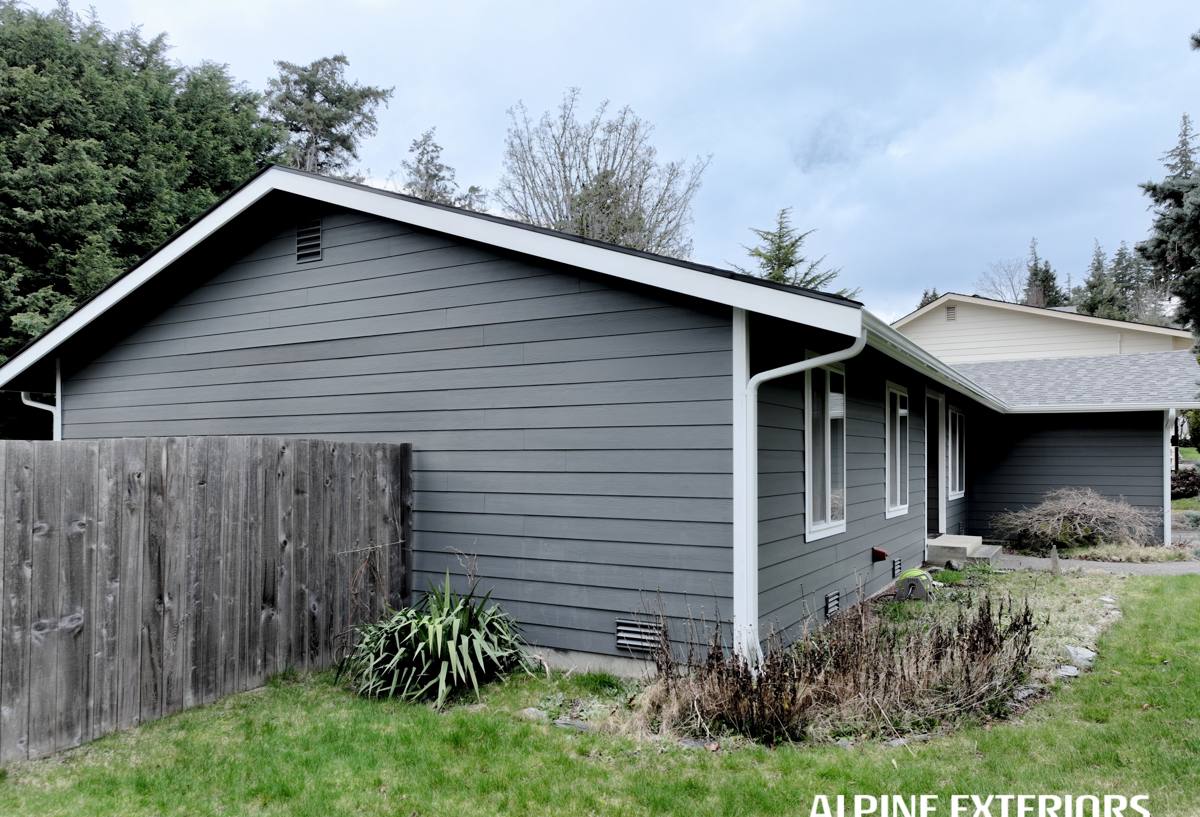
We standardized on James Hardie fiber cement siding for every installation we do, including Bellingham-area homes, and we don't install vinyl, LP SmartSide, or other fiber cement brands. That's a deliberate professional standard, not a sales preference.
James Hardie's HZ5 product line is engineered specifically for climates like this one — cold, wet, and humid — with a formulation designed to resist moisture-related damage better than standard fiber cement. The material is non-combustible, which matters increasingly to insurers and homeowners alike. The factory-applied ColorPlus finish is baked on under controlled conditions rather than field-painted, which gives it more consistent coverage and better fade and moisture resistance than a site-applied coat, and it's backed by a substantial finish warranty separate from the product warranty on the board itself. For a wall that's going to face salt air, sideways rain, and months of damp shade every year, we think that combination of engineering and finish durability is what actually holds up — and we'd rather stand behind one product system we know well than install several we have reservations about.
Our Installation Process for Bellingham Homes
- Assessment and measurement. We walk the exterior, check existing sheathing and framing condition where accessible, and note exposure levels on each elevation — south and west walls generally take more weather than north and east.
- Removal of old siding. Old cladding comes off and the sheathing underneath gets inspected for rot, soft spots, or prior water damage before anything new goes on.
- Repair of any underlying damage. Damaged sheathing or framing is repaired or replaced. Covering up a compromised wall with new siding just hides a problem that keeps getting worse.
- Weather-resistive barrier and drainage plane installation. Barrier is lapped correctly, and a rain screen gap is installed where the wall's exposure warrants it.
- Flashing at every penetration. Windows, doors, vents, and other penetrations get flashed in proper sequence before siding goes over them.
- James Hardie panel or lap installation. Installed to manufacturer fastening specifications, with correct clearances at grade, roofline, and trim.
- Trim, caulking, and final detailing. Trim is fitted and sealed at transition points, and the job is walked for quality before we call it done.
- Final walkthrough with the homeowner. We go over what was done and what maintenance, if any, to expect going forward.
Signs Your Current Siding Is Already Struggling With This Climate
Homeowners in the Bellingham area often reach out after noticing one or more of the following:
- Persistent moss or dark streaking on north- or west-facing walls that comes back soon after cleaning
- Visible warping, buckling, or gapping at siding seams
- Soft or spongy spots when pressing on the siding near the base of the wall
- Paint that's peeling, bubbling, or needing repainting far more often than expected
- Staining or discoloration around windows and doors, which often points to a flashing problem rather than a siding problem
- Rusting fasteners or trim visible on the exterior
Any of these is worth a professional look before it turns into a sheathing or framing repair, which costs considerably more than a siding-only job.
Cost Factors to Understand
Every home is different, and we don't quote prices without seeing the job, but these are the main variables that drive cost on a Bellingham-area siding installation:
| Factor | Why It Matters |
|---|---|
| Home size and wall complexity | More square footage and more corners, gables, and trim details mean more labor and material |
| Condition of existing sheathing | Rot or water damage found during tear-off adds repair scope before new siding can go on |
| Siding profile chosen | James Hardie lap, shingle, and panel profiles vary in material and installation labor |
| Rain screen requirement | High-exposure elevations often warrant a drainage gap, which adds a step but pays off in longevity |
| Trim and detail work | Window and door surrounds, corner boards, and fascia detailing add time relative to a plain flat wall |
| Access and site conditions | Multi-story walls, tight lot lines, or difficult staging can affect labor time |
Why Hiring a Crew That Already Works This Area Matters
Siding installation isn't a generic process you can apply the same way everywhere. A crew that regularly works Whatcom County walls already knows which elevations on a typical Bellingham-area home take the worst of the weather, understands how much rain screen detailing a given exposure level actually needs, and isn't guessing at flashing sequence on a wet-season install. That local pattern recognition is part of what separates a siding job that lasts twenty-plus years from one that starts showing problems within the first decade.
When you're vetting a siding contractor for a Bellingham-area home, a few things are worth checking:
- Manufacturer training or certification for the specific siding product being installed
- Willingness to explain their flashing and water-management approach in plain terms, not just the visible siding choice
- A written scope that specifies fastener type, weather barrier product, and whether a rain screen gap is included
- Proper licensing and insurance for exterior work in Washington State
- A clear plan for what happens if sheathing damage is found once old siding comes off
Maintenance After Installation
A correctly installed James Hardie siding system is low-maintenance, but "low" isn't "zero" in this climate. We recommend an annual visual check for moss buildup on shaded walls, keeping gutters and downspouts clear so water isn't overflowing onto siding below the roofline, and a periodic gentle rinse to keep salt residue and organic growth from accumulating. None of this requires repainting on any regular schedule thanks to the factory finish, which is one of the practical advantages of going with a factory-coated product in a climate that's this hard on paint.
If you're weighing a siding replacement or repair for a home in the Bellingham area, we're happy to take a look and walk you through what your specific walls need. Reach out for a free, no-pressure estimate — there's a form right below to get started.