 Lynden
 A Roof Built for Nooksack's Weather, Not a Generic One
Nooksack sits in the part of Whatcom County where marine air off the Salish Sea meets the Nooksack River valley — the result is a long wet season, heavy tree cover in a lot of yards, and roofs that stay damp far more of the year than homeowners moving in from drier climates expect. Salt-tinged air, driving rain that comes in sideways during winter windstorms, and a moss season that can run eight months or more all put specific demands on a roof system that a generic installation doesn't account for. A new roof here isn't just shingles and nails — it's decking, underlayment, flashing, and ventilation all working together to shed water fast and stay dry underneath.
We install roofs across Lynden and the surrounding Whatcom County communities, including Nooksack, and we build every one assuming it will spend its life wet, shaded, and occasionally battered by wind-driven rain. That assumption changes real decisions on the job — where we add extra underlayment, how we detail valleys and penetrations, and which materials we recommend first.
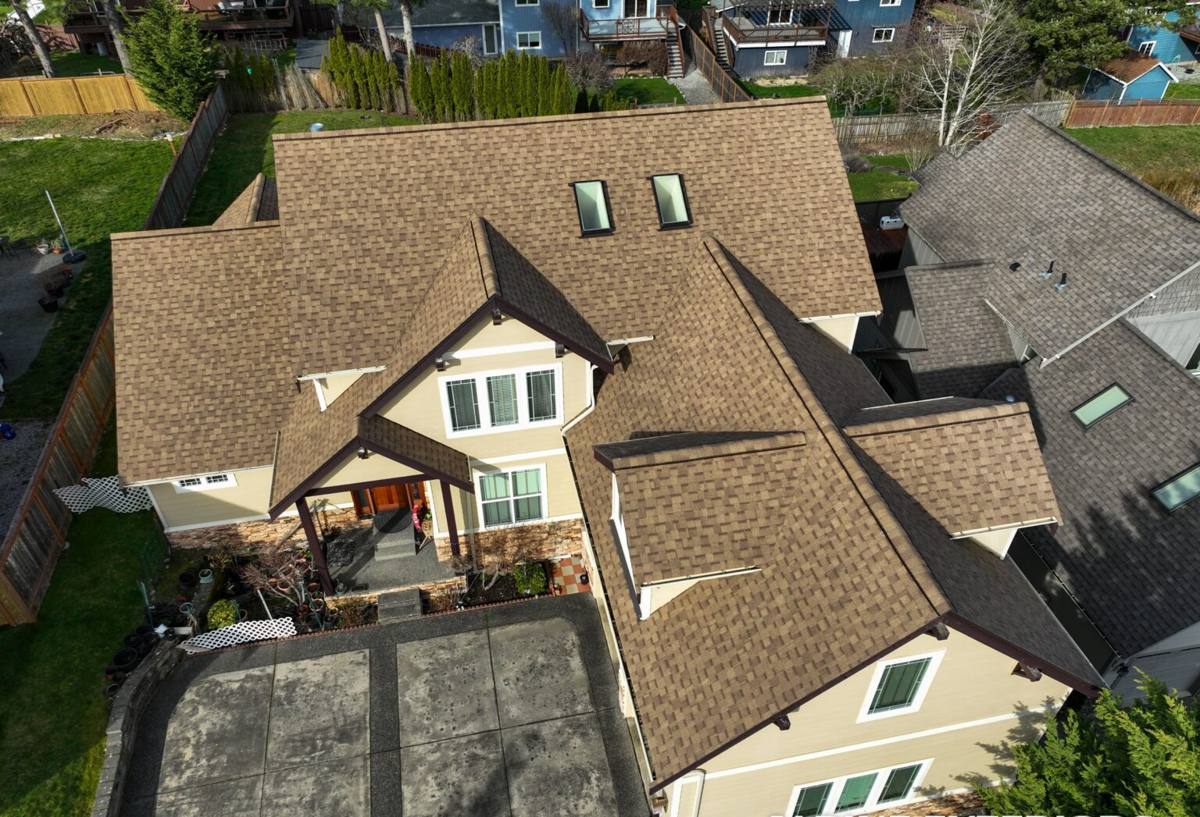
What a Correct New Roof Installation Actually Involves
A roof replacement is only as good as what's underneath the shingles. Skipping steps here doesn't show up on day one — it shows up as a leak two or three winters later, usually after the original crew is long gone. A correct install includes:
- Full tear-off to bare decking, not a layover, so we can actually see the condition of the roof underneath
- Inspection and replacement of any soft, delaminated, or water-stained sheathing before anything new goes down
- Ice-and-water shield membrane at eaves, valleys, and around every penetration — the areas that take the most standing water and wind-driven rain
- Synthetic underlayment across the full field for a secondary water barrier, since shingles alone are not a waterproofing system
- New flashing at chimneys, walls, skylights, and roof-to-wall transitions — reused flashing is one of the most common causes of early leaks
- Balanced intake and exhaust ventilation, sized to the attic, not just a ridge vent added as an afterthought
- Proper starter strip, nailing pattern, and exposure per manufacturer specification, not shortcuts to save time
Every one of these steps matters more in a climate that stays wet for months at a time than it would somewhere dry. Moisture that gets past a shortcut here doesn't dry out quickly in Whatcom County — it sits.
Roofing Material Options for Nooksack Homes
There's no single "best" roofing material for every house — it depends on tree cover, roof pitch, budget, and how long you plan to stay in the home. Here's how the common options compare for a property dealing with regular rain and moss pressure:
| Material | Moss Resistance | Typical Lifespan | Best Fit |
|---|---|---|---|
| Standard architectural asphalt shingle | Moderate — needs periodic cleaning | 25-30 years | Most homes, good value |
| Algae/moss-resistant shingle | Higher — embedded granules slow growth | 25-30 years | Shaded lots, north-facing roofs |
| Standing seam metal | High — smooth surface sheds debris and moisture fast | 40-50+ years | Steep pitches, long-term owners |
| Synthetic/composite shake | Moderate to high depending on product | 30-40 years | Homes wanting a shake look with less maintenance |
For a lot with heavy overhead tree cover — common around Nooksack's more rural properties — we'll often steer the conversation toward algae-resistant shingles or metal, simply because the maintenance burden of a standard shingle roof under constant shade is real. That's a professional recommendation based on moisture behavior, not a knock on standard shingles, which perform fine on roofs that get regular sun and airflow.
Why We Don't Push One Product on Every Roof
Every material on that table has trade-offs in cost, installation sensitivity, and appearance. A steep, shaded roof with a lot of valleys benefits from different detailing than a simple, sun-exposed gable. Part of our job is matching the material and installation approach to your specific roof, not selling whatever is easiest to install.
Ventilation and Moisture Control — The Part You Don't See
In a climate where the roof deck rarely gets a long stretch to fully dry out, attic ventilation stops being optional. Warm, moist air from inside the house rises into the attic; if it can't escape through balanced soffit intake and ridge or roof-vent exhaust, it condenses on the underside of the decking. Over a few winters, that trapped moisture can rot sheathing from the inside — a problem that has nothing to do with the shingles above it and everything to do with airflow.
When we install a new roof, we check that intake and exhaust are actually balanced, not just present. A ridge vent with blocked or undersized soffit intake does very little. This is one of the most overlooked parts of a roof job, and it's also one of the cheapest problems to fix correctly during a full tear-off, when the decking is already exposed.
Building Moss Resistance Into the Install
Moss doesn't just sit on top of a roof looking unsightly — its root structure lifts shingle edges and holds moisture against the surface, which shortens the life of the roofing material underneath it. On shaded lots around Nooksack, moss pressure is a normal fact of life, not a sign anything was done wrong. A few things we build into the installation to reduce it:
- Zinc or copper strips installed near the ridge, which release trace metal ions that inhibit moss and algae growth as rain washes over them
- Algae-resistant shingle selection on roofs with heavy shade exposure
- Clean, tight flashing and valley work so debris and needles have fewer places to collect and hold moisture
- A straightforward recommendation on tree trimming where overhanging limbs keep a section of roof shaded and damp year-round
None of this makes a roof moss-proof forever — regular gentle cleaning is still part of ownership here. But a well-detailed install meaningfully slows how fast moss becomes a problem again.
Our Process, Start to Finish
- On-site inspection and estimate — we look at your current roof, attic ventilation, and any trouble spots before quoting anything
- Material selection — we walk through the options that make sense for your roof's pitch, shade, and budget
- Scheduling around the weather — we plan installs for realistic dry windows and keep materials protected if conditions shift mid-job
- Tear-off and deck inspection — old roofing comes off completely so we can see and address any deck damage
- Underlayment, flashing, and ventilation install — the water-management layer goes in before a single shingle is laid
- Roofing material installation — installed to manufacturer specification for nailing pattern, exposure, and fastening
- Cleanup and final walkthrough — magnetic sweep for stray nails, debris haul-off, and a walk of the finished roof with you
Why Hiring a Crew That Already Works Nooksack Matters
A roofing crew that works Whatcom County regularly already knows what a Nooksack roof is up against — the wet-season scheduling realities, the moss pressure on shaded rural lots, and the driving-rain flashing details that a crew from a drier region might not think to prioritize. We're not learning the local climate on your roof; we're applying what we already know from working on homes like yours throughout Lynden and the surrounding area.
Local also means we're easy to reach after the job is done. If a question comes up during the first hard rain of the season, you're calling a crew that's still nearby, not chasing down a company that only worked in your area for one job.
Signs Your Nooksack Home Needs a New Roof, Not Another Repair
- Shingles that are curling, cracking, or losing significant granule coverage across large sections
- Daylight visible through the roof deck from inside the attic
- Repeated leaks in different spots each winter, rather than one isolated issue
- Sagging rooflines or soft spots you can feel underfoot on the deck
- A roof approaching or past 20-25 years old with no major upgrades to underlayment or ventilation
- Heavy, persistent moss growth that keeps returning within a season of cleaning
If you're only seeing one or two of these and the roof is otherwise sound, a repair may genuinely be the right call — we'll tell you that honestly rather than push a full replacement you don't need yet.
What Influences the Cost of a New Roof
| Factor | Why It Matters |
|---|---|
| Roof size and pitch | Steeper, larger roofs take longer and require more safety setup |
| Number of layers to remove | Tearing off multiple old layers adds labor and disposal cost |
| Decking condition | Rotted or soft sheathing needs replacement before new roofing goes on |
| Material choice | Standard shingle, algae-resistant shingle, metal, and composite all price differently |
| Roof complexity | Valleys, dormers, chimneys, and skylights each add flashing and labor time |
| Access | Steep sites or limited driveway access can affect equipment and staging |
We'll walk through all of this at the estimate stage so you know exactly what's driving the number, rather than a flat quote with no explanation behind it.
If your Nooksack-area roof is showing its age or you just want an honest read on whether repair or replacement makes sense, we're happy to come take a look. The estimate is free, there's no pressure, and you'll get a straight answer either way.