 Lynden
 Decking Built for the Nooksack Side of Lynden
Nooksack sits close enough to the river bottoms and open farmland east of Lynden that decks here see a slightly different weather pattern than decks tucked into town. Cold air settles in the low ground near the river, moisture lingers longer under tree cover, and the wind off the valley carries rain sideways during the worst of our fall and winter storms. Add in the marine influence that reaches this far inland from Puget Sound and Bellingham Bay, and you've got a climate that is genuinely hard on outdoor wood surfaces. Composite decking was built for exactly this kind of exposure, and we've installed enough of it around Nooksack and the rest of Whatcom County to know what actually holds up here versus what looks good in a showroom.
This page covers composite decking specifically for the Nooksack area — what the local climate does to a deck over time, what a correctly built composite deck involves, and how our process works from first call to final walkthrough.
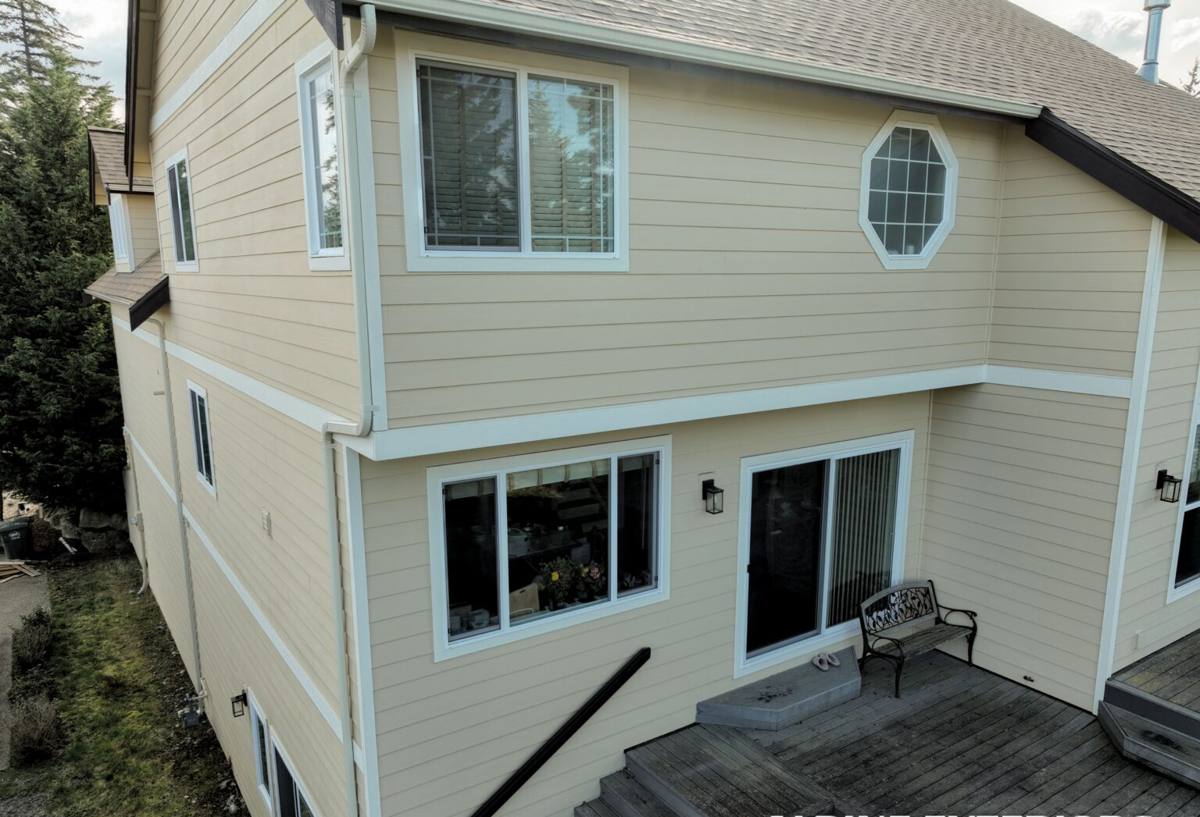
What Whatcom County Weather Does to a Deck
Homeowners who've lived here a while already know the short version: it rains a lot, it stays damp even when it isn't raining, and moss finds a way onto anything that sits still. Here's the longer version, broken down by what it actually does to decking materials.
Salt Air and Moisture Combined
Nooksack isn't beachfront, but Whatcom County's proximity to Puget Sound and Bellingham Bay means a steady low-level salt content in the air, especially when westerly winds push moist marine air inland. On its own, salt air is mostly a metal-fastener problem. Combined with our nine-plus months of damp weather, it becomes a wood-fiber problem too — salt-laden moisture works into end grain and fastener holes faster than plain rainwater does, which is part of why untreated or poorly sealed wood decking ages faster here than it would in a drier inland climate.
Driving Rain and Standing Water
Fall and winter storms in this part of the county don't just rain straight down — wind-driven rain gets up under railings, into board gaps, and against the house-side ledger board where a deck attaches to the structure. That ledger connection is one of the most common failure points we find on older decks, because it's the hardest spot to keep dry and the easiest to overlook during a quick refinish job.
The Long Moss Season
Moss doesn't need much — shade, moisture, and time. Nooksack's tree cover and the valley's tendency to hold morning fog give moss plenty of both. On a wood deck, moss traps moisture directly against the board surface, which accelerates rot from the top down, not just from underneath. On composite decking, moss is mostly a surface and traction issue rather than a structural one, but it still needs the right board profile and periodic cleaning to keep from becoming a slip hazard.
Why Composite Makes Sense for This Property Type
A lot of homes around Nooksack sit on larger lots with mature trees, which means partial shade on at least part of the deck for much of the day. That shade is exactly the condition that shortens the life of a wood deck and extends the growing season for moss and algae. Composite decking doesn't stop moss from landing on it, but it doesn't feed rot the way wood fiber does, and it doesn't need annual staining to keep moisture out of the board itself. For a property that already has enough shade and moisture working against it, that's a meaningful maintenance reduction, not just a marketing point.
What a Correct Composite Deck Build Actually Involves
Composite boards get most of the attention, but the boards are only part of what makes a deck last in this climate. The framing, fastening, and drainage details underneath matter just as much — arguably more, since that's the part you can't see and can't easily fix later without tearing into the deck.
Substructure and Framing
We frame with the board manufacturer's spacing requirements in mind, not generic lumber-deck spacing. Composite boards flex and expand differently than wood, and joist spacing that's fine for a cedar deck can lead to bounce or premature sagging under a composite board that isn't rated for wider gaps. We also use joist tape or an equivalent moisture barrier on top of the framing — a cheap step that keeps standing water off the joists themselves, which matters a lot in a climate where the framing rarely gets a chance to fully dry out between rain events.
Fasteners and Hardware
Given the salt content in the air here, we use fasteners and structural hardware rated for coastal or high-moisture exposure — stainless steel or coated hardware, not standard galvanized, on anything that will see sustained moisture contact. This is a small cost difference at build time and a real difference in how the deck holds up ten years out.
The Ledger Board Connection
Since this is where most wind-driven rain problems start, we flash the ledger connection properly with flashing that directs water away from the house band board, not just a bead of caulk. This is code-required in most jurisdictions for good reason — it's also the single detail most likely to be done wrong or skipped on a fast, cheap deck job.
Drainage and Airflow Underneath
A deck that traps moisture underneath stays damp longer after every storm, which shortens the life of everything above it. We grade and plan for airflow under the deck where the site allows it, and we avoid designs that trap water against the house foundation or create low spots where water pools against framing.
Composite vs. Wood vs. PVC: An Honest Comparison
There's no single "best" decking material — there's the right material for a given budget, site, and maintenance appetite. Here's how the three most common options stack up for a Nooksack-area property specifically.
| Factor | Wood (Cedar/Treated) | Composite | PVC |
|---|---|---|---|
| Moisture resistance in this climate | Moderate — needs annual sealing | Strong — engineered for wet exposure | Very strong — fully synthetic |
| Moss/algae resistance | Low — feeds growth if untreated | Moderate to good — board-dependent | Good — nonporous surface |
| Upfront cost | Lowest | Mid-range | Highest |
| Annual maintenance | Staining/sealing, moss treatment | Occasional wash | Occasional wash |
| Typical lifespan here | 10-15 years with upkeep | 20-25+ years | 25-30+ years |
| Feel underfoot | Natural, warms/cools with weather | Natural-leaning, stays cooler than PVC | Can feel more synthetic |
Composite tends to be the sweet spot for most Nooksack homeowners: real moisture and moss resistance without the top-tier cost of full PVC, and none of the annual sealing cycle that wood demands.
What to Check in a Composite Board Before You Commit
Not all composite decking is built the same, and the difference shows up after five or six wet seasons, not in the first year. A few things worth asking about before choosing a product:
- Is the board capped (a protective shell around the whole board) or uncapped composite? Capped boards resist moisture absorption and staining significantly better in a climate this wet.
- What's the manufacturer's warranty against moisture damage, fading, and staining — and does it cover the whole board or just the surface?
- What's the board's slip rating? With a long moss and rain season, surface texture matters more here than in a drier climate.
- How does the color hold up under our low-angle winter light and near-constant cloud cover? Darker boards can look great initially but show pollen, dust, and water spotting differently than lighter tones.
- What hidden fastener system does the board use, and is it rated for the board's expansion and contraction range?
Our Process, Start to Finish
We keep the process straightforward because a deck project doesn't need to be complicated to be done right.
- On-site assessment. We look at the existing structure (if any), the site's sun and shade pattern, drainage, and how the deck ties into the house.
- Material walkthrough. We go over composite board options and pricing tiers honestly, including trade-offs, so you're picking based on your budget and how you'll use the space — not a sales pitch.
- Permitting. Most deck rebuilds and new builds in Whatcom County require a permit; we handle that process as part of the job.
- Demo and framing. If it's a rebuild, we assess the existing framing rather than assuming it's reusable — a lot of older decks around here have ledger or joist issues hidden under the old boards.
- Installation. Framing, moisture barrier, fastening, board installation, and railing/stair work to code.
- Final walkthrough. We go over the finished deck with you, including basic care and what to expect from the material over time.
Keeping a Composite Deck in Good Shape Locally
Composite decking is genuinely lower-maintenance than wood, but "low-maintenance" isn't "no-maintenance," especially with our moss season. A simple seasonal checklist keeps a composite deck performing the way it's supposed to:
- Sweep debris and fallen leaves off the deck regularly in fall — trapped organic matter is what feeds moss and algae growth on any surface.
- Wash the deck once or twice a year with a mild soap and soft-bristle brush; avoid pressure washing at close range, which can damage the board's protective cap layer.
- Keep gutters and downspouts near the deck clear so runoff isn't dumping directly onto or under the deck surface.
- Check railing posts and stair connections annually for movement — hardware can loosen over time even when the boards themselves show no wear.
- Trim back overhanging branches where practical to reduce shade and speed up drying time after storms.
Why a Crew That Already Works Nooksack Matters
Building a deck that holds up here isn't about knowing decking in general — it's about knowing what this specific stretch of Whatcom County does to a deck over a full year of seasons. A crew that's already worked properties around Nooksack knows which framing details matter most given the local moisture pattern, has a feel for how the valley's shade and fog affect drying time, and isn't guessing at fastener and flashing choices based on a drier climate's standard practices. That local experience shows up in the details that don't get noticed until years later — the ledger flashing that never leaked, the joist spacing that never bounced, the hardware that never rusted through.
If you're planning a new composite deck or replacing an aging wood deck near Nooksack, we're happy to come take a look and give you an honest read on your site, your options, and what it'll actually take to do the job right. Reach out for a free, no-pressure estimate using the form below.