 Lynden
 Why Roof Repair Looks Different in Maple Falls
Maple Falls sits back in the forested foothills of Whatcom County, closer to the mountains than the open water, but that doesn't spare it from the same weather patterns that shape roofing decisions across the rest of the county. Humid marine air still pushes inland and settles in under heavy tree cover, winter storms still drive rain sideways instead of straight down, and the mix of shade, moisture, and mild temperatures adds up to one of the longer moss seasons in the region. A roof repair here has to account for all three at once, not just patch whatever's visibly wrong and move on to the next job.
This page covers what actually goes wrong with roofs in Maple Falls, how to tell a genuine repair from a roof that's really telling you it needs replacement, what a correct repair involves, and why hiring a crew that already works this community — rather than one learning the terrain on your roof — makes a real difference in how long the fix actually holds.
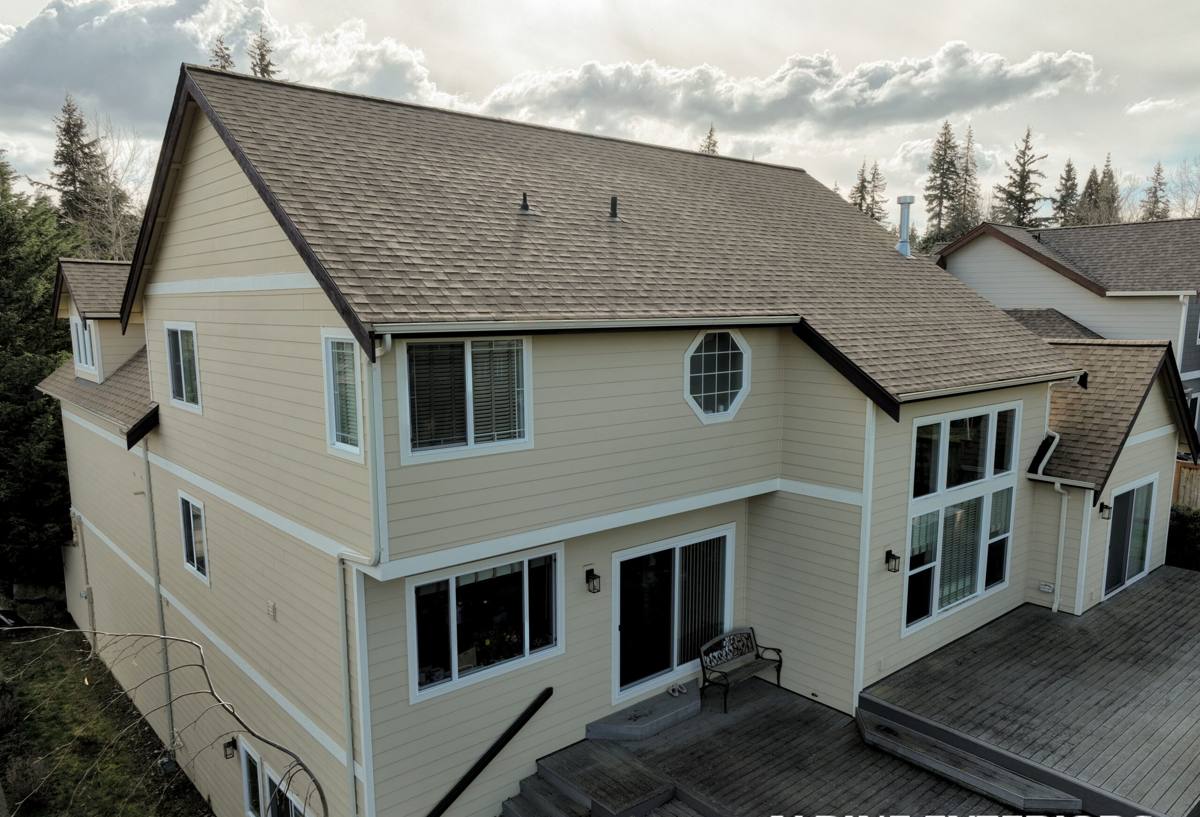
What Actually Damages Roofs in Maple Falls
Moss and Heavy Tree Cover
The tree canopy that makes Maple Falls a nice place to live is also the reason roofs here hold moisture longer than roofs on open, sun-exposed lots elsewhere in the county. Shaded, north-facing slopes stay damp for weeks after a storm passes, and that dampness is exactly what moss needs to take hold. Once moss establishes itself, it doesn't just sit on the surface — it works under shingle tabs and holds water against the roofing material, which is where granule loss, lifted shingles, and eventually leaks start.
Driving Rain and Flashing Failures
Winter storms in this part of the county don't drop rain straight down. Wind pushes it sideways and up under shingle edges, flashing laps, and anywhere else a rushed installation left a gap. Most leaks we find on repair calls don't start out in the open field of the roof — they start at a valley, a chimney, a skylight curb, or a wall intersection where flashing wasn't lapped or sealed correctly the first time around.
Marine Air and Metal Corrosion
Even set back from the water, this region gets enough humid marine air moving through to accelerate corrosion on undersized or lower-grade fasteners and flashing metal over time. Paired with the extra moisture that shade and moss already hold against the roof, corroded metal is a common hidden cause behind leaks that seem to come from nowhere.
Debris From Surrounding Trees
Needles, leaves, and small branches collect in valleys and behind chimneys faster on a heavily treed lot than on an open one. Left alone, that debris holds moisture directly against the roofing material and clogs the paths that are supposed to carry water off the roof, which turns an ordinary rain event into standing water in exactly the spots most prone to leaking.
Repair or Replace: Reading the Signs Correctly
Not every roof problem in Maple Falls means a full replacement, and not every roof that looks rough from the ground is actually in trouble structurally. Telling the two apart correctly is the first real job of an honest repair estimate.
| Symptom | Usually a Repair | Often Points to Replacement |
|---|---|---|
| Isolated moss on one slope | Yes — treat and clean | Only if shingles underneath are already lifted or brittle |
| Single active leak at a flashing point | Yes — targeted flashing repair | Rare, unless surrounding shingles are failing too |
| Granule loss concentrated in one area | Often — depends on shingle age | Yes, if granule loss is widespread across the roof |
| Soft spot in the decking | Sometimes — if localized | Yes, if soft spots show up in multiple areas |
| Curling or cracking shingles across most slopes | Rarely | Usually — a sign the roof is near the end of its service life |
| Water staining that keeps reappearing after a repair | No | Yes — points to a larger underlying issue |
A roof that's otherwise sound with one or two isolated problems is a strong repair candidate. A roof showing the same kind of damage in multiple places, especially damage tied to age rather than a specific failure point, is usually telling you it's closer to the end of its practical life.
How We Diagnose a Roof Before We Recommend Anything
A repair estimate is only as good as the inspection behind it. Before we recommend a scope of work, we typically check:
- The attic or roof deck from underneath for water staining, damp insulation, or daylight showing through gaps
- Every valley, chimney, skylight curb, and wall intersection, since these are where most leaks actually originate
- Shingle condition on shaded and north-facing slopes specifically, where moss and moisture do the most damage
- Flashing metal for corrosion, loose fasteners, or failed sealant at penetrations
- Gutters and valleys for debris buildup that's holding water against the roof
- Attic ventilation, since poor airflow underneath the deck accelerates moss growth and shingle deterioration from below
We walk through what we find honestly, including when the answer is that a roof doesn't need much beyond routine moss treatment and gutter cleaning.
What a Correct Repair Actually Involves
Fixing the Cause, Not Just the Symptom
A leak stain on the ceiling is a symptom. The cause is almost always somewhere else — a failed flashing lap, a cracked pipe boot, moss holding water against a shingle edge. A repair that patches the visible spot without correcting what's actually letting water in tends to resurface in the same place, usually sooner than expected.
Flashing Work Done to the Same Standard as New Construction
When we repair or replace flashing at a valley, chimney, or wall intersection, it's lapped, sealed, and integrated with the underlayment the way it should have been the first time, not caulked over as a shortcut. Caulk is a maintenance item, not a flashing repair, and treating it as one is one of the most common reasons a leak comes back within a season or two.
Matching Shingle Type and Color Where Possible
Spot repairs work best when the replacement shingles match what's already on the roof in profile and, as closely as possible, in color. Older roofs can make an exact match difficult once a shingle line is discontinued, and we'll tell you upfront if that's the case rather than after the repair is done.
Moss Treatment That Addresses the Roof, Not Just the Surface
Killing visible moss without addressing the shade, debris buildup, or ventilation issue that let it establish in the first place is a short-term fix. A correct moss treatment removes what's there without damaging the shingle surface and pairs it with recommendations — gutter cleaning frequency, trimming overhanging branches where that's the homeowner's option — that actually slow regrowth.
Repair Cost Factors
| Factor | What It Affects |
|---|---|
| Number and location of problem areas | Whether the job is one targeted repair or several smaller ones across the roof |
| Flashing scope | Complexity of properly integrating new flashing with existing underlayment and shingles |
| Shingle match availability | Whether an exact color or profile match is possible or a close alternative is needed |
| Decking condition underneath | Whether hidden rot or soft spots turn up once shingles are pulled back |
| Roof pitch and access | Labor time and safety staging required to reach the problem area |
| Moss and debris removal | Additional cleaning needed before the repair itself can be assessed accurately |
A written estimate that breaks these out individually gives you a far clearer picture than a single flat number, and it's worth asking any contractor to explain what's actually driving the price before you compare bids.
How Our Process Works
- In-person inspection: We get on the roof and into the attic when it's accessible, rather than estimating from the ground or a photo.
- Honest scope, written down: You get a clear estimate that separates what needs repair now from what's worth monitoring, with the reasoning explained.
- Scheduling around weather: We build realistic flexibility into the timeline, since wet weather delays are a normal part of working in this area, not an excuse after the fact.
- The repair itself: Flashing, shingles, decking, or moss treatment — whatever the scope calls for, done to the same standard we'd use on new work.
- Final walkthrough: We review the completed repair with you and confirm the cause was addressed, not just the visible symptom.
Why Hiring a Crew That Already Works Maple Falls Matters
A roofing crew that mostly works open, sun-exposed lots elsewhere in the county can still do competent work here, but Maple Falls roofs deal with a specific combination of heavy shade, a long moss season, and driving rain that shows up more consistently on this kind of forested, foothill property than it does on many other lots nearby. A crew that already works this community has seen which roof orientations hold moss longest, which flashing details tend to fail first under wind-driven rain, and how much debris buildup from surrounding trees actually matters to a roof's lifespan. That's the kind of practical knowledge that shows up in the small decisions made during a repair, not just the big ones.
It also matters after the job is done. A workmanship warranty only means something if the company behind it is still around and reachable, and a contractor with an established, ongoing presence in the Lynden area is the one you can actually call two or three years later if a question comes up.
A Practical Checklist Before You Choose a Roofer
- Do they inspect the attic and roof surface in person, not just estimate from the ground?
- Does the written estimate explain the cause of the problem, not just describe the visible symptom?
- Is flashing work explicitly scoped, or is it lumped into a vague "repair as needed" line?
- Do they carry current WA contractor licensing, liability insurance, and workers' compensation?
- Can they speak specifically to moss and shade issues on heavily treed lots, not just general roofing?
- Does the estimate separate manufacturer material warranty from their own workmanship warranty?
Keeping a Repair From Needing a Repeat Visit
- Clean gutters and valleys at least twice a year, more often on heavily treed lots, so debris doesn't hold water against the roof
- Treat moss before it spreads across a slope, not after it's already lifted shingle edges
- Trim back branches that overhang the roofline where you're able to, since less shade slows moss regrowth
- Check attic ventilation periodically, since poor airflow accelerates moisture problems from underneath the deck
- Address a new leak or stain right away rather than waiting to see if it happens again — the earlier it's caught, the smaller the repair usually is
- Have the roof looked at after any major windstorm, even if nothing looks obviously wrong from the ground
If you're dealing with a specific leak, moss buildup, storm damage, or just want a straight read on where your Maple Falls roof stands, we're glad to take a look and explain what we find plainly — including when the answer is that it doesn't need much. Use the form below to request a free, no-pressure estimate.