 Lynden
 Why Kendall Roofs Wear Differently Than the Rest of Lynden
Kendall sits up in the Nooksack foothills east of town, where the tree cover is heavier and the ground holds moisture longer than it does out on the open farmland closer to Lynden. That difference matters more for a roof than most homeowners realize. More trees mean more shade, more falling debris, and roof surfaces that stay damp long after a storm has passed through the rest of Whatcom County. Add in the driving rain that comes off the marine weather systems moving through the region, and you've got a recipe for a roof that needs to shed water fast and resist a long moss season, not just survive it.
Asphalt shingles struggle in these conditions. The granulated surface gives moss and moisture something to grab onto, and shaded, tree-lined lots like the ones common around Kendall accelerate that process. A correctly installed metal roof handles this environment better — but "metal roof" covers a wide range of products and installation quality, and the difference between a roof that performs for decades and one that leaks in five years usually comes down to details most homeowners never see.
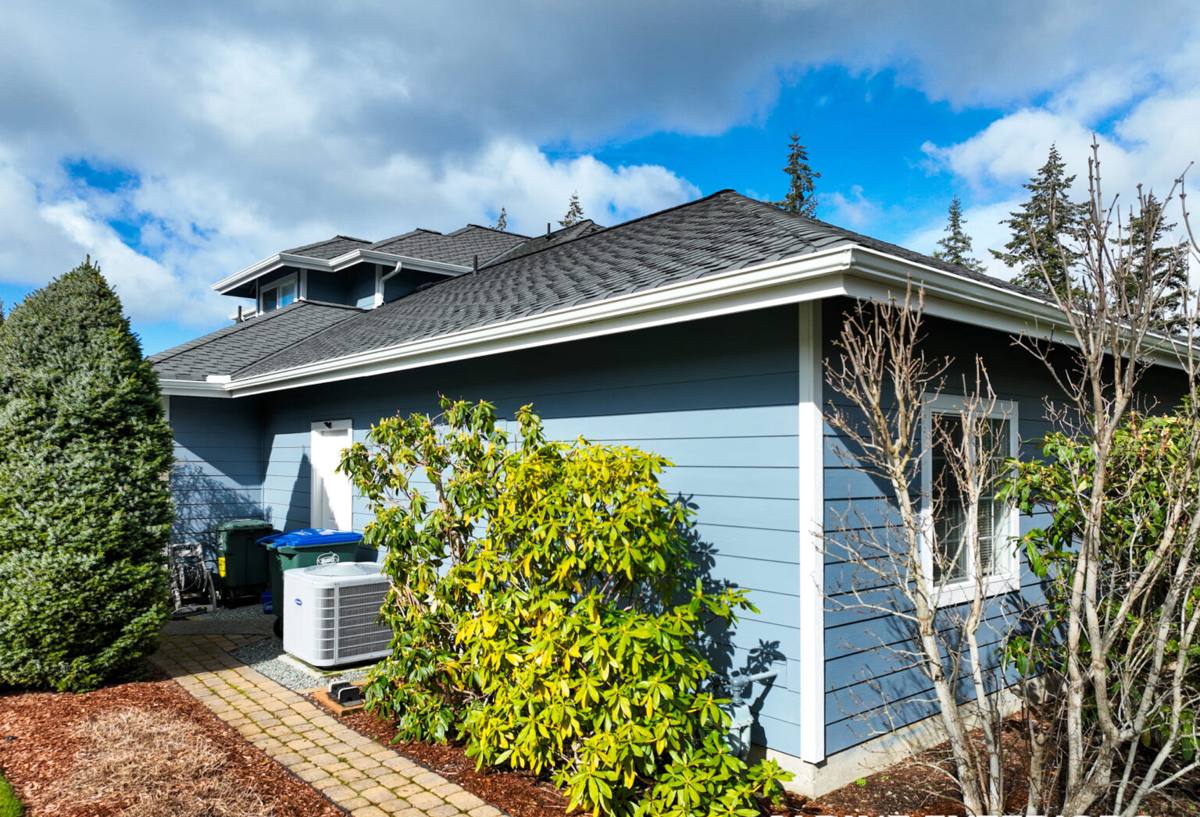
What Kendall's Climate Actually Demands From a Roof
Before talking about panels and fasteners, it helps to be clear about what the roof is up against out here:
- Sustained, driving rain that tests every seam, lap, and penetration on the roof, not just the field of the panels
- Heavy tree cover that drops needles, leaves, and branches into valleys and behind chimneys where debris collects
- A long moss and algae season — the shaded, damp conditions common around Kendall keep organic growth active for more months of the year than a roof in open sun would see
- Temperature swings between summer heat and winter cold that expand and contract roofing materials, stressing fasteners and seams over time
- Occasional snow load in the higher, cooler pockets of the foothills, which is rare in Lynden proper but not unheard of out toward Kendall
None of this is exotic — it's the normal cost of living somewhere green and close to the mountains. But it does mean a roofing system chosen for a dry, open-lot subdivision somewhere else isn't automatically the right fit here, and it's why we treat every Kendall estimate as its own job rather than a copy-paste of a Lynden in-town roof.
Why Metal Roofing Makes Sense for This Environment
Metal roofing isn't the right choice for every home or every budget, and we'll say so plainly if that's the case. But for the conditions Kendall homes deal with, it has real, practical advantages over asphalt shingles:
- Smooth, hard surface — moss and algae have a much harder time establishing on painted steel or aluminum than on the porous, granulated surface of a shingle
- Fast water shedding — steep-slope metal panels move rain off the roof quickly, which matters when storms roll through with real volume
- Long service life — a properly installed and maintained metal roof commonly outlasts two or more asphalt roofing cycles
- Better performance under debris load — needles and leaves are less likely to mat down and hold moisture against a smooth metal panel than they are on a textured shingle surface
- Fire resistance — a genuine benefit for wooded properties, where dry-season fire risk is a real consideration
The trade-off is upfront cost and the need for a crew that actually knows how to install metal correctly. This is a product where poor installation causes more problems than the material itself ever would — which is the next thing worth understanding before you commit to it.
What a Correctly Installed Metal Roof Actually Involves
Metal roofing looks simple from the ground — long, clean panels running from ridge to eave. The reality underneath is more technical than most homeowners expect, and it's where the difference between a good installer and a fast one shows up.
Panel and Fastening Systems
Not all metal roofing is built the same way, and the system you choose affects both upfront cost and long-term maintenance:
| System | How It's Fastened | Maintenance | Best Fit |
|---|---|---|---|
| Standing seam | Concealed clips, no exposed screws through the panel face | Very low — no fasteners to back out or reseal | Homes wanting the longest service life and cleanest look |
| Exposed-fastener panel | Screws driven directly through the panel into the deck or purlins | Fastener gaskets should be checked periodically over the roof's life | Budget-conscious projects, outbuildings, shops |
| Stone-coated steel | Interlocking panels fastened at the overlap | Low — behaves like standing seam with a textured, shingle-like profile | Homeowners who want a metal roof's durability with a more traditional look |
We'll walk through which system fits your roofline, budget, and how long you plan to stay in the home — there's no single "best" answer that applies to every Kendall property.
Underlayment, Flashing, and Ventilation
This is where most metal roof failures actually start, and it's rarely the panels themselves. A synthetic, high-temperature underlayment underneath the panels gives the roof a secondary water barrier if wind-driven rain ever gets past a seam — important on an exposed or tree-sheltered roof where wind can push rain sideways under panel laps. Flashing at valleys, chimneys, skylights, and wall intersections has to be formed and installed correctly, not just caulked and hoped for; caulk is a backup, not a flashing plan. And ventilation matters more with metal than most homeowners assume — a roof deck that can't breathe traps moisture underneath the panels, which leads to condensation, rot, and premature failure of the very underlayment meant to protect it.
A roof that's cut corners in any one of these areas can still look fine from the driveway for a year or two. The problems show up later, and by then they're usually more expensive to fix than they would have been to do right the first time.
Choosing the Right System for Your Home
Cost is one of the first questions we get, and it deserves an honest, general answer rather than a made-up number that doesn't fit your roof. Several factors move the price more than the metal itself:
| Cost Factor | Why It Matters |
|---|---|
| Tear-off vs. re-cover | Removing old roofing and inspecting the deck adds labor but is usually the right call on an older roof |
| Roof pitch and complexity | Steep roofs, multiple valleys, and dormers take longer to flash and panel correctly |
| Panel gauge and finish | Heavier-gauge steel and better paint systems cost more upfront and hold up longer against fading and denting |
| Underlayment upgrade | A premium synthetic or ice-and-water shield in valleys adds cost but reduces the risk of hidden leaks |
| Ventilation retrofit | Older homes sometimes need ridge or soffit vent work added as part of the reroof to keep the deck dry long-term |
We'll break these down for your specific roof during the estimate, with real numbers for your home — not a generic per-square-foot figure that doesn't account for your roofline or existing deck condition.
How Our Process Works
We keep this straightforward because a roof project shouldn't feel like a mystery:
- On-site inspection — we look at your existing roof, deck condition, ventilation, and any trouble spots like valleys or chimney flashing
- Honest recommendation — we'll tell you if metal is the right call for your home, budget, and how long you plan to own it, or if another system makes more sense
- Written estimate — clear scope, materials, and pricing before anything is scheduled
- Tear-off and deck check — old roofing comes off and the deck is inspected for rot or soft spots before anything new goes down
- Underlayment, flashing, and panel installation — done in the sequence that actually keeps water out, not the sequence that's fastest
- Final walkthrough and cleanup — we review the finished roof with you and make sure the site is left clean, including magnetic sweeps for stray fasteners
Living With a Metal Roof in the Foothills
Part of why we're upfront about maintenance is that a metal roof's low upkeep is real, but it isn't zero. A little seasonal attention goes a long way toward getting the full lifespan out of the investment:
- Clear needles, leaves, and small branches out of valleys and off the roof surface a couple of times a year, especially under heavier tree canopy
- Keep gutters clear so water has somewhere to go once it sheds off the panels — clogged gutters under trees are one of the most common causes of fascia and soffit damage we see
- Have flashing and penetrations checked after major wind events, since that's where movement is most likely to show up first
- Watch for scuffs or scratches in the paint finish near roof edges, and have them touched up before bare metal is exposed to moisture
- If your home has exposed-fastener panels, plan on a periodic check of fastener gaskets as part of general upkeep
None of this requires a specialist visit every year — most of it is the kind of thing you can glance at from the ground or handle with a quick walk-around after a big storm.
Why Hiring a Crew That Already Works Kendall Matters
Metal roofing rewards experience in a way that shingle roofing is more forgiving about. A flashing detail that's slightly off doesn't always show up as a leak right away — it can take a full wet season, or several, before water finds its way in. That's a bad way to find out a roof wasn't installed correctly.
Working properties around Kendall and the rest of Whatcom County regularly means we already understand the local conditions before we walk your roof: the tree exposure, the moisture patterns, the way weather off the Nooksack valley behaves differently on a shaded, wooded lot than it does on an open one closer to town. That's not a substitute for a proper inspection of your specific home, but it does mean we're not guessing at what your roof needs to hold up here.
If you're weighing metal roofing for a home in Kendall, we're happy to take a look and give you a straight answer about what your roof actually needs — no pressure, no inflated scope. Use the form below to request a free estimate.