 Lynden
 Kendall's Climate Is Harder on Siding Than Most Homeowners Realize
Kendall sits inland from Bellingham Bay and the Strait of Georgia, but that distance doesn't buy much protection from Puget Sound's marine weather. Moisture-laden air still moves in off the water and settles into the Nooksack lowlands, and Whatcom County's fall-through-spring rain season means Kendall homes can go six or seven months with siding rarely drying out completely between storms. Add a moss season that runs nearly as long, plus the salt-tinged air that rides inland on westerly systems, and you have a climate that punishes any siding product with a weak point in its finish, its fastening, or its water management.
This isn't a reason to worry about siding — it's a reason to be precise about what goes on the wall and how it's installed. Fiber cement handles this climate well when it's detailed correctly. Plenty of other products handle it poorly even when installed correctly, because the material itself struggles with sustained moisture exposure. That distinction is the reason we've standardized on one product line rather than offering a menu of options.
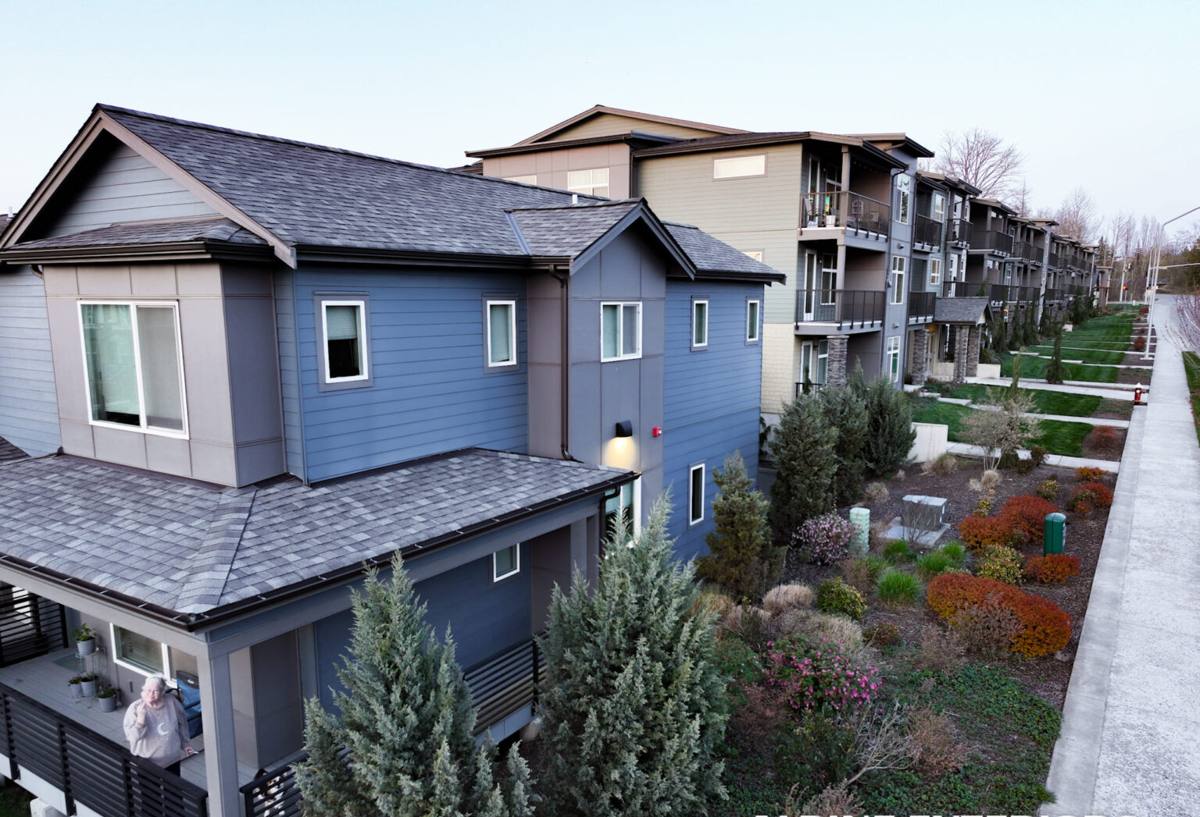
Why We Install Only James Hardie Siding in Kendall and Lynden
We don't install vinyl, LP SmartSide, Cemplank, Allura, primed spruce, or cedar. That's a deliberate standard, not a sales pitch, and it's worth explaining honestly. Vinyl expands and contracts hard through this region's temperature swings and can warp or crack over sustained wet-cold cycles; it also isn't fire-rated the way fiber cement is. Engineered wood products like LP SmartSide use wood-strand technology that performs fine in drier climates but is more sensitive to sustained moisture exposure at cut edges and seams — exactly the conditions Kendall delivers for months at a stretch. Cedar and primed spruce are attractive materials, but they need consistent maintenance — staining, sealing, repainting — to hold up here, and skipping even one cycle in a wet year accelerates rot.
Cemplank and Allura are also fiber cement, and reasonable products in their own right, but James Hardie is engineered specifically with regional climate zones in mind, backs its ColorPlus factory finish with a longer warranty, and has the deepest track record and installer training network in this part of the country. When we're the crew responsible for a home's exterior for the next 30-plus years, we want the material with the fewest unknowns.
What a Correct James Hardie Installation Actually Involves
James Hardie siding is a good product that can still be installed badly. Most of the failures we get called out to inspect on older installs trace back to installation shortcuts, not the material itself. A correct install includes:
- Proper clearance — siding held at least 6 inches above roofing, decks, and grade, and 1-2 inches above walkways, so splash-back and standing water can't wick into the bottom edge
- A weather-resistive barrier installed and lapped correctly underneath, with flashing integrated at every window, door, and penetration — not caulk used as a substitute for flashing
- Correct fastener type, spacing, and depth per Hardie's published fastening schedule for our wind exposure, with fasteners driven flush rather than overdriven, which crushes the material and creates a moisture entry point
- Factory-cut ends field-sealed where the ColorPlus finish has been cut, since a bare cut edge is the one place the product isn't factory-protected
- Butt joints and seams treated with the manufacturer-specified sealant or flashed, not just butted together and painted over
None of this is exotic. It's the manufacturer's own installation standard. But it takes longer than a rushed install, and it's the difference between siding that reaches its expected lifespan and siding that needs repair by year eight.
Which James Hardie Product Fits a Kendall Home
James Hardie makes several product lines, and the right one depends on the home's style, exposure, and existing trim details more than on personal preference alone.
| Product | Typical Use | Why It Fits Kendall |
|---|---|---|
| HardiePlank lap siding | Traditional horizontal look, the most common residential choice | Sheds driving rain efficiently when lapped and flashed correctly; widest color and texture selection |
| HardiePanel vertical siding | Modern vertical look, accent walls, gable ends | Fewer horizontal seams for water to find; good fit for high-exposure gable faces |
| HardieShingle siding | Shingle or shake-style accents on dormers and gables | Traditional Pacific Northwest look without cedar's moisture-maintenance burden |
| HardieTrim boards | Corner boards, window and door trim, fascia | Matches the siding's moisture resistance so trim doesn't become the weak point |
Most Kendall projects use HardiePlank as the field material with HardieTrim boards for a finished look, sometimes with HardieShingle or HardiePanel accents where the home's architecture calls for it. We also spec the HZ5 climate-engineered formulation built for the Pacific Northwest, which Hardie manufactures differently than the versions sold for hotter, drier regions.
Moisture Management Is the Detail That Actually Determines Lifespan
Siding material matters, but in a climate like ours, the water management behind the siding matters just as much. A home can have premium siding and still develop rot, mold, or sheathing damage if the wall assembly behind it can't manage the moisture that inevitably gets past the outer layer. Our process treats the siding as one layer of a larger water-management system.
House Wrap and Drainage
A continuous, properly lapped weather-resistive barrier gives the wall a drainage plane so any moisture that gets behind the siding has somewhere to go besides the sheathing. On some Kendall homes with limited wall ventilation, we'll add a rainscreen gap — a thin furring space between the wrap and the siding — so water drains and air can circulate to dry the wall assembly instead of trapping moisture against it.
Flashing at Every Penetration
Windows, doors, hose bibs, light fixtures, vents — every penetration through the siding is a potential entry point. Flashing tape and metal flashing, installed in the correct shingle-lap order, redirect water around these penetrations instead of relying on caulk, which degrades over time and needs recaulking that many homeowners never get around to.
Foundation and Grade Details
Where siding meets the foundation, we check that grade slopes away from the house and that the bottom starter strip sits well clear of soil, mulch, and splash zones — a detail that's easy to overlook and one of the more common causes of bottom-edge rot we see on older siding jobs in this area.
Moss, Mildew, and Whatcom County's Long Wet Season
Kendall's moss season runs long enough that most homeowners here have some experience scraping it off a roof or a deck, and siding isn't immune to the same conditions. Moss and algae need sustained moisture and shade to take hold, so north-facing walls, tree-shaded elevations, and areas with poor airflow are usually where growth shows up first. James Hardie's ColorPlus factory finish is baked on under controlled conditions and holds up better against mildew and moss staining than field-applied paint, but "better" isn't "immune" — any exterior surface in this climate benefits from a little periodic attention.
A Simple Maintenance Checklist for Kendall Homes
- Rinse siding annually — a garden hose and soft brush is enough; avoid aiming a pressure washer directly at seams and joints
- Trim back vegetation and tree limbs to keep airflow and sunlight reaching shaded wall sections
- Check and clear gutters before the fall rains so overflow doesn't run down the siding face
- Inspect caulking at trim joints and penetrations every couple of years and recaulk where it's cracked or pulled away
- Walk the foundation line once a year to confirm grade hasn't built up against the bottom starter strip
Our Process for a Kendall Siding Project
Every project starts with an on-site assessment, not a phone estimate. We walk the exterior, check the existing wall assembly where we can, and look at exposure — which elevations take the worst weather, whether there's existing moisture damage, and what the trim and window details look like. From there:
- We remove the old siding and inspect the sheathing underneath for rot or damage before anything new goes up — this is the point where hidden problems get found and fixed, not covered over
- We install or repair the weather-resistive barrier and flashing system before any Hardie product touches the wall
- We install James Hardie siding and trim to the manufacturer's fastening and clearance specifications for our region
- We seal factory cut ends and finish caulking at seams and penetrations per Hardie's specification
- We do a final walk-through with the homeowner to review the work and go over basic maintenance
Why a Crew That Already Works in Kendall Makes a Real Difference
Siding installation isn't just following a manual — it's judgment calls made against a specific site's weather exposure, and that judgment improves with local repetition. A crew that already works Kendall and greater Lynden knows which elevations in this area take the hardest driving rain, how local permitting works, what a typical Whatcom County wall assembly looks like once the old siding comes off, and how weather windows here actually behave during the wetter months — which affects tear-off scheduling and how a job gets sequenced to avoid leaving a wall open during a storm system. That's not something a crew passing through the region for a single job accumulates. It's built job by job, over time, in this specific climate.
What Affects the Cost of a Kendall James Hardie Project
Every home is different, and we don't quote sight-unseen, but the same handful of factors drive cost on nearly every project we look at in this area:
| Factor | Why It Matters |
|---|---|
| Tear-off and sheathing condition | Hidden moisture damage found during tear-off adds repair work before new siding can go on |
| Home size and wall complexity | More corners, gables, and dormers mean more cutting, flashing, and trim work |
| Product mix | A straight HardiePlank run goes faster than a job mixing in HardieShingle accents or HardiePanel features |
| Trim and color choice | Custom trim details and certain ColorPlus finishes carry different material costs |
| Access and site conditions | Steep grades, tight lot lines, and landscaping affect staging and labor time |
Fiber cement siding generally costs more upfront than vinyl and less than most masonry or high-end wood systems, but the honest comparison isn't upfront cost alone — it's upfront cost weighed against expected lifespan, maintenance burden, and warranty coverage over the decades the siding is actually on the house.
If you're planning a siding project in Kendall or anywhere around Lynden, we're happy to walk your home, look at what's actually going on with your walls, and give you a straightforward, no-pressure estimate. There's a form below — reach out and we'll get a time on the calendar.