 Lynden
 Why Ferndale Homes Need a Different Approach to Window Installation
Ferndale sits close enough to the water and the marine air moving in off the Strait that homes here take on a different kind of weathering than you'd see further inland. Salt-laden air accelerates corrosion on anything metal — hinges, cranks, screws, cladding fasteners — and it breaks down exterior finishes faster than a dry climate ever would. Add in Whatcom County's driving, wind-pushed rain and the long stretch of damp, low-sun months when moss and algae take over anything that stays wet, and you've got a climate that punishes a mediocre window installation quickly. A window that's slightly out of level, sealed with the wrong product, or missing proper flashing might not show a problem for a year or two. In this climate, it usually does.
We install windows for a living in this part of Whatcom County, and the failures we get called out to repair almost always trace back to the same root cause: water got behind the window frame and had nowhere to go. Good window installation here isn't about the window itself so much as it is about managing water — keeping it out, and giving any water that does get past the exterior a way to drain back out instead of sitting against wood framing.
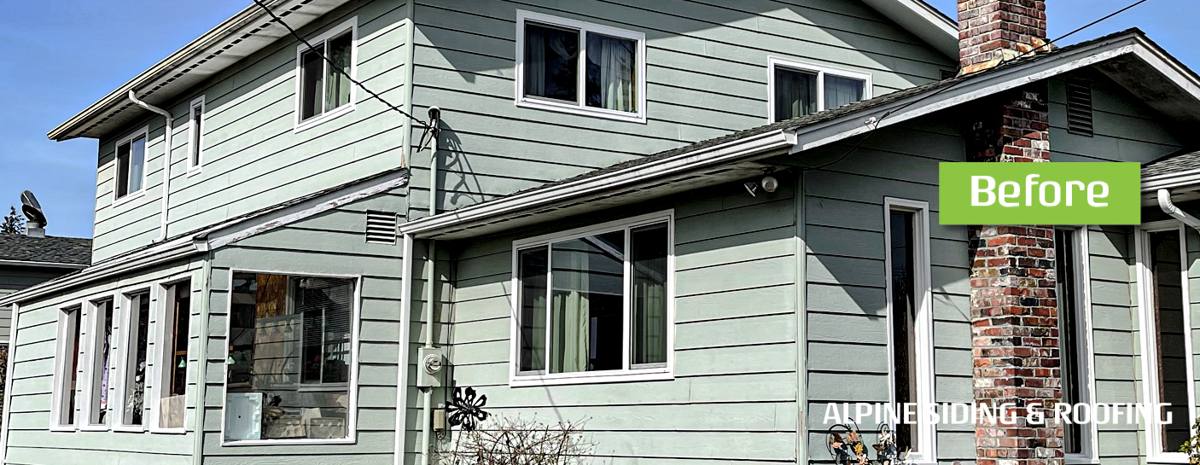
What Correct Window Installation Actually Involves
A window installation that's built for this climate goes well beyond setting a new unit into an old opening and running a bead of caulk around the outside. There's a sequence to it, and skipping steps is exactly how homeowners end up with soft framing and interior staining a few winters later.
Sill Pan Flashing
The bottom of a window opening is where water problems start. A sill pan — a rigid or flexible flashing that sits under the window and directs any water that gets past the frame back to the exterior — is standard practice for us, not an upgrade. In a climate with sustained wind-driven rain, skipping the sill pan is one of the most common reasons we find rot when we pull old windows out.
Integrated Drainage Plane
The flashing around a new window needs to tie into the home's existing weather-resistive barrier (the house wrap or building paper) in the correct shingle-lap order, so water is always directed downward and outward, never trapped behind the siding. This is easy to get wrong if a crew is moving fast, and it's invisible once the trim goes back on — which is exactly why it matters who's doing the work.
Setting the Window Plumb, Level, and Square
A window that's slightly racked won't operate smoothly, and it puts uneven stress on the seals, which shortens their life. We shim and check this on every side before fastening, not just eyeballing it from the interior.
Insulation and Air Sealing — Without Overfilling
The gap between the window frame and the rough opening needs insulation, but packing it too tight with expanding foam can actually bow the frame and cause operating problems. Low-expansion foam or backer rod and sealant, applied correctly, keeps the window performing the way it's supposed to without distorting it.
Exterior Sealant and Trim
The visible caulk line around a window is the last line of defense, not the first. It matters, but it's not doing the job alone — it's backed up by the flashing and drainage work underneath it. We still use a high-quality, flexible, paintable sealant rated for exterior exposure, because in a climate this wet, a cheap caulk job fails within a couple of seasons.
Signs Ferndale Windows Are Overdue for Replacement
Not every window problem means full replacement, but in this climate several signs tend to show up together and point toward it:
- Fogging or a visible haze between panes of glass — a sign the seal has failed and the insulating gas has escaped
- Soft or discolored wood trim or sill, especially on the side of the house that takes the most weather
- Drafts you can feel near the frame even when the window is fully latched
- Difficulty opening, closing, or locking the window — often a sign the frame has shifted or swollen
- Visible corrosion or seized hardware on older aluminum or steel-component windows
- Moss or dark streaking building up on the sill or below the window, suggesting water is sitting instead of draining
- Rising heating bills without another clear explanation
If you're seeing more than one of these, it's worth having someone look at the actual condition of the framing before deciding between a repair, an insert replacement, or a full-frame replacement.
Choosing a Window Built for Salt Air and Driving Rain
Not every product on the market is a good match for a coastal-influenced climate. Hardware material matters as much as frame material — standard-grade fasteners and cranks corrode faster near salt air, so we favor stainless or corrosion-resistant hardware on homes in this area regardless of what frame material is chosen. Beyond that, here's how the common frame options generally compare for this climate:
| Frame Material | Moisture & Salt Air Behavior | Maintenance | Typical Fit For Ferndale Homes |
|---|---|---|---|
| Vinyl | Won't rot or corrode; seams and welded corners are the main long-term watch point | Low — occasional cleaning | Strong value option, good moisture resistance |
| Fiberglass | Very stable in temperature swings and moisture; holds paint well | Low to moderate | Good for homes wanting a painted or wood-look finish with less upkeep |
| Wood (unclad) | Most vulnerable to sustained damp and moss-season exposure without diligent upkeep | High — regular refinishing needed | Best reserved for protected elevations or interior-facing rooms |
| Wood-clad (exterior-clad) | Exterior cladding shields the wood from weather; cladding seams are the point to watch | Moderate | Popular where a warm wood interior look is wanted with better exterior durability |
| Aluminum | Prone to corrosion and conducts cold/condensation without thermal breaks | Moderate to high | Generally not our first recommendation in this climate unless thermally broken |
Glass package matters too. Dual-pane with a low-E coating is the baseline we recommend for this area; triple-pane can be worth the added cost for north-facing rooms or homes closer to the water where wind load and heat loss are both higher priorities.
Our Window Installation Process
We keep this straightforward and communicate at each stage so there are no surprises:
- On-site assessment. We look at each opening individually — not every window on a house is in the same condition — and check for existing rot or water damage before quoting.
- Product selection. We walk through frame material, glass package, and hardware options based on the home's exposure, budget, and how the window will be used (egress requirements, operating style, etc.).
- Careful removal. Old windows come out with attention to the surrounding framing so we can catch any hidden moisture damage before it's covered back up.
- Repair framing if needed. If we find soft or rotted framing, we address it before the new window ever goes in. Installing a new window over damaged framing just hides the problem.
- Flashing and sill pan installation. Water management goes in first, tied correctly into the existing weather barrier.
- Set, shim, and fasten. The window is set plumb, level, and square, then secured per manufacturer specifications.
- Insulate and air seal. Low-expansion foam or backer rod and sealant fills the gap without distorting the frame.
- Exterior trim and sealant. Trim is reinstalled or replaced, and a quality exterior-rated sealant finishes the weatherproofing.
- Final walkthrough. We check operation, look, and seal quality with you before calling the job done.
What Affects the Cost of Window Installation
Every home is different, and we'll always give you a firm number in writing before work starts, but these are the factors that typically move the price up or down:
| Factor | Why It Matters |
|---|---|
| Insert vs. full-frame replacement | Full-frame costs more but is often necessary when framing is damaged or the opening size is changing |
| Number of windows | Doing multiple windows in one visit generally reduces the per-window labor cost |
| Frame material and glass package | Fiberglass and triple-pane options cost more upfront than standard vinyl dual-pane |
| Condition of existing framing | Rot repair discovered during removal adds labor and material beyond the original quote |
| Accessibility | Second-story or hard-to-reach windows take more time and equipment |
| Egress and code requirements | Bedroom windows may need to meet specific size and opening requirements, which can affect the product choice |
As a broad range, a straightforward single window replacement in this area is a different investment than a whole-house project — the honest answer for your home depends on the factors above, which is exactly why we quote in person rather than over the phone.
Why Hiring a Crew That Already Works Ferndale Matters
A window installer who works this part of Whatcom County regularly has already seen how homes in this area actually weather — which elevations take the worst of the driving rain, how quickly moss builds up on north-facing sills, and how salt-influenced air treats hardware over a few winters. That translates into decisions on the job: which flashing details get extra attention, which fastener grade is worth the upgrade, and which framing details tend to hide moisture problems in homes of a certain age or construction type common to this area.
It also matters for scheduling and workmanship in a practical sense. Installing a window in the rain, or rushing a job between weather windows, is how corners get cut on flashing and sealant cure time. A local crew plans around this region's weather patterns instead of fighting them.
Keeping Your New Windows Performing for the Long Run
Even a correctly installed window benefits from a little seasonal attention in this climate. This is the maintenance checklist we give homeowners after every installation:
- Clean weep holes (the small drainage openings at the bottom of the frame) each fall so they don't clog with debris and trap water
- Inspect exterior caulking annually, especially after a hard winter, and touch up any cracking before water can get behind it
- Wipe down sills and tracks periodically to keep moss and algae from taking hold during the wetter months
- Check hardware — cranks, locks, hinges — for stiffness or corrosion and address it early rather than forcing it
- Watch for condensation between panes, which signals a failed seal rather than a cleaning issue
- Keep nearby vegetation trimmed back so foliage isn't holding moisture against the window or trim
None of this takes long, but it's the difference between windows that perform well for decades and ones that start showing problems years earlier than they should.
Get a Straightforward Estimate
If your windows are drafty, fogging, sticking, or just overdue, we're happy to take a look and give you an honest read on what's actually going on — whether that means a targeted repair, an insert replacement, or a full-frame job. Fill out the form below for a free, no-pressure estimate for your Ferndale home.