 Lynden
 Ferndale Decks Face a Different Set of Problems Than Decks Inland
Ferndale sits close enough to Bellingham Bay and the Strait of Georgia that salt-laden air is a real factor in how exterior materials age, and that's on top of the rain totals and long gray stretches that define a Whatcom County winter. A deck built here has to shed water fast, resist corrosion at every metal connection, and stand up to months of shade and moisture that would turn a poorly built deck green before it's five years old. Composite decking can handle all of that, but only when it's installed with this specific climate in mind — not built from a generic spec sheet written for a drier region.
We install composite decking around Ferndale and Lynden regularly, and the failures we get called out to fix almost never come from the decking material itself. They come from shortcuts in the substructure, flashing, and fastening that don't show up until the second or third wet season.
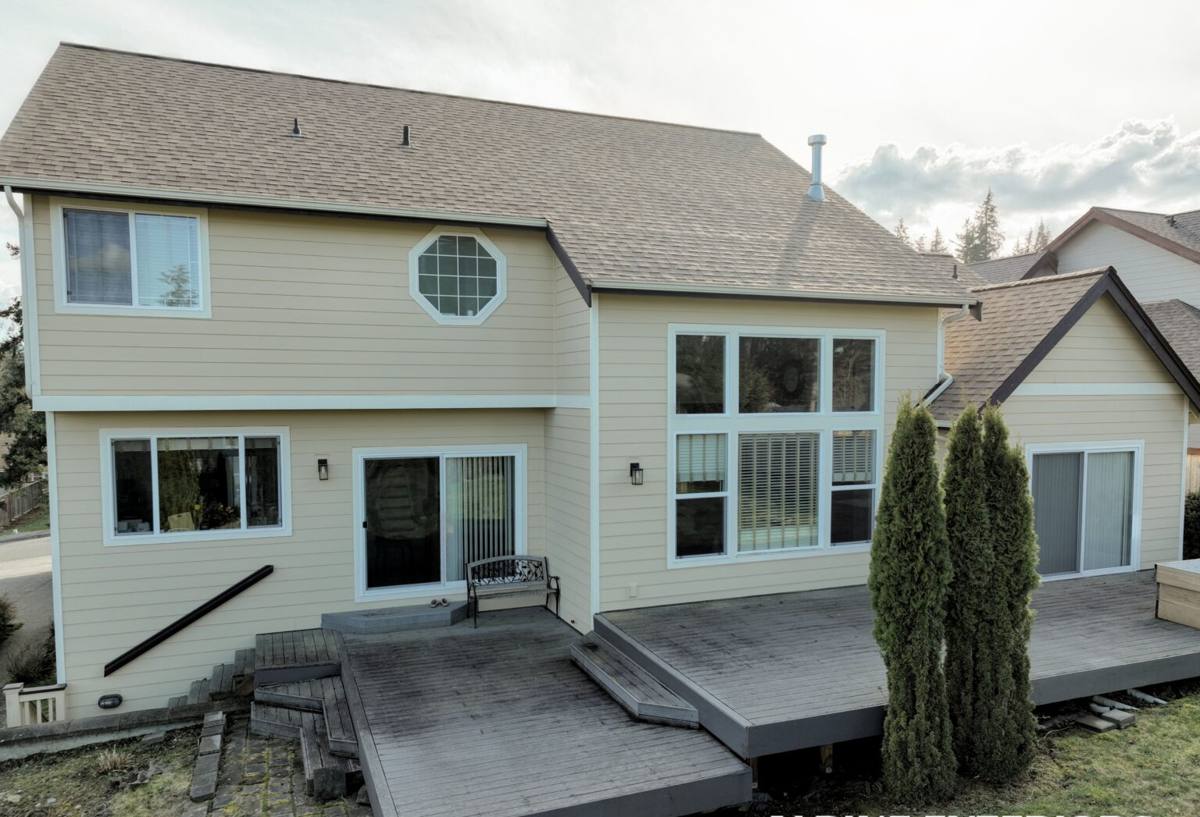
What Salt Air, Rain, and Moss Actually Do to a Deck
Salt Air and Metal Fatigue
Airborne salt accelerates corrosion on fasteners, joist hangers, and structural screws. On a deck close to the water or exposed to prevailing wind off the bay, standard hardware can start showing rust well before the decking boards themselves show any wear. Once a hanger or ledger bolt corrodes, the structural connection weakens even though the visible deck looks fine.
Driving Rain and Water Intrusion
Whatcom County rain doesn't just fall straight down — wind-driven rain gets pushed sideways into ledger connections, stair stringers, and any gap where water can collect instead of run off. Composite boards themselves don't rot, but the wood framing underneath them, and the house structure the deck attaches to, absolutely can.
The Long Moss and Algae Season
Shaded decks under fir or cedar cover, and decks on the north side of a house, stay damp for months at a time in this climate. That's exactly the environment moss and algae need. Composite decking resists rot, but its surface can still host surface growth if water isn't allowed to drain and dry between rain events. How a deck is framed, sloped, and spaced has as much to do with staying moss-free as the board material does.
What a Correct Composite Deck Installation Looks Like Here
Composite decking is only as good as the structure underneath it and the details most homeowners never see once the project is finished. For Ferndale conditions specifically, we treat these as non-negotiable:
- Ledger board flashed with a proper water-resistive barrier and step flashing where the deck meets the house — this is the single most common source of hidden rot on older decks
- Joist tape over every framing member before decking goes down, so water that gets between boards doesn't sit on exposed wood
- Stainless or coated corrosion-resistant fasteners and hardware throughout, not standard galvanized, given the salt air exposure
- Board spacing set for proper drainage and airflow, not tightened up purely for a seamless look
- Hidden fastener systems installed to the manufacturer's exact spacing tolerances — composite boards expand and contract more than wood with temperature swings
- Adequate ground clearance and cross-ventilation under the deck so the substructure can actually dry out between storms
None of this is unusual or exotic. It's standard best practice for composite decking everywhere. What changes in Ferndale is how strictly it has to be followed, because the margin for error is smaller when a structure sits wet for a larger share of the year.
Choosing a Composite Board for This Climate
Not every composite product performs the same way in a wet, shaded, salt-air environment. The differences that matter most locally are moisture absorption at cut edges, cap stock quality (the protective outer layer), and how the board's color and texture handle mildew visibility.
| Factor | Why It Matters in Ferndale |
|---|---|
| Capped vs. uncapped composite | A full polymer cap resists moisture absorption at the surface far better than uncapped composite, which matters on a deck that stays damp for weeks at a time |
| Color selection | Very dark boards run hotter in the rare sun and can show mildew and pollen film more visibly in shaded, damp areas; lighter and mid-tone colors tend to hide seasonal grime better between cleanings |
| Surface texture | Heavily embossed wood-grain textures can trap moisture and organic debris in shaded spots; smoother finishes shed water and rinse clean more easily |
| Cut-edge sealing | Every cut end needs to be properly finished or capped during install — an exposed cut edge is the one place composite can wick moisture over time |
| Manufacturer warranty terms | Fade, stain, and moisture warranties vary by brand; we review the actual warranty language with you rather than just quoting a length of years |
We work with the major composite lines — brands like Trex, TimberTech, and Fiberon are all products we install regularly — and we'll walk you through which board and color in their lineup makes sense for your deck's orientation, shade exposure, and how much visible upkeep you're comfortable with.
Substructure and Moisture Management: Where Deck Failures Actually Start
If you take one thing away from this page, make it this: composite decking fails from the bottom up, not the top down. The framing, footings, and connection to the house determine whether a composite deck lasts 25+ years or starts having problems in year six.
Footings in Local Soil
Whatcom County soil holds moisture, and footings that aren't set to the correct depth and properly drained can shift over a wet winter. We set footings to local frost and drainage requirements, not a one-size-fits-all minimum.
Ledger Attachment
The ledger board — where the deck bolts to the house — is the highest-risk point for water intrusion on any deck in a rainy climate. Correct flashing here isn't optional trim work; it's what keeps water out of your home's wall framing, not just the deck.
Joist Protection
Every joist top gets protective tape before decking is installed. It's a small material cost that prevents the framing from absorbing water through screw penetrations for the life of the deck.
Living With a Composite Deck in Ferndale: Realistic Maintenance
Composite decking is genuinely lower-maintenance than wood, but "low-maintenance" doesn't mean "no maintenance," especially with a moss season this long. A realistic care routine looks like:
- A seasonal rinse or light wash before the wet season sets in and again after pollen season, using a soft-bristle brush and mild soap — not a high-pressure setting that can damage the cap surface
- Keeping nearby foliage trimmed back so shaded sections of the deck get more airflow and light
- Clearing gutters and downspouts above the deck so runoff isn't concentrating water onto one section of boards
- Checking railing posts and stair connections annually for any looseness, since that's usually the first sign of a hardware or framing issue, not a board issue
Compare that to the sanding, staining, and sealing cycle a wood deck needs in this climate, and the time savings are real — but it's still worth setting a simple annual routine rather than assuming the deck needs zero attention.
Our Process for a Ferndale Composite Deck Project
We keep the process straightforward and give you real information at each step rather than surprises at the end:
- On-site assessment of the deck location, sun and shade exposure, drainage path, and existing structure if this is a replacement
- Honest recommendation on board brand, color, and railing system based on your home's exposure and how the deck will actually be used
- Permitting handled through the appropriate local jurisdiction before any framing work begins
- Framing and structural work built to the flashing, joist protection, and fastening standards outlined above
- Composite board installation with manufacturer-specified spacing and hidden fastening
- Final walkthrough covering how the deck was built, what maintenance to expect, and where your warranty coverage applies
Cost Factors for Composite Decking in This Area
Composite decking costs more upfront than pressure-treated wood, but the comparison isn't apples to apples once you factor in what wood requires to survive this climate long-term. Rough cost drivers on a project include:
| Factor | Effect on Cost |
|---|---|
| Deck size and shape | Larger footprints and multi-level or curved layouts increase both material and labor |
| Substructure condition | A full tear-off and reframe of an old deck costs more than building on sound existing framing, but is often necessary when a deck shows rot or corrosion |
| Board tier and brand | Composite pricing spans a wide range between entry-level and premium capped lines |
| Railing system | Composite, aluminum, or cable railing each carry different material and installation costs |
| Site access | Difficult access, slope, or height above grade affects labor time and equipment needs |
We provide a written estimate that breaks these factors out clearly rather than a single lump number, so you can see exactly what's driving the price.
Why a Crew That Already Works Ferndale Makes a Difference
A contractor who works this specific stretch of Whatcom County already knows which flashing details matter most for wind-driven rain off the bay, which local soil conditions affect footings, and how much shade and moss exposure a given lot orientation is likely to see through the winter. That's not something you get from a national deck-building franchise working off a generic checklist — it comes from having built and maintained decks in these exact conditions repeatedly. When something does need attention down the road, a local crew is also the one that's actually reachable, rather than a call center routing you to whoever's available.
If you're planning a new composite deck or replacing an aging one in Ferndale or Lynden, we're happy to take a look and give you a straightforward, no-pressure estimate — just fill out the form below to get started.