 Lynden
 Deming's Climate Is Hard on Roofs
Homes in and around Deming take a beating that homeowners in drier parts of the country never have to think about. The combination of driving rain, salt-laden marine air moving in off the coast, and heavy tree cover creates conditions that shorten the useful life of almost every roofing material if the roof wasn't built correctly the first time. It's not one big storm that does the damage — it's the slow, repeated cycle of wet-dry, wet-dry, month after month, for years.
Moss is the most visible symptom of that cycle. A roof that stays shaded and damp for long stretches of the year gives moss exactly what it needs to take hold, and once it does, it holds moisture against the roofing material far longer than rain alone ever would. Add in salt air, which accelerates corrosion on fasteners, flashing, and any exposed metal, and you've got a roof system that needs to be built with this specific climate in mind — not a generic roof dropped onto a Whatcom County house.
We work on roofs in this area regularly, and the patterns repeat: north-facing slopes and sections shaded by tree cover fail years before the sunnier sides of the same roof. Valleys and low-slope sections trap debris and hold water longer. Fasteners and flashing that weren't rated for the moisture and salt exposure corrode faster than the roofing material around them. None of that is a mystery once you've seen it enough times — it's just what this climate does to a roof.
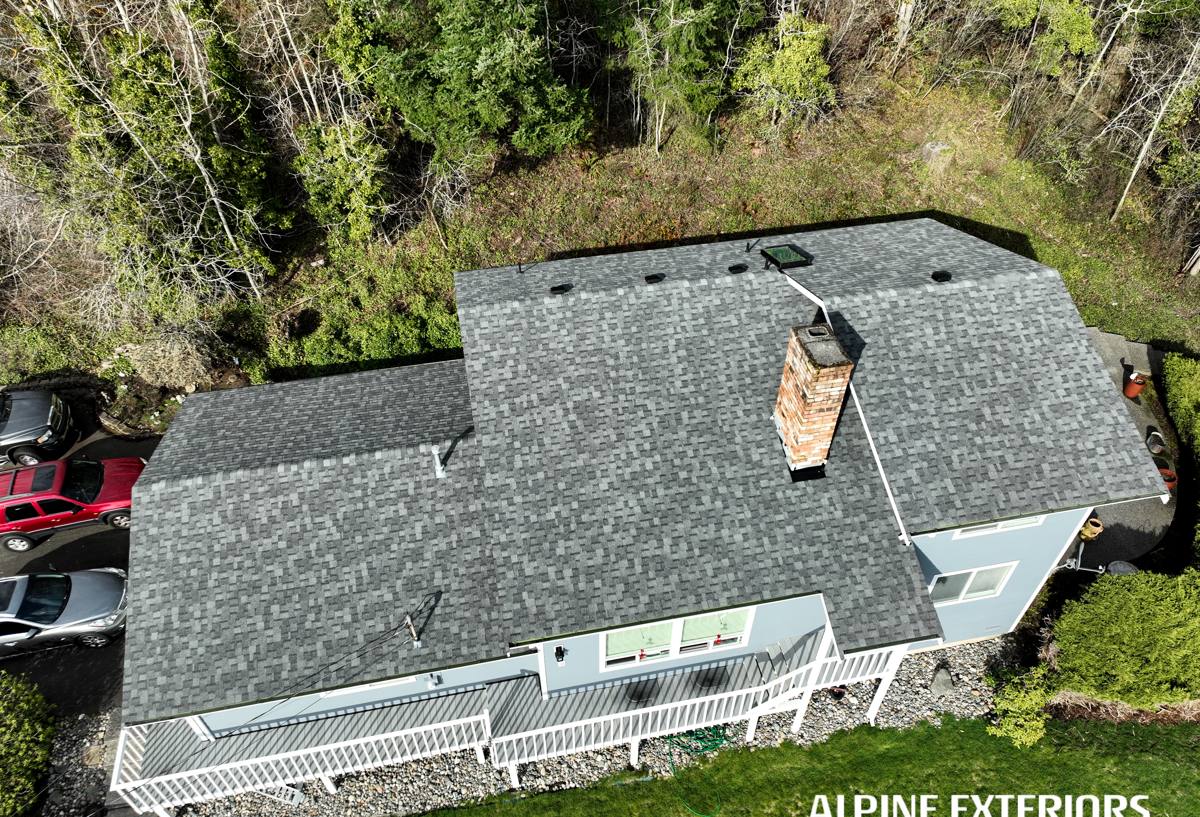
Repair or Replace? Signs to Watch For
Not every roof problem means a full replacement, and we'll tell you honestly when a repair is the smarter call. But there's a point where patching becomes throwing money at a system that's already failed underneath. Here's what tends to separate the two:
- Granule loss heavy enough that you're finding shingle granules in gutters or at downspout outlets — a sign the shingles themselves are wearing thin.
- Curling, cracking, or cupping shingles across large sections rather than one isolated spot.
- Soft or spongy decking felt underfoot during inspection, which usually means moisture has already reached the wood.
- Persistent moss or algae growth that comes back within a season or two of cleaning, even after treatment.
- Daylight visible through the roof deck from the attic, or water staining on attic sheathing.
- A roof original to the house and past 20-25 years old, especially if it's never had ventilation or flashing upgrades.
- Multiple past repairs in different spots — a sign the underlying system is failing broadly, not in one weak point.
If you're only seeing one or two of these, a targeted repair is often the right and more affordable answer. When several show up together, that's usually the roof telling you it's done protecting the house the way it should.
What Goes Into a Correct Roof Replacement
A roof replacement isn't just stripping off old shingles and nailing down new ones. In a climate that sees this much sustained moisture, the layers you don't see matter as much as the ones you do. Here's what a correct job actually involves.
Tear-Off and Deck Inspection
We remove the old roofing down to bare decking rather than layering over it. That's the only way to actually see the plywood or plank sheathing underneath — and in this climate, it's common to find soft spots or rot around old vent penetrations, valleys, and eaves that were hidden under the previous roof. Any damaged decking gets replaced before anything new goes down. Installing new roofing over a compromised deck just guarantees a shorter lifespan for the whole system.
Underlayment and Moisture Protection
The underlayment is the roof's backup plan for the moments when wind-driven rain gets past the surface material, which happens more often here than in drier regions. We use a synthetic or self-adhering underlayment appropriate to the roof's slope and exposure, with self-adhering ice-and-water membrane at the eaves, valleys, and any roof-to-wall transitions — the spots where water backs up or concentrates. This layer is invisible once the job is done, but it's the difference between a roof that sheds a heavy driving rain and one that lets it find a way in.
Ventilation Most Homeowners Never Think About
A roof that can't breathe traps moisture in the attic space, which speeds up decking rot from underneath and creates the exact damp, still conditions that moss and mildew thrive on. Balanced intake and exhaust ventilation — enough to actually move air through the attic — is part of a correct replacement, not an optional add-on. We check existing ventilation during the estimate and correct it where it's inadequate, which is more often the case than not on older Whatcom County homes.
Flashing and Edge Detail
Flashing around chimneys, skylights, vents, and roof-to-wall junctions is where most roof leaks actually originate — not the open field of shingles. Given the salt air in this region, we use flashing and fastener materials chosen to resist that corrosion, not just whatever's cheapest at the yard. Drip edge along eaves and rakes gets installed correctly so water is directed into gutters rather than behind fascia boards, which is a common source of slow rot on older homes we inspect.
Choosing a Roofing Material for This Climate
There's no single "best" roofing material — the right choice depends on your budget, your roof's exposure to shade and moisture, and how long you plan to stay in the home. We'll walk through the honest trade-offs rather than push whatever has the best margin.
| Material | Moss & Moisture Resistance | Typical Lifespan | Considerations |
|---|---|---|---|
| Architectural asphalt shingle | Good with proper ventilation; benefits from algae-resistant granules | 25-30 years | Most affordable upfront; wide color range; requires periodic moss cleaning |
| Standard 3-tab shingle | Moderate; wears faster in shaded, damp areas | 15-20 years | Lower upfront cost but shorter service life in this climate |
| Standing seam metal | Excellent; sheds moisture and resists moss much better than shingles | 40-50+ years | Higher upfront cost; fewer seams and penetrations to maintain |
| Synthetic/composite shingle | Good; engineered to resist moisture absorption | 30-40 years | Mid-to-upper cost; good option where appearance of shake or slate is wanted without the maintenance |
We don't install every product on the market, and that's a deliberate standard, not an accident. Materials with a track record of poor moisture behavior, installation sensitivity that's hard to get right in the field, or warranty structures that don't hold up in practice aren't worth putting on a roof we're going to stand behind. If a product doesn't perform well under sustained Pacific Northwest moisture, we'd rather tell you that upfront than install it and have you calling us back in five years.
Living With Moss and Tree Cover Between Roofs
Tree cover is part of what makes this area what it is, and we're not suggesting anyone clear-cut their property for the sake of a roof. But a little routine attention between replacements goes a long way toward getting the full lifespan out of whatever material you choose.
- Keep gutters and valleys clear of needles and leaf debris, especially heading into fall — clogged gutters back water up under shingles.
- Have moss treated (not scraped or pressure-washed, which damages granules) before it forms a thick mat.
- Trim overhanging branches back from the roof surface where practical, to reduce shade and debris buildup.
- Walk the attic once a year with a flashlight looking for daylight, staining, or damp insulation — early warning signs cost nothing to check for.
- Have flashing around chimneys and vents visually checked every couple of years, since that's where small leaks usually start.
None of this replaces a properly built roof, but it protects the investment once the new roof is on.
Our Process, Start to Finish
Homeowners generally want to know two things: what's actually going to happen to their house, and when. Here's how a replacement typically runs.
- On-site inspection. We get on the roof, check the decking where accessible, look at ventilation and flashing, and measure the whole system — not just eyeball it from the ground.
- Written estimate. You get a clear breakdown of material options, scope of work, and pricing, with the trade-offs explained rather than just a number.
- Scheduling around the weather. Roofing needs a dry work window to do right. We plan installs around realistic forecasts for this area rather than rushing a tear-off ahead of rain.
- Material delivery and staging. Materials are staged to protect landscaping and driveways as much as possible.
- Tear-off, deck repair, and install. Old roofing comes off, decking issues get addressed, and the new system goes on in the sequence described above — underlayment, ice-and-water membrane, flashing, ventilation, then the final roofing material.
- Site cleanup. Magnetic sweep for nails, debris hauled off, and the property left the way we found it.
- Final walkthrough. We go over the finished roof with you and answer any questions before calling the job done.
Why a Local Deming Crew Makes a Difference
Roofing looks similar on paper everywhere, but a crew that regularly works Deming and the surrounding Whatcom County area knows things a traveling or out-of-area contractor doesn't. We know how this region's rain patterns and tree cover tend to age a roof, which means we're not guessing at ventilation needs or flashing details — we've seen what fails here and what holds up. We're familiar with local permitting and inspection expectations, which keeps a project from stalling on paperwork. And because we're not driving in from out of town, scheduling around a realistic dry weather window is easier to manage, and we're accountable and reachable well after the job is finished — not a name from an out-of-area lead-gen site that's hard to track down if a question comes up later.
That local presence also means we're not learning this climate on your roof. We've already seen where moss takes hold first, which slopes fail early, and which details get skipped on roofs that weren't built for this area — so we build past those weak points from the start.
What Affects the Cost of a Deming Roof Replacement
Every roof is priced individually after an on-site inspection, but the factors that move the number are consistent. Understanding them makes it easier to compare estimates honestly.
| Factor | Why It Matters |
|---|---|
| Roof size and complexity | More squares, valleys, dormers, and penetrations mean more material and labor time |
| Roof pitch and access | Steep or hard-to-access roofs require more safety equipment and slow the work |
| Number of existing layers | Multiple old layers add tear-off time and disposal cost |
| Decking condition | Rot or soft spots found during tear-off require plywood or sheathing replacement |
| Material choice | Asphalt, synthetic, and metal roofing carry significantly different material costs |
| Ventilation and flashing upgrades | Correcting inadequate ventilation or outdated flashing adds scope but protects the new roof |
Broadly speaking, a straightforward architectural asphalt shingle replacement on an average-sized home tends to fall in the low-to-mid five figures, with metal roofing and larger or more complex roofs running higher. The only way to get a number that actually applies to your house is an on-site look — anything quoted sight-unseen should be treated as a rough guess at best.
If your roof in Deming is showing its age or you're just not sure whether it needs repair or replacement, we're happy to take a look and give you a straight answer. Fill out the form below for a free, no-pressure estimate.