 Lynden
 Windows Built for Custer's Climate, Not a Catalog
Custer sits close enough to Drayton Harbor and the Salish Sea that salt-laden air is a regular visitor, and it sits squarely in the same wet, gray stretch of Whatcom County weather that soaks Lynden and everything around it. That combination is harder on windows than most homeowners realize. Salt air accelerates corrosion on hardware and fasteners. Driving rain off the water finds any weak point in flashing or sealant. And the long moss season — the stretch from fall through spring when this whole region barely dries out — keeps wood sills, tracks, and frame joints damp for months at a time.
An energy-efficient window for a Custer home isn't just about a good U-factor on a spec sheet. It's a window and an installation that keep water out, resist salt corrosion on the parts that move, and still perform on the coldest, wettest nights of the year. We treat those as one job, not two, because in this climate they are.
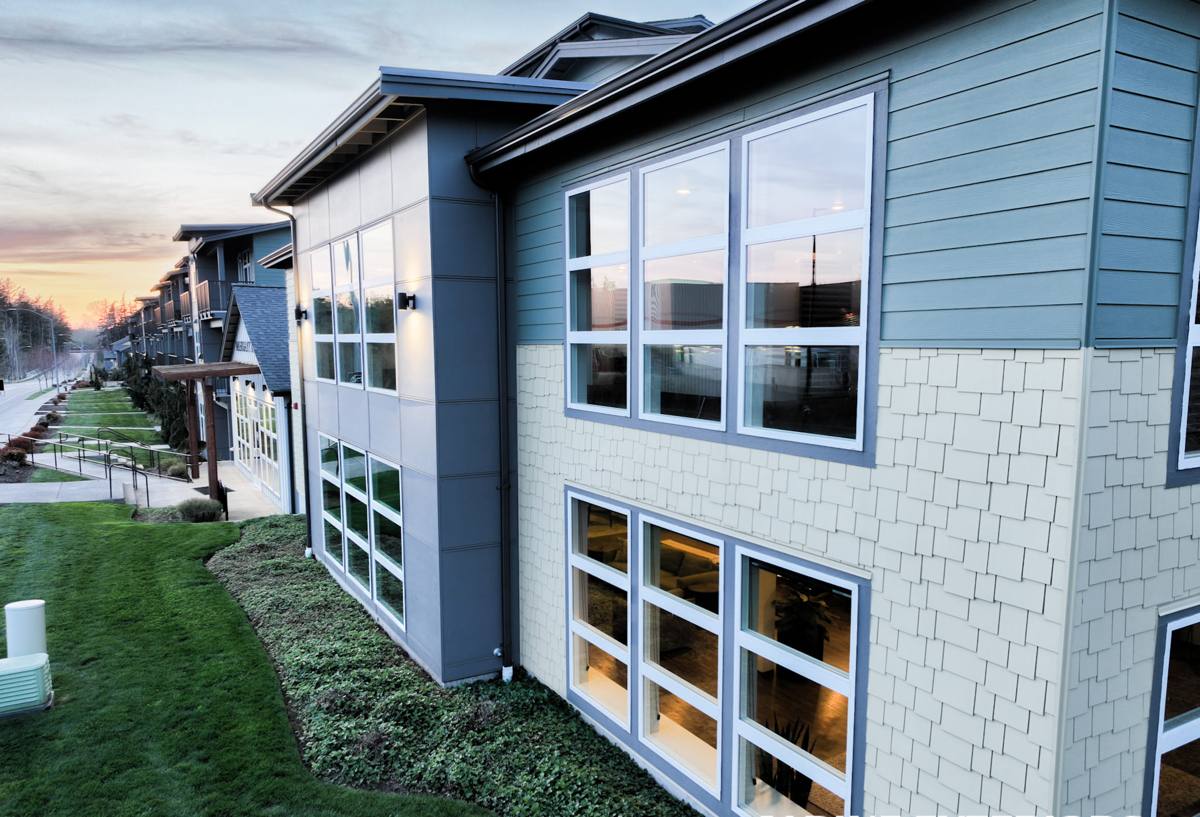
What "Energy-Efficient" Should Actually Mean Here
Energy efficiency in a window comes down to a handful of measurable properties, and all of them matter more in a marine climate than they would somewhere dry and mild.
U-Factor: How Much Heat Escapes
U-factor measures how well the window resists heat loss — lower is better. In Whatcom County's damp, cool winters, a low U-factor keeps interior glass surfaces warmer, which matters for two reasons: lower heating bills and less condensation. Cold glass in a humid house is where moisture problems start.
Solar Heat Gain Coefficient (SHGC)
This measures how much solar heat passes through the glass. Western Washington doesn't get intense summer sun, but on south- and west-facing walls a moderate SHGC still helps even out room temperatures and cuts glare without blacking out the view.
Air Leakage and Water Penetration Ratings
These two ratings, tested to NFRC and AAMA/WDMA standards, tell you how much air sneaks through the frame and how much wind-driven rain the window can shed before it leaks. For a Custer home exposed to weather coming off open water, the water penetration rating deserves as much attention as the energy numbers — a window that scores well on efficiency but poorly on water resistance will eventually cause more damage than it saves in energy costs.
Frame Material: The Decision That Drives Everything Else
Frame material affects energy performance, salt-air durability, and long-term maintenance. Here's how the common options compare for a coastal Whatcom County property.
| Frame Material | Energy Performance | Salt Air / Moisture Behavior | Maintenance |
|---|---|---|---|
| Vinyl (quality, multi-chambered) | Good to very good | Doesn't corrode; hardware quality varies by manufacturer | Low — no painting, occasional cleaning |
| Fiberglass | Very good to excellent | Excellent — dimensionally stable, resists warping in wet/dry cycles | Low |
| Aluminum (non-thermally broken) | Poor — conducts heat and cold | Prone to pitting and corrosion near salt air over time | Moderate |
| Wood / wood-clad | Good with proper glazing | Vulnerable — exposed wood suffers in the long moss season without diligent upkeep | High — regular refinishing and caulk inspection |
We steer most Custer homeowners toward quality vinyl or fiberglass. It's not that wood windows can't perform — it's that unclad wood exposed to this region's near-constant dampness demands a maintenance schedule most homeowners don't want to keep up with, and a missed year of refinishing can mean rot at the sill before anyone notices. Vinyl and fiberglass simply ask less of you over the life of the window.
Why Salt Air Changes the Hardware Conversation
The glass and frame get most of the attention, but hardware — hinges, locks, balances, and screws — is often where salt air does its damage first. Standard-grade fasteners and hardware can start pitting and corroding years before the window itself shows any wear, especially on homes with a clear exposure toward the water. We spec corrosion-resistant hardware and stainless or coated fasteners for Custer installs, and we pay attention to how a window's locking hardware is finished, not just how it looks in the showroom. A window that won't close tight because the lock has corroded stops being energy-efficient no matter what the original ratings said.
Driving Rain Needs a Water Management Plan, Not Just Caulk
A lot of window leaks people blame on "a bad window" are actually installation failures — and driving rain off open water exposes those failures fast. Caulk alone is not a water management system; it's a backup, and backups fail.
What a Correct Installation Actually Includes
- A sloped sill pan under the window that directs any intruding water back outside instead of into the wall cavity
- Proper flashing integration with the house wrap or weather-resistive barrier — shingled correctly, top piece last, so water sheds down and over, never behind
- Backer rod and compatible sealant at the right joints, not sealant used as a substitute for flashing
- Correct shimming and fastening so the window operates square and the weatherstripping seals evenly all the way around
- Interior air sealing at the rough opening, which matters as much for moisture control as it does for drafts
Skip any one of these and a window can look fine for a year or two before a slow leak shows up as soft trim, a musty smell, or a stain that seems to come from nowhere. In a climate that stays wet for months at a stretch, small installation shortcuts compound.
Signs Your Current Windows Are Working Against You
Most homeowners don't replace windows because one broke — they replace them because a collection of small problems finally adds up. Watch for these signs, especially on walls facing prevailing weather.
- Condensation building up between the panes (a sign the seal has failed and the insulating gas has leaked out)
- Persistent fogging or moisture on the inside of the glass, even with normal ventilation
- Drafts you can feel with a hand near the frame on a windy day
- Wood trim or sills that feel soft, discolored, or have a musty smell
- Hardware that's stiff, corroded, or won't lock cleanly
- Visibly higher heating bills compared to similar homes nearby
- Paint or finish that's bubbling or peeling near the window frame
Any one of these on its own might just need a repair. Several together, especially on an older window, usually means the unit has reached the end of its useful life.
How We Approach a Custer Window Project
Our process is the same whether it's two windows or a whole house, because skipping steps is exactly how leaks happen later.
- On-site assessment. We look at existing window condition, framing, exposure direction, and any signs of past water intrusion before recommending anything.
- Product selection matched to exposure. A window on a wall that takes the brunt of the weather may warrant a different glass package or hardware spec than one on a sheltered side of the house.
- Removal and opening inspection. We check the rough opening and sill for hidden rot or moisture damage before the new window goes in — this is the point where a small problem is cheap to fix and an ignored problem gets expensive.
- Sill pan and flashing installation. Every opening gets a proper water management system, not just sealant.
- Precise setting and fastening. The window is shimmed, squared, and fastened per manufacturer specification so it operates correctly and seals evenly.
- Interior and exterior sealing. Air sealing inside, weatherproof sealant outside, trim finished to match the home.
- Final walkthrough. We test operation, locks, and seals with the homeowner before calling the job done.
What It Costs and What Drives the Price
Window project costs vary based on size, count, glass package, and how much work the opening needs beyond the window itself. Rather than quote a number that won't match your home, here's what actually moves the price.
| Cost Factor | Why It Matters |
|---|---|
| Number and size of windows | Larger openings and whole-house projects benefit from per-unit efficiency but obviously scale total cost |
| Frame material | Vinyl is typically the most budget-friendly; fiberglass costs more upfront but often needs less long-term upkeep |
| Glass package | Upgraded low-E coatings and gas fills raise efficiency and price together |
| Condition of the existing opening | Hidden rot or water damage found during removal adds repair work before the new window can go in |
| Trim and finish work | Matching existing trim, especially on older homes, can add labor |
We give straightforward written estimates that separate the window cost from any opening repair, so you know exactly what you're paying for and why.
Why It Matters to Hire a Crew That Already Works in Custer
Window installation standards written for a dry inland climate don't automatically hold up out here. A crew that regularly works Custer, Lynden, and the rest of Whatcom County already knows which walls tend to take the worst of the driving rain, how salt exposure changes hardware choices, and why a rushed flashing detail shows up as a problem two winters later instead of two weeks later. That's not a marketing point — it's the difference between a window that quietly does its job for twenty-plus years and one that needs attention again sooner than it should.
We also know this area well enough to set expectations honestly: no window, however good, eliminates the need for basic upkeep in a climate this wet. What good product selection and correct installation do is minimize that upkeep and prevent the kind of hidden water damage that turns a window project into a wall repair project.
Maintenance for the Long Moss Season
Even low-maintenance frame materials benefit from a little seasonal attention here.
- Clear debris and moss buildup from window tracks and sills a couple of times a year — trapped organic matter holds moisture against the frame
- Check exterior caulk lines annually for cracking or separation, especially after a hard winter
- Wipe down hardware periodically if the home has direct exposure toward open water
- Keep gutters and downspouts clear so roof runoff isn't sheeting down over window heads
- Address any soft trim or discoloration near a window promptly rather than waiting
None of this is heavy work, but skipping it in a climate that stays damp for months is how small issues turn into bigger ones.
If your Custer home has windows showing any of the signs above, or you're planning ahead for a remodel, we're happy to take a look and give you a straightforward, no-pressure estimate using the form below.