 Lynden
 Why Custer Homes Put Windows Through More Than Most
Custer sits close enough to the water and open farmland that its homes take a different kind of weather beating than houses further inland. You get salt-laden air drifting in off the coast, wind-driven rain that hits window frames sideways instead of straight down, and a wet season that stretches long enough to grow moss on anything that stays damp too long. None of that is dramatic on its own. It's the accumulation, year after year, that wears out seals, swells wood, and corrodes hardware that was never rated for it.
Windows are one of the few parts of a house that have to do two jobs at once: keep weather out and let it drain away when it inevitably gets in around the edges. In Whatcom County, that second job matters as much as the first. A window that looks fine from the curb can still be failing quietly behind the trim if it was installed without the right flashing, the right sill pitch, or materials suited to this climate.
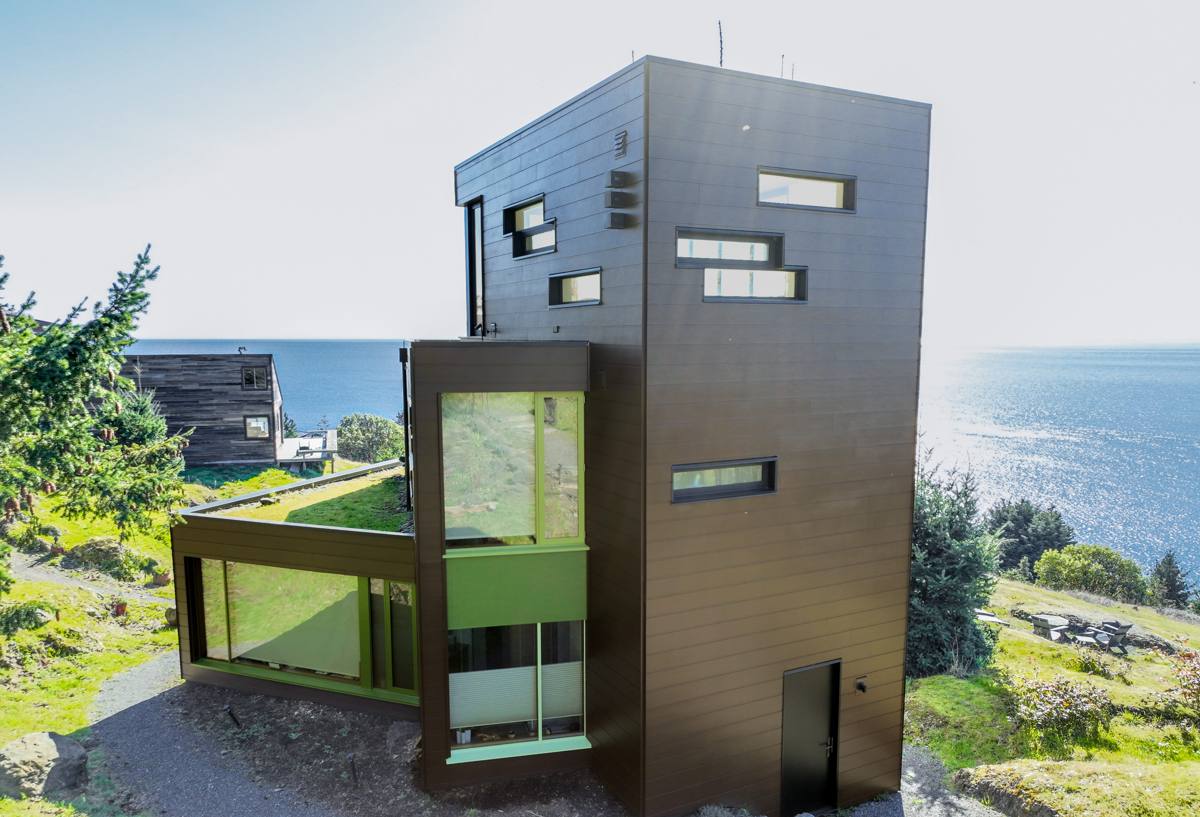
What "Custom" Actually Means on a Job Like This
Custom doesn't mean fancy shapes or high-end trim packages, though we do that when a homeowner wants it. On most Custer jobs, custom simply means the window is built to the exact rough opening of that house — not a stock size that gets shimmed and gapped to fit. Older farmhouses and homes built in stages over the years rarely have perfectly square, standard-dimension openings. Forcing a stock window into an opening that's slightly out of square is one of the most common causes of early leaks and failed seals.
A correctly done custom window job includes:
- Precise field measurement of every opening, since even openings on the same wall can differ by a quarter inch or more
- Frame material and glass package matched to that wall's sun and wind exposure
- Proper flashing integration with the existing house wrap or siding, not just caulk over the gap
- A sill pan or sloped sill detail so any water that gets past the exterior sheds outward instead of pooling
- Insulation in the gap between frame and rough opening — not stuffed, but filled evenly so the frame doesn't distort
Why This Matters More Near the Coast
Salt air accelerates corrosion in hardware, screws, and any exposed metal flashing. It also tends to hold moisture longer than dry inland air, which is part of why moss and mildew show up faster on north-facing walls and shaded trim around Custer than they might twenty miles inland. Choosing hardware and fasteners rated for coastal exposure isn't an upsell — it's the difference between hardware that still operates smoothly in ten years and hardware that seizes up in three or four.
Signs Your Current Windows Are Already Losing the Fight
Most window failures don't show up as a dramatic leak. They show up as small, easy-to-dismiss symptoms first. Worth checking before winter storms roll through:
- Fogging or a milky haze between the panes — the seal has failed and moisture is trapped in the gap
- Soft or discolored wood on the interior sill or exterior trim
- A window that's noticeably harder to open or close than it used to be
- Visible moss or black staining building up on the frame or sill, especially on shaded sides of the house
- Drafts you can feel with a hand near the frame on a windy day
- Condensation forming on the inside of the glass regularly, even when the house isn't especially humid
Any one of these alone might just mean a caulking touch-up. Two or three together, especially on a window that's original to the house, usually means the unit itself is done and patching it further is just delaying the inevitable.
Frame Material Options for This Climate
There's no single "best" frame material for every house — it depends on exposure, budget, and how much upkeep a homeowner actually wants to do. Here's how the common options hold up specifically against salt air, rain, and moss:
| Material | Salt air / corrosion | Moss and moisture resistance | Upkeep |
|---|---|---|---|
| Vinyl | Doesn't corrode; hardware is the main wear point | Sheds moisture well, doesn't feed moss growth | Low — occasional cleaning |
| Fiberglass | Very stable, minimal expansion or contraction | Excellent — dimensionally stable in wet-dry cycles | Low |
| Wood-clad | Exterior cladding protects the wood if intact | Vulnerable where cladding seams open up | Higher — needs seams inspected periodically |
| Solid wood (interior look, exposed exterior) | Poor in this exposure without frequent maintenance | High risk of moss and rot without regular sealing | Highest |
We're upfront that we steer most Custer homeowners away from exposed solid-wood exteriors unless they're genuinely committed to a maintenance schedule. It's not that wood is a bad material — it's that this particular climate is unforgiving of gaps in upkeep, and a missed year of sealing can mean real damage. Vinyl and fiberglass carry that maintenance burden far better, and wood-clad splits the difference for homeowners who want a wood look on the interior.
Our Process, Start to Finish
1. Walkthrough and Measurement
We look at every window being replaced individually — sun exposure, wind exposure, current condition of the surrounding wall — rather than quoting a flat per-window price without seeing the house. Custer's mix of open, wind-exposed lots and more sheltered tree-lined properties means two houses a mile apart can genuinely need different specs.
2. Material and Glass Selection
We'll walk through frame material, glass package, and any tradeoffs in plain terms — what costs more up front versus what costs more in upkeep over ten years. No pressure toward the most expensive option if it doesn't fit the house or the budget.
3. Removal and Opening Prep
Old windows come out carefully so we can actually inspect the rough opening — sheathing, framing, and any hidden water damage — before a new unit goes in. This step gets skipped by crews in a hurry, and it's exactly where problems get missed.
4. Flashing and Installation
Proper flashing sequencing so water sheds down and out over each layer, never trapped behind it. This is the single most important technical step for long-term performance in a high-rain climate.
5. Sealing, Insulation, and Trim
Even insulation fill, correct sealant at the right joints (not everywhere — over-sealing can trap moisture instead of releasing it), and trim work that matches the house.
6. Final Walkthrough
We check operation, sightlines, and sealing with the homeowner before calling the job done.
Mistakes We See in Older Installations
A fair amount of our work in and around Lynden is correcting problems from previous installations, not just replacing old windows. The recurring issues:
- Caulk used as the primary water barrier instead of proper flashing underneath it
- Stock-size windows forced into out-of-square openings, leaving uneven gaps packed with foam
- No sill pan, so water that gets past the exterior has nowhere to go but into the wall framing
- Hardware and fasteners not rated for coastal exposure, seizing or corroding within a few years
None of these are visible from the outside right after installation. They show up years later as soft trim, stuck sashes, or a musty smell near the wall — which is why the install quality matters more than the window brand itself.
Living with the Maintenance Side
Even a well-installed window needs occasional attention in this climate. Rinsing salt residue off exterior glass and frames a couple times a year, keeping weep holes in vinyl and fiberglass frames clear of debris, and knocking moss off shaded sills before it gets established all go a long way. We're happy to point out what to watch for on your specific windows during the estimate, since exposure varies a lot from one side of a house to another.
Why a Local Custer Crew Is Worth It
Window installation done wrong is expensive to fix later, and the cost usually isn't the window itself — it's the wall damage that happened silently behind it. A crew that's already worked houses in Custer and around greater Lynden has a working sense of which walls face the worst wind, where moss shows up first, and how coastal salt air changes the math on hardware and fasteners. That's not something you get from a general contractor working here for the first time, and it's not something a big-box installer crew touring through the county is going to factor in either.
We're a Whatcom County crew working Whatcom County houses. That's the whole pitch — no gimmicks, just windows put in correctly for the place they're actually going.
If your windows are fogging, sticking, or just old enough that you're wondering, we're happy to take a look and give you a straight answer — no pressure, no obligation. Reach out below for a free estimate.