 Lynden
 Why Birch Bay's Coastal Climate Is Hard on Roofs
Birch Bay sits close enough to the water that homes there take a different kind of beating than roofs a few miles inland in Lynden or Bellingham. Salt-laden air corrodes exposed metal faster than dry-side climates would suggest, driving rain gets pushed sideways under shingle laps instead of just falling straight down, and the long stretch of damp, low-sun months every year gives moss and algae plenty of time to take hold. None of this means a Birch Bay roof needs to fail early. It means the repair work has to account for conditions that a generic patch job usually ignores.
We work throughout Whatcom County, and the difference between a roof in town and a roof near the shoreline shows up in the details: how fast fasteners rust, how much moss builds up on north-facing slopes, and how often flashing needs a second look. A repair that doesn't account for those details tends to come back sooner than it should.
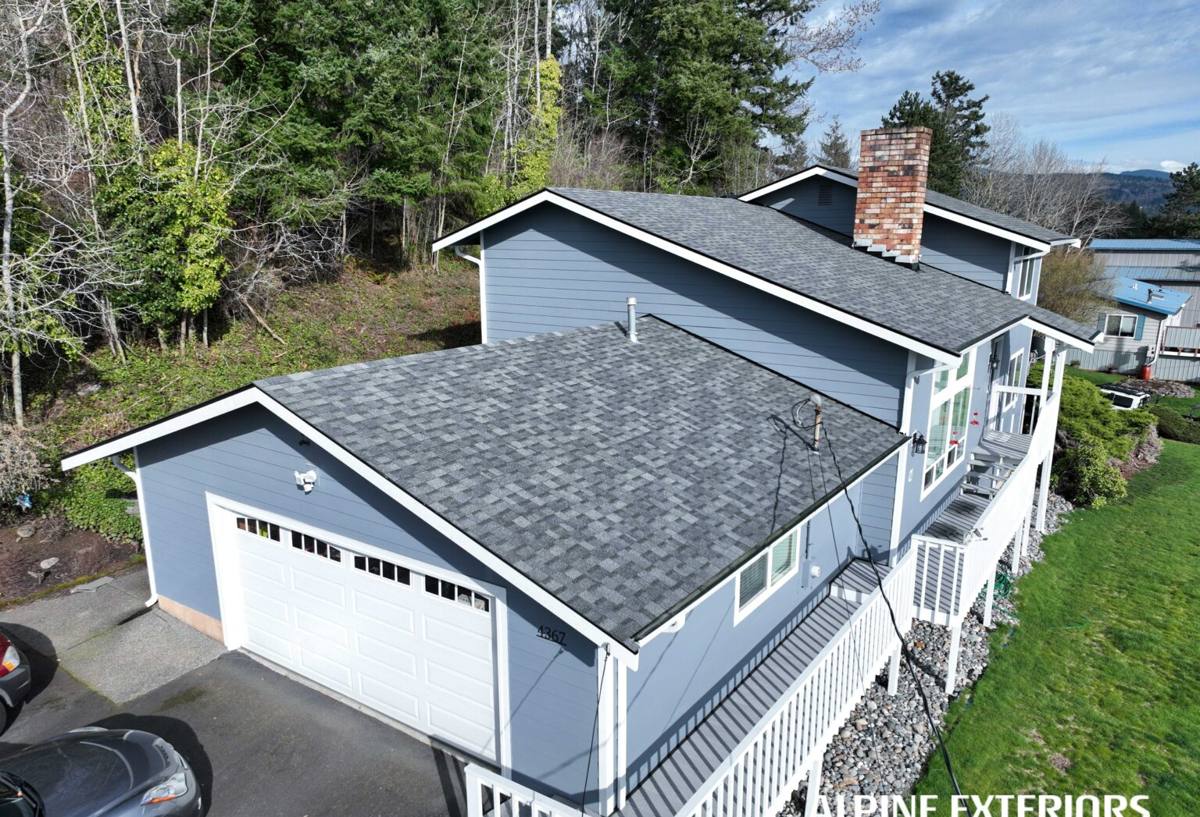
Signs a Birch Bay Roof Needs Repair
Most roof problems don't announce themselves with a leak on day one. They show up as smaller warning signs first, and catching them early is usually the difference between a repair and a full replacement.
- Granules collecting in gutters or at downspout outlets, especially after a hard rain
- Shingle edges curling, cupping, or lifting, particularly on south- and west-facing slopes
- Thick moss or dark algae streaking on shaded or north-facing roof sections
- Soft or spongy spots underfoot when walking the roof for inspection
- Rust staining or visible corrosion around flashing, vents, or fasteners
- Water stains on interior ceilings or in the attic near chimneys, skylights, or wall intersections
- Gutters pulling away from the fascia or overflowing during normal rain
If you're seeing more than one of these at once, it's worth having someone look at the roof before the next big system rolls through off the water.
The Repair Issues We See Most Often Near the Water
A few failure points come up again and again on coastal Whatcom County roofs, and they're rarely random. They track directly with wind exposure, moisture load, and how much moss cover a roof has built up over the years.
Flashing First
Flashing around chimneys, skylights, and wall-to-roof transitions is the single most common source of leaks we find, and it's rarely the shingles themselves that fail first. Driving rain finds any gap in step flashing or counterflashing long before it finds a weak spot in the field of the roof. A repair that only reseals a visible crack without checking the flashing underneath is a temporary fix, not a real one.
Valleys and Ridges Under Wind Load
Valleys concentrate more water than any other part of the roof, so any wear in the underlayment or shingle overlap there shows up as a leak fast. Ridge caps take the brunt of wind exposure, especially on homes with less tree cover breaking up gusts off the water, and they loosen or crack before the rest of the roof shows its age.
Moss: More Than Cosmetic
Moss isn't just an appearance issue. It holds moisture against the shingle surface long after the rest of the roof has dried, which softens the mat underneath, lifts shingle edges, and creates channels for wind-driven rain to get underneath. A roof with heavy moss cover is often further along in wear than it looks from the ground, which is why we check underneath it during an inspection rather than just noting it's there.
What a Correct Roof Repair Actually Involves
A repair done right starts with finding the actual source of a problem, not just patching the spot where water showed up inside. Water travels along rafters and sheathing before it drips through a ceiling, so the visible stain and the actual failure point are often several feet apart. That means:
- Tracing leaks to their real origin, including checking the attic side when possible, before opening anything up
- Removing and replacing damaged decking or underlayment rather than shingling over soft spots
- Matching shingle type, weight, and where reasonably possible, color and profile, so the repair doesn't stand out or create a mismatched wear pattern later
- Rebuilding flashing details properly, with correct step and counterflashing overlap, rather than relying on caulk or roofing cement as the primary seal
- Confirming proper nailing pattern and fastener placement, since incorrect nailing is a common hidden cause of premature shingle failure
A repair that skips any of these steps might look fine from the driveway and still leak again within a season or two.
Repair or Replace? Key Factors We Weigh
Not every roof problem calls for a full replacement, and not every roof is a good candidate for another round of patching. We walk homeowners through the honest tradeoffs rather than defaulting to whichever option is bigger.
| Factor | Favors Repair | Favors Replacement |
|---|---|---|
| Age of roof | Under roughly two-thirds of expected lifespan | Near or past expected lifespan for the material |
| Extent of damage | Isolated to one section, flashing point, or valley | Spread across multiple slopes or recurring in new spots |
| Decking condition | Solid, dry sheathing under the affected area | Widespread soft spots or rot in the decking |
| Moss and algae coverage | Light to moderate, treatable and cleanable | Heavy, long-term coverage with shingle mat damage |
| Underlayment condition | Original underlayment still intact and dry | Underlayment failing or missing in exposed areas |
When a roof falls in a gray area, we say so plainly and lay out what a repair buys you in time versus what a replacement resets.
Our Roof Repair Process
Repair work goes faster and holds up better when it follows a consistent process instead of jumping straight to patching the obvious spot.
- Inspection — a walk of the roof surface plus, where accessible, a look from inside the attic to trace water paths and check decking condition.
- Written estimate — a clear explanation of what's failing, why, and what the repair will and won't address, before any work starts.
- The repair itself — removing damaged material back to sound decking, replacing underlayment and flashing as needed, and matching shingles for a clean tie-in.
- Cleanup and check — clearing debris and nails from gutters and the ground, and a final check of the repaired area and surrounding flashing.
We schedule around weather where we can, since a repair done in a dry window seals better than one rushed between rain systems.
Materials and Methods for Coastal Exposure
Coastal air changes what "good enough" fasteners and flashing look like. We use corrosion-resistant fasteners — hot-dip galvanized or stainless where exposure warrants it — instead of standard-grade nails and screws that can rust and weep stains within a few seasons this close to the water. We also lean on ice-and-water shield underlayment at eaves, valleys, and around penetrations, since these are the spots where wind-driven rain is most likely to get pushed backward under a standard shingle lap.
For shingle repairs and replacements, algae-resistant shingle lines make sense on shaded, moss-prone slopes as a long-term maintenance reducer, but we're upfront that they slow algae growth rather than eliminate the need for periodic cleaning. We'd rather set that expectation clearly than oversell a product as a permanent fix. Same goes for sealants and roofing cement: useful as a secondary defense at a flashing joint, never a substitute for correct flashing installation underneath.
Why Local Experience in Birch Bay Matters
A repair crew that mostly works drier, inland roofs can still do competent work, but they're often solving for average conditions rather than what a shoreline roof actually deals with. Knowing which slopes on a Birch Bay roof hold moss the longest, how much more flashing wear shows up on wind-exposed sides, and how fast standard fasteners corrode in this air changes what gets prioritized during an inspection and what gets built into the repair.
It also means fewer surprises during the job. A crew that regularly works Whatcom County's coastal communities has already seen how local wind patterns, moisture load, and moss cycles play out on real roofs, not just in a manual, and that experience shows up in fewer callbacks.
Maintenance That Extends a Repair's Life
A good repair lasts longer with basic upkeep in between visits. Clearing gutters at least twice a year keeps water moving off the roof instead of backing up under the edge. Trimming back branches that overhang the roof cuts down on the shade and debris that feed moss growth. A simple visual check after major windstorms — looking for lifted shingles or displaced ridge caps — catches small problems before they become interior leaks. None of this replaces a professional inspection, but it stretches the time between them.
If you're seeing moss buildup, granule loss, or a stain creeping across a ceiling in your Birch Bay home, we're happy to take a look and give you a straight answer on what it needs. Reach out for a free, no-pressure estimate through the form below.