 Lynden
 Decks Take a Beating in Bellingham's Marine Climate
A deck in Bellingham lives a harder life than one built somewhere dry and inland. Whatcom County sits right on the water, which means salt-laden air working on every metal fastener, long stretches of driving rain soaking into end grain and joints, and a moss season that can run from fall clean through spring on any surface that doesn't get much sun. Add in freeze-thaw cycles during cold snaps and you have a structure that's constantly expanding, contracting, and absorbing moisture it can't always shed fast enough. Most decks don't fail because the wood was bad or the builder was careless. They fail because the structure underneath was never built to manage water in a climate like this, and years of small compromises finally caught up with it.
Deck replacement, done right for this area, isn't just swapping old boards for new ones. It's rebuilding the structure so water moves off it instead of sitting in it, and so the parts most exposed to salt air and rain are the parts least likely to fail first.
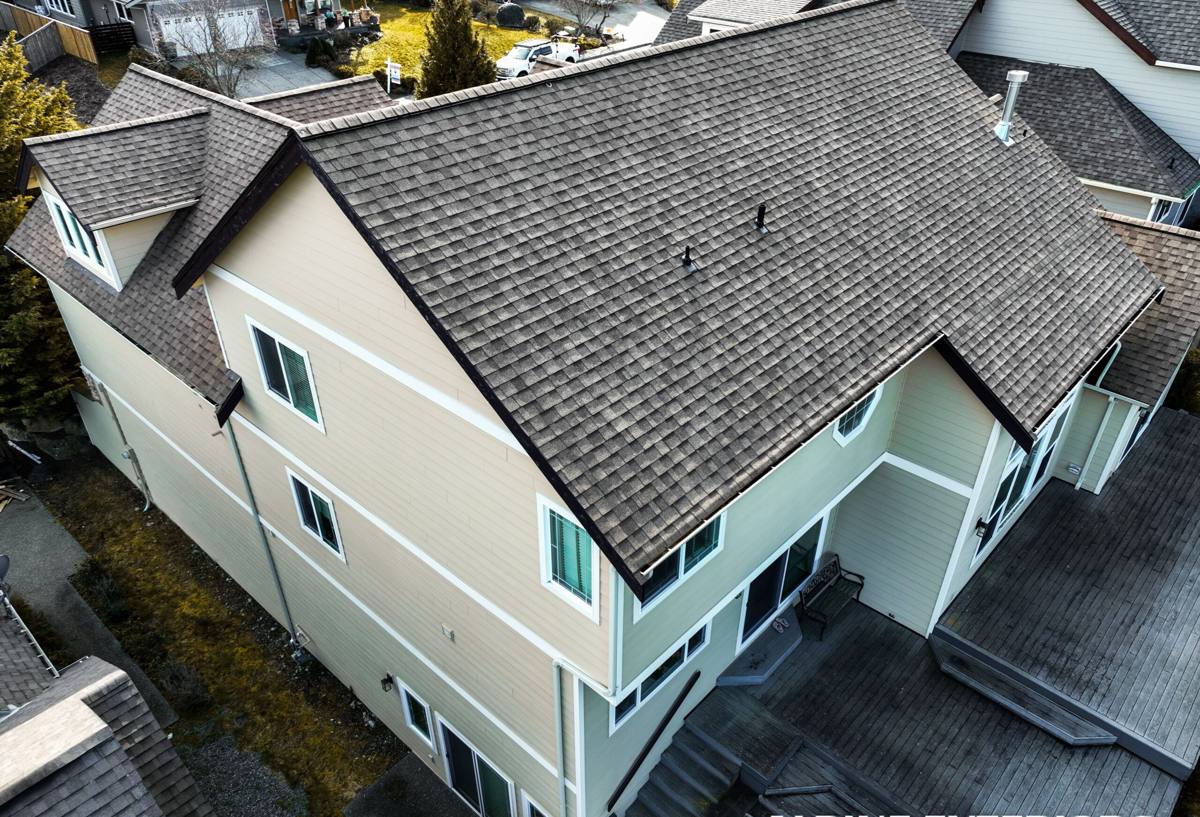
Signs a Bellingham Deck Needs Replacement, Not Repair
Structural warning signs
Some problems mean the whole deck needs to come down and be rebuilt, not patched:
- Soft or spongy spots in the decking, especially near the house or in shaded corners that stay damp longer
- Ledger board pulling away from the house, or visible gaps where it meets the siding
- Posts that have shifted, rotted at the base, or sit on footings that have heaved or settled
- Railing that flexes or feels loose when you lean on it
- Persistent moss or algae growth on the framing underneath, not just the walking surface
When repair still makes sense
If the framing is sound and the problems are limited to a handful of worn boards, loose fasteners, or surface graying, a repair or resurfacing is the honest answer. We'd rather tell a homeowner their deck has a few good years left than sell a full replacement it doesn't need yet. Replacement becomes the right call when the framing, ledger connection, or footings are compromised, because at that point new decking on top of a bad structure is just a cosmetic fix over a real problem.
What a Correct Deck Replacement Actually Involves
A deck rebuilt for this region needs to address moisture at every layer, not just the top one homeowners see day to day.
Footings and posts
Footings need to be sized and set below frost depth, and posts should be held up off the concrete with a proper post base rather than buried or set flush against wet ground. Constant ground moisture around Bellingham makes post-base rot one of the most common hidden failures we find on older decks.
Framing and joists
Joists and beams should be rated for exterior or ground-contact use as appropriate, sized correctly for the span, and protected at cut ends and fastener points, since that's where untreated wood soaks up water fastest. Joist spacing also matters more with composite decking than with wood, since composite spans differently and sags if it's hung on framing built for lumber.
Fasteners and hardware
Salt air corrodes standard fasteners faster than most homeowners expect. Hangers, hidden fastener systems, and structural screws should all be rated for the wood treatment and environment they're going into, so you're not looking at rust streaks and failing hardware in five years.
Decking surface
Whether it's wood, composite, or PVC, the decking should be installed with proper gapping for drainage and expansion, and end cuts should be sealed where the material calls for it.
The Ledger Board: Where Most Deck Failures Start
If there's one detail that determines whether a deck lasts or rots from the inside out, it's the ledger board connection to the house. This is the board bolted to the house rim joist that carries a huge share of the deck's structural load, and it's also the single spot most exposed to water running off the house and collecting where the deck meets the siding.
Correct ledger installation means proper flashing that directs water out and away from the house, a gap or drainage path so moisture doesn't get trapped against the wall, and lag bolts or through-bolts rated for the load, not just nailed on. In a climate that sees as much driving rain as this one, a poorly flashed ledger board is often the reason a deck that looks fine on top is quietly rotting the rim joist and sheathing behind it. We treat this connection as the most important part of the whole rebuild, not an afterthought.
Choosing Decking Material for Bellingham Conditions
There's no single right answer for every homeowner, but the climate does narrow the trade-offs worth thinking through.
| Material | How it handles this climate | Maintenance | Typical lifespan |
|---|---|---|---|
| Pressure-treated wood | Affordable and strong, but end grain and fastener holes absorb moisture and need regular sealing to resist rot and moss | Annual cleaning and re-sealing recommended | 15-20 years with upkeep |
| Cedar | Naturally rot-resistant and handles rain well, but softer surface and needs finish maintenance to hold its color and resist moss in shaded areas | Cleaning and refinishing every 1-2 years | 15-25 years with upkeep |
| Composite decking | Doesn't absorb water the way wood does, resists rot, and sheds moss more easily on sunlit sections, though shaded areas still need occasional cleaning | Periodic washing, no sealing or staining | 25-30+ years |
| PVC decking | Fully synthetic, handles constant damp and salt air with minimal absorption, generally the lowest-maintenance option in wet, shaded yards | Occasional washing | 25-30+ years |
We'll walk through these trade-offs honestly based on your yard's sun exposure, budget, and how much upkeep you actually want to do. A heavily shaded deck that stays damp most of the year is a very different decision than one that gets full afternoon sun.
A note on which products we stand behind
We're selective about which decking brands and fastener systems we install, not because every product on the market is bad, but because some hold up to this climate's moisture and salt exposure far better than others, and some come with warranty terms that actually protect the homeowner rather than the manufacturer. We'd rather install fewer options well than offer everything and let quality vary.
How Our Deck Replacement Process Works
- On-site assessment — we inspect the existing deck's framing, ledger connection, footings, and posts to determine what's actually failing and why
- Honest scope and estimate — you get a clear picture of what needs full replacement versus what could reasonably be repaired, with pricing that reflects the actual work
- Demolition and disposal — the old structure comes down and materials are hauled off, with care taken to protect the siding and landscaping around it
- Rebuild from the ground up — footings, posts, framing, ledger flashing, and decking are installed in that order, with each layer inspected before the next goes on
- Final walkthrough — we go over the finished deck with you, including how to care for whatever material you chose
Permits and Local Requirements
Deck replacement often requires a permit, particularly when footings, framing, or the ledger connection are being rebuilt rather than just the surface. Requirements can vary depending on deck height, size, and whether it's attached to the house, so we handle the permit process as part of the job rather than leaving homeowners to sort it out with the city or county on their own. Skipping a required permit can create real problems later, from failed home inspections at resale to insurance complications if something goes wrong.
Keeping a New Deck in Good Shape
Whatever material you choose, a little seasonal attention goes a long way in this climate:
- Sweep leaves and debris off the deck regularly, especially in shaded corners where moss takes hold first
- Clean the surface at least once a year to remove algae and moss before it gets a foothold
- Check that gaps between boards stay clear so water can drain instead of pooling
- Inspect the ledger board area and railing connections annually for any signs of movement or moisture
- Re-seal or refinish wood decking on the schedule appropriate to the species and finish used
None of this is complicated, but skipping it is exactly how a well-built deck starts developing the same problems years earlier than it should.
Why a Crew That Knows Bellingham Matters
A contractor who works across Whatcom County regularly sees how decks actually fail here, not just how they're built on paper. That means knowing which ledger flashing details actually keep water out during a real Pacific Northwest storm, which fastener grades hold up to salt air near the water, and which shaded yards need extra thought around moss and drainage before the first board ever goes down. It also means being around after the job is done if a question comes up, not just for the initial sale.
If your deck is showing its age or you're not sure whether it needs repair or full replacement, we're happy to take a look and give you a straight answer. Reach out for a free, no-pressure estimate using the form below.