 Lynden
 Board & Batten Siding for Aldergrove, Built by a Crew That Works This Area Every Week
Board and batten has become one of the most requested siding looks on both sides of the border here — the clean vertical lines read as modern farmhouse on a new build and as a tasteful update on an older home. We're based in Lynden, just minutes from the Aldergrove-Lynden border crossing, and we work homes on both sides of that line regularly. That matters more than it sounds like it should, because Aldergrove and Lynden share the same weather system. The moisture-laden air moving in off the Pacific, the driving rain that comes sideways during fall and winter storms, and the long stretch of damp, low-sun months that let moss and algae take hold on north-facing and shaded walls — none of that changes when you cross the line. A siding job that's "correct" for this climate looks the same whether the address is in Whatcom County or just across it in the Fraser Valley.
This page is about one thing specifically: board and batten siding, installed correctly, on a home in the Aldergrove area. Not a general overview of siding options — the details that make board and batten hold up (or fail early) in a climate defined by driving rain and a long moss season.
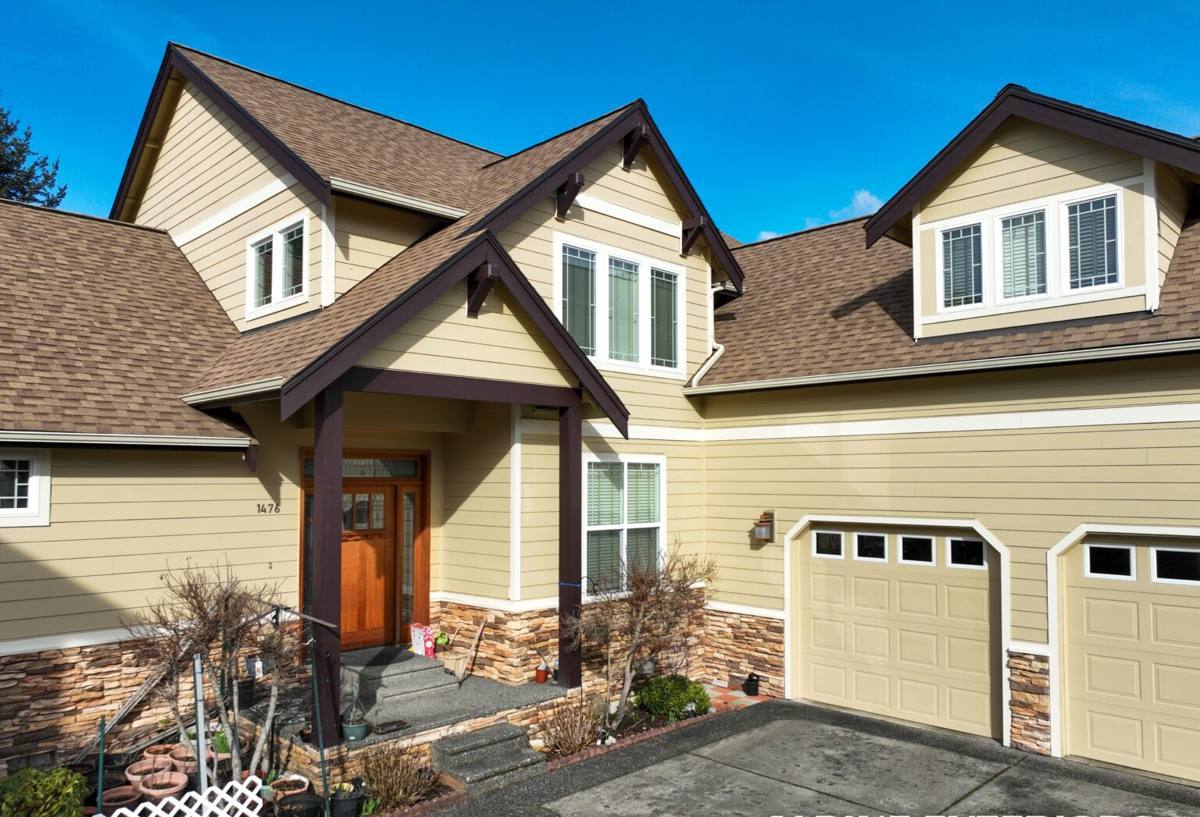
What Board & Batten Actually Is
The look is simple: wide vertical panels or boards with narrower strips — the battens — covering the seams between them. It's one of the oldest siding patterns around, originally a practical way to cover gaps in rough-sawn barn boards before it became a deliberate architectural style. Today there are two real ways to build it correctly with fiber cement:
Factory panel systems
A vertical panel product (Hardie's version is called HardiePanel vertical siding) goes up in large sheets, with trim battens installed over the seams at engineered spacing. This is the faster, more dimensionally consistent option, and it holds a straight, crisp line better than site-built boards over time.
Site-built board and batten
Individual boards are installed with a gap between them, then battens are face-nailed over those gaps. This gives more flexibility on board width and spacing — useful on homes where the architecture calls for a specific proportion — but it depends entirely on the installer getting the layout, fastening, and sealing right, because there are more seams and more places for water to find a way in.
Both approaches can be done well. Both can also be done badly. The material matters, but the installation details matter just as much — arguably more, in a climate like this one.
Why the Local Climate Changes What "Correct" Looks Like
Driving rain and wind-driven moisture
Vertical siding patterns like board and batten have more horizontal seams and joints than a standard lap pattern in some configurations, and every one of those seams is a place wind-driven rain can push moisture behind the cladding if it isn't detailed properly. In a climate that gets sustained wet weather rather than occasional downpours, a siding system needs a real drainage path behind it — not just a caulked seam that's expected to stay watertight forever.
A long moss season
Shaded walls, north exposures, and anything near overhanging trees or roof lines see extended damp periods that give moss and algae time to establish. Field-painted wood and some engineered products are more vulnerable here because the surface finish is only as good as the paint job and how well it was maintained. A factory-applied, baked-on finish holds up differently than something painted on site, and that difference shows up specifically in how a wall looks after several damp seasons, not in the first year.
Neither of these is unique to Aldergrove — it's the shared reality of this whole corner of the map, on both sides of the border. But it's worth saying plainly: a board and batten installation that would be perfectly fine in a dry climate can fail early here if it skips the details below.
What a Correct Board & Batten Installation Involves
This is the checklist we actually work from, not a marketing list:
- Inspect and, if needed, repair the weather-resistive barrier (WRB) underneath before anything new goes up — new siding over a compromised barrier just hides the problem
- Install furring strips or a dedicated rainscreen product to create a drainage gap behind the siding, so any moisture that gets past the surface can drain and dry instead of sitting against the wall
- Follow the manufacturer's fastening pattern and spacing exactly — this affects both wind resistance and how the panels or boards handle expansion and contraction
- Flash every penetration — hose bibs, vents, light fixtures, electrical boxes — and every horizontal transition, not just the obvious ones
- Install proper kickout flashing at roof-to-wall intersections, one of the most common places we find water damage on homes we're asked to re-side
- Seal and prime all field-cut edges before installation, since a factory finish only protects the surface it was applied to
- Leave manufacturer-specified expansion gaps at trim, corners, and butt joints rather than butting everything tight
- Use corrosion-resistant fasteners rated for the coastal-influenced, high-moisture conditions common to this area
Skip two or three of these and the wall can still look fine on installation day. The problems show up two, five, or ten years later — usually as a repair bill that's larger than it would have been to do it right the first time.
Why We Only Install James Hardie for This Application
Board and batten is available in vinyl, engineered wood, and fiber cement. We've made a professional decision to install only James Hardie fiber cement, and we think homeowners deserve the honest reasoning rather than a sales pitch.
| Material | Behavior in Wet, Mossy Conditions | Finish Durability | Long-Term Maintenance |
|---|---|---|---|
| Vinyl board and batten | Doesn't absorb moisture itself, but seams and panels can warp or gap over time, creating paths behind the wall | Color is molded in, but fades over the years and can't be refreshed without replacement | Low day-to-day upkeep, but panels are prone to cracking in impacts and are difficult to match if replaced years later |
| Engineered wood board and batten | Wood-based core is vulnerable to swelling and edge deterioration if moisture gets past the finish, which is more likely in sustained wet climates | Depends heavily on factory or field coating being intact and maintained | Requires more diligent caulk and finish inspection to keep moisture out long-term |
| James Hardie fiber cement | Non-combustible, dimensionally stable material that doesn't swell, rot, or support insect activity | Factory-baked ColorPlus finish is engineered specifically to resist fading, cracking, and moisture intrusion better than field-applied paint | Occasional rinsing and normal caulk checks; no repainting cycle in most cases |
None of the alternatives are bad products in every situation — vinyl is inexpensive and low-maintenance in the right application, and engineered wood has real fans for its workability. But for the specific combination of driving rain, a long moss season, and a vertical siding pattern that has more seams to manage, we've found Hardie's fiber cement with its factory finish gives homeowners the best long-term outcome for the investment. That's the standard we install to, and it's why we don't offer the alternatives even when they'd be a cheaper quote.
Our Process, Start to Finish
- Walk-around and assessment — we look at existing siding condition, wall orientation (which sides get the most weather and shade), and any signs of past moisture issues before we talk product
- Sheathing and barrier check — any existing siding comes off with an inspection of what's underneath, and we address problems before covering them back up
- Layout planning — panel system or site-built boards, batten spacing, and how the pattern works around windows, corners, and trim
- Installation with a proper rainscreen gap — furring or drainage mat, correct fastening, flashing at every penetration and transition
- Trim, caulking, and finish detail — sealed cut edges, finished corners, and a final check of every seam
- Final walkthrough — we go over the finished wall with the homeowner before calling the job done
Maintenance in This Climate
Board and batten with a ColorPlus finish is genuinely low-maintenance, but "low" isn't "none." A few habits go a long way in a climate like this one:
- Rinse the exterior periodically, especially shaded or north-facing walls where moss and algae get a head start
- Keep gutters clear so water isn't overflowing directly onto siding below
- Trim back vegetation and tree limbs that keep a wall section damp and shaded longer than the rest of the house
- Do a quick annual look at caulk lines around windows, trim, and penetrations — catching a failed bead early is a five-minute fix, not a wall repair
Why a Local Crew Matters Here
Aldergrove and Lynden sit close enough together, connected by their own border crossing, that a crew working one side sees the same weather patterns, the same architectural preferences, and often the same building conditions on the other. That's not a small thing when it comes to board and batten specifically — the pattern's popularity in this area means we've installed it enough times, in this exact climate, to know which details actually matter versus which ones are just extra steps. We're not learning this region's weather on your project; it's the same weather we deal with every week.
If you're weighing board and batten for a home in the Aldergrove area, we're happy to walk the property, talk through panel versus site-built options for your specific layout, and give you a straightforward, no-pressure estimate using the form below.