 Lynden
 Asphalt Shingle Roofing Built for Acme's Conditions, Not a Generic Spec Sheet
Acme sits in a part of Whatcom County where the roof over your head works harder than it does in a lot of other places. Between the moisture moving in off the Salish Sea, the driving rain that comes with fall and winter storm systems, and the heavy tree cover that shades a lot of these properties for much of the day, an asphalt shingle roof here is under a slower, steadier kind of stress than the same roof would see in a drier inland climate. We install asphalt shingle roofing for homes in and around Acme with that reality in mind, not as an afterthought.
This page is about one job, done right, in one area: asphalt shingle roofing for Acme homes. Not a general overview of every roofing option we offer. If you're comparing shingles to metal or flat-roof systems, that's a separate conversation — this one is for homeowners who already know shingles are the right fit and want to understand what a correct job looks like here.
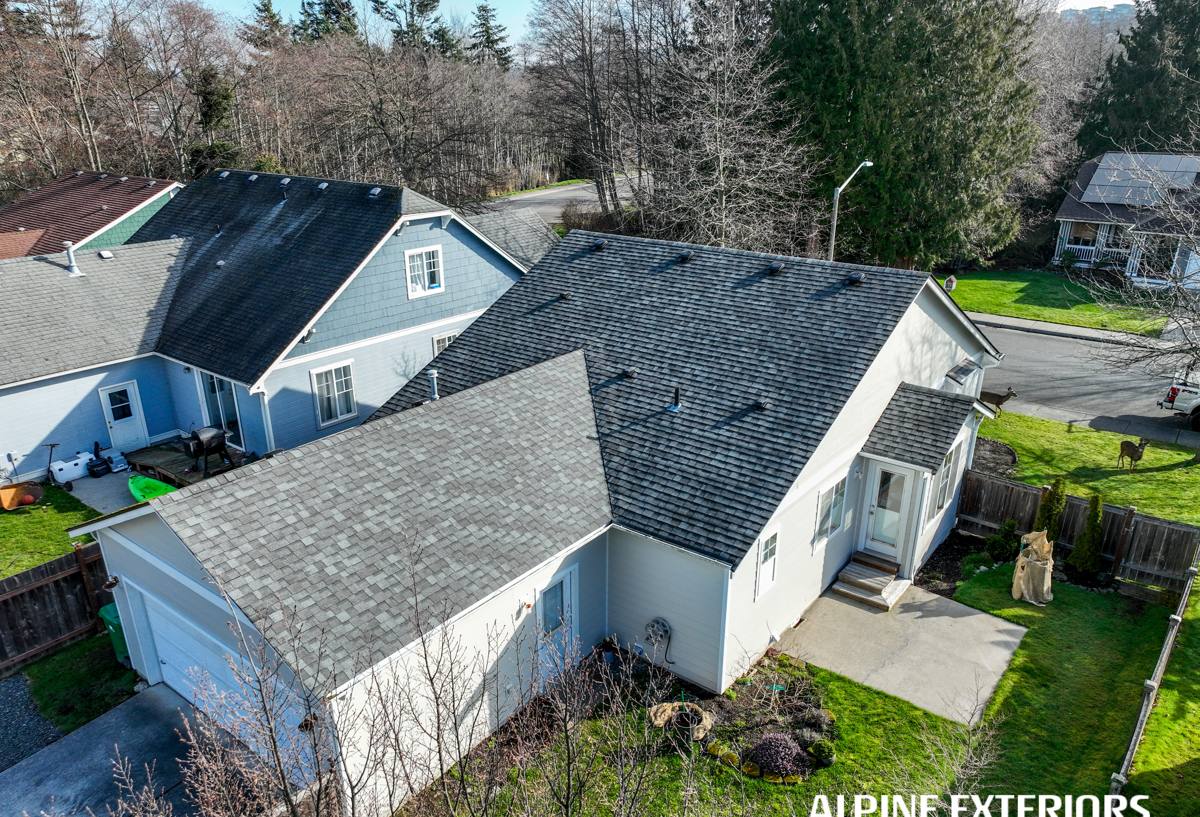
What Salt Air, Rain, and Shade Actually Do to a Shingle Roof
Asphalt shingles are a proven, cost-effective product almost everywhere in the country. What changes from region to region is how fast the small problems show up and how much they matter if they're ignored. In Acme's setting, three things drive most of the early wear we see:
Moisture that never fully dries out
Salt-tinged, marine air moving through Whatcom County carries more moisture than a lot of homeowners realize, and on tree-shaded lots that moisture sits on the roof surface longer between rain events. Shingles are designed to shed water, not sit in it, and prolonged dampness is what allows granule loss and mat softening to start well before a shingle's rated lifespan is up.
Moss and algae growth
A long moss season is one of the defining maintenance realities of roofing in this part of Washington. Moss doesn't just look bad — its root structure works into shingle mats, lifts tab edges, and holds water against the roof deck exactly where you don't want it held. Left unaddressed for a few seasons, moss growth shortens a roof's usable life more than almost anything else short of a storm event.
Wind-driven rain finding the weak points
Straight-down rain is easy for any roof to handle. Driving, wind-pushed rain is what finds a poorly lapped shingle course, an under-flashed valley, or a nail that missed the strike zone. Acme's exposure to storm-driven weather means installation details that would be forgivable in a calmer climate become real leak risks here.
What a Correct Asphalt Shingle Roofing Job Involves
A shingle roof is a system, not a single product. The shingles themselves get the attention, but the layers underneath and the details around penetrations are what actually determine whether the roof performs for its full expected life in this climate.
- Deck inspection and repair — any soft, delaminated, or water-damaged sheathing gets replaced before new material goes down, not covered over
- Ice-and-water shield at eaves, valleys, and other vulnerable transitions, sized for actual local exposure
- Synthetic underlayment across the full deck for a secondary water barrier that outperforms old-style felt in wet, humid conditions
- Proper flashing at every chimney, wall intersection, skylight, and vent pipe — reused old flashing is one of the most common causes of "mystery" leaks
- Balanced attic ventilation so moist interior air isn't trapped against the underside of the deck, which accelerates rot and shortens shingle life from below
- Correct nailing pattern and shingle exposure, matched to the manufacturer's high-wind installation instructions rather than the minimum standard spec
- Algae-resistant shingle granules where budget allows, to slow the return of moss and streaking in a climate that encourages both
Skip any one of these and the roof may still look fine from the ground for a few years. The failures that show up later — soft decking, leaks at a valley, moss that keeps coming back no matter how often it's cleaned off — usually trace back to a step that got shortcut during installation.
Our Process, Start to Finish
1. On-site inspection
We walk the roof (or inspect from the eave and attic when conditions don't allow safe roof access) to assess the deck, existing ventilation, flashing condition, and how much moss or algae growth is already present. We look at the whole system, not just the shingles.
2. Written estimate
You get a clear scope of work and price before anything is scheduled — what's being replaced, what underlayment and flashing are included, and what the ventilation plan looks like. No vague allowances buried in fine print.
3. Tear-off and deck check
Old roofing comes off down to the deck so we can actually see what's underneath. Any damaged sheathing gets flagged and repaired as part of the job, not treated as a surprise change order.
4. Underlayment, flashing, and shingle installation
Installed in the sequence and nailing pattern the manufacturer specifies for this exposure, with attention to the valleys, penetrations, and edges where most leaks originate.
5. Cleanup and walk-through
Job site cleared of debris and fasteners, and we walk the finished roof with you so you know what was done and what to watch for going forward.
Choosing the Right Shingle for This Climate
Not every asphalt shingle product handles moisture and moss pressure the same way. The table below compares the common options for a property like the ones we see around Acme.
| Shingle Type | Typical Lifespan | How It Handles Local Conditions |
|---|---|---|
| 3-Tab Asphalt | 15–20 years | Lowest upfront cost; less wind resistance and less algae resistance without an upgraded granule option — needs more frequent moss monitoring |
| Architectural (Laminate) Asphalt | 25–30 years | Thicker mat and better wind rating; the standard choice we recommend for most Acme homes given the driving rain exposure |
| Algae-Resistant (AR) Architectural | 25–30 years | Copper- or zinc-infused granules slow algae and moss regrowth — worth the modest upcharge in a long moss season |
| Impact-Resistant (Class 4) Architectural | 25–30+ years | Added durability against wind-driven debris common in storm events; higher upfront cost, sometimes offset by insurance discounts |
What Drives Cost on an Acme Roofing Project
Every roof is priced on its own specifics, but the same handful of factors move the number up or down on most jobs we quote in this area.
| Factor | Why It Matters Here |
|---|---|
| Roof pitch and access | Steeper roofs and limited equipment access add labor time and safety requirements |
| Deck condition | Rot or delamination from years of trapped moisture means sheathing replacement, which isn't known until tear-off |
| Number of valleys and penetrations | Each one needs individual flashing work, which is where most leak risk and labor time concentrates |
| Ventilation upgrades | Adding or correcting ridge and soffit ventilation extends shingle life but adds a line item |
| Shingle tier | Standard architectural vs. algae-resistant vs. impact-resistant shifts material cost per square |
| Tear-off layers | Removing a second existing layer of roofing takes more labor and disposal than a single-layer tear-off |
We don't publish a flat per-square price because these variables genuinely change the number from one Acme property to the next — a shaded, moss-heavy roof with several valleys is a different job than a simple, open gable. What we do give every homeowner is a specific, itemized estimate before work starts.
Signs Your Roof Needs Attention Now
Given the moss and moisture pressure common around Acme, a few warning signs are worth acting on sooner rather than later:
- Moss visibly growing on shingle tabs, not just in the gutter line
- Granules collecting in gutters or at downspout outlets
- Shingle edges curling, cupping, or lifting
- Dark streaking across the roof plane, especially on shaded slopes
- Daylight visible through the roof deck from inside the attic
- Soft or spongy spots when walked (by a professional, not a homeowner on a wet roof)
- Interior ceiling stains, particularly after a stretch of wind-driven rain
None of these guarantee a full replacement is needed — some are repair-scale issues if caught early. But in this climate, waiting rarely makes the fix cheaper.
Why a Crew That Already Works Acme Matters
Roofing crews that mostly work drier, calmer climates sometimes under-detail flashing and ventilation because it's rarely tested by the conditions here. A crew that regularly works Whatcom County properties builds installation habits around what actually happens on a roof exposed to a long moss season and repeated wind-driven storms — heavier ice-and-water coverage at valleys, ventilation sized for humid attics, and flashing details that assume the wind won't always come straight down.
There's also a practical side: local crews know how weather windows work here. Reroofing during a wet stretch without a plan for keeping the deck dry between stages is how call-backs happen. Scheduling around Whatcom County's weather patterns, not fighting them, is part of doing the job right the first time.
Get a Straightforward Estimate
If your Acme-area roof is showing moss, wear, or you're just planning ahead, we're happy to take a look and give you an honest read on where things stand — no pressure, no inflated scope. Fill out the form below for a free estimate and we'll get back to you to schedule a time that works.